Origins3 min read
A morning at the hive
Before the wax, before the wick: a dawn visit to the small apiaries where every candle begins.
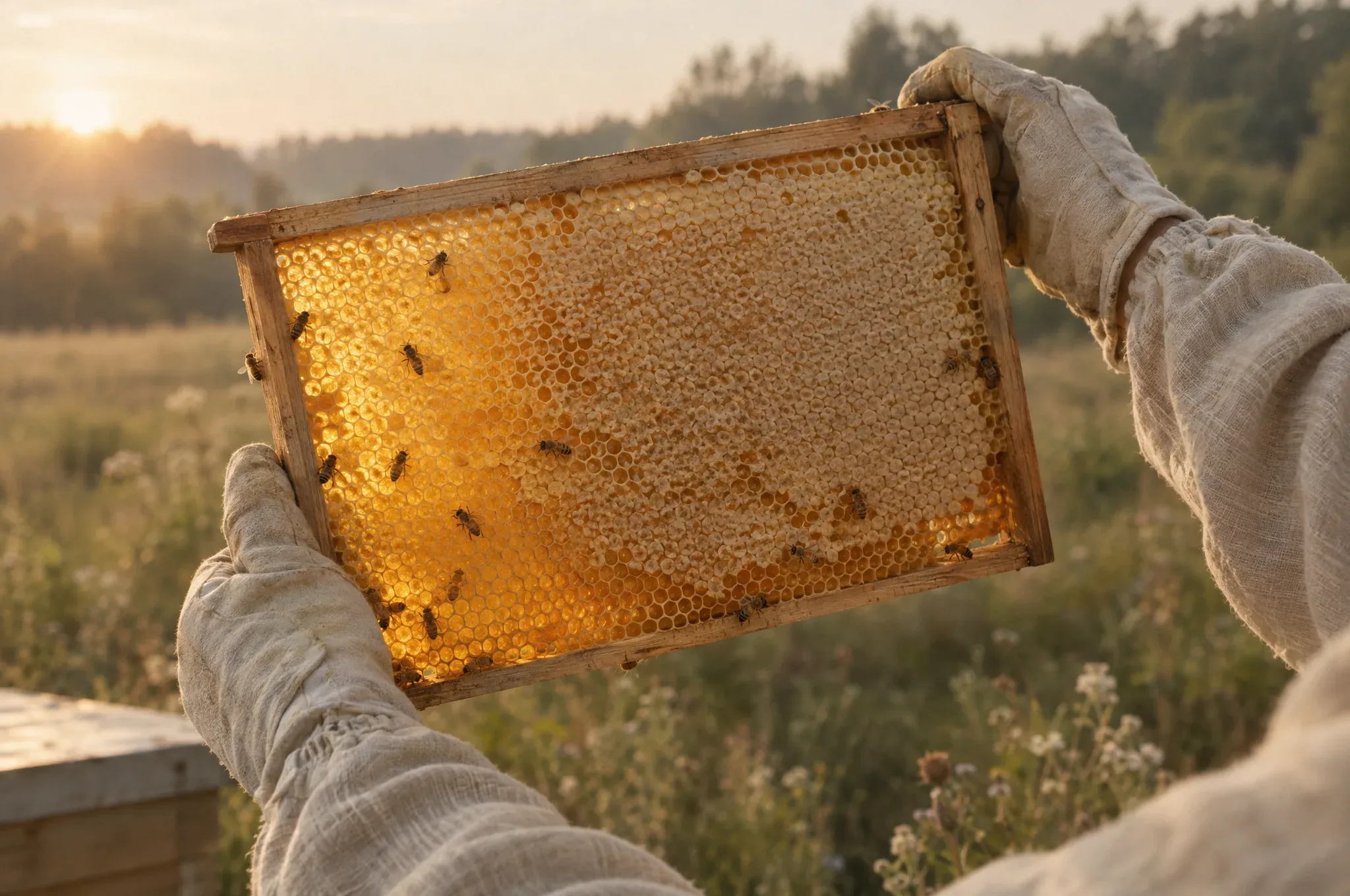
Beekeepers start early. Before the day warms up, most of the colony is still inside and the bees are calm. By half past six the smoker is lit, the veil is on, and the first lid comes off with the soft crack of propolis giving way.
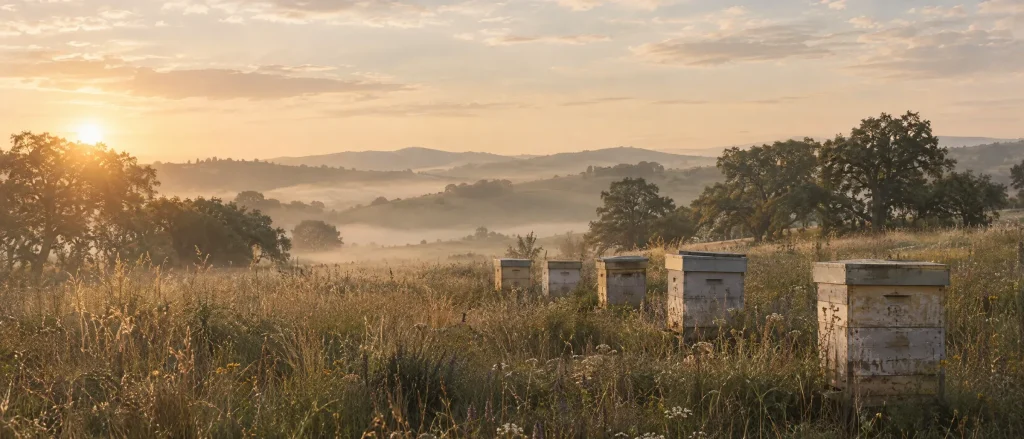
Every candle we make begins here, long before anyone thinks about wicks. We buy our wax from small European beekeepers, most with a few dozen hives, some with only a dozen. We visit them when we can. This is what one of those mornings looks like.
Opening the hive
Smoke is used sparingly: a few puffs at the entrance and under the lid are enough to keep the bees settled. The frames come out one at a time, are held up to the light and turned slowly. Each one says something about the colony: how much brood there is, whether the queen is laying, how much honey has been stored.
The boxes at the top hold the honey. In a good week their frames are heavy and sealed with a pale layer of fresh wax, the cappings. That thin layer is what we are here for.
Where the wax comes from
Bees make wax from small glands on the underside of the abdomen. It appears as tiny clear flakes, which they chew and shape into comb. It takes a great deal of nectar: beekeepers usually say six to eight kilos of honey for every kilo of wax. Nothing about it is quick, which is why beeswax has always been precious.
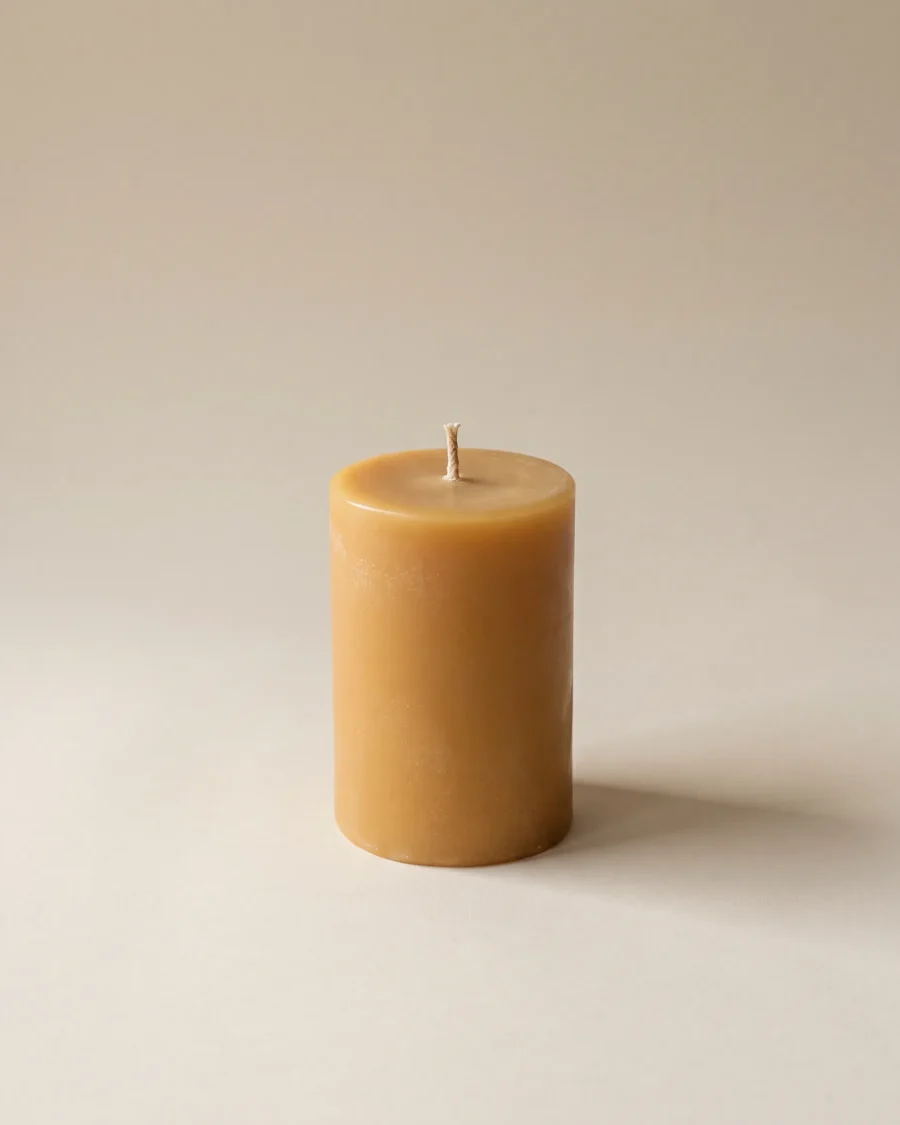
When the honey is harvested, the cappings are sliced off to open the cells. The honey runs out and the cappings stay behind. Melted, filtered and set into blocks, they become the clean, golden wax we pour. Old brood comb, darker and heavier, stays in the beekeeper’s own cycle and never goes into our candles.
Every candle begins with a frame held up to the morning light.
What we ask for
We do not certify anyone ourselves, and we would rather not pretend to. What we look for is simple, and we check it in person.
- Wax from honey cappings, not old brood comb.
- Pure beeswax only: no paraffin and no blends, checked on every batch we receive.
- Enough honey left in the hive for the bees to see out the winter.
- Beekeepers we know by name, whose hives we have stood beside.
Back down the hill
By nine the sun is on the hives and the bees are flying in numbers. The lids go back on, the smoker is put out in a bucket of sand, and there is coffee in the van. The cappings will be melted and filtered over the following weeks, and the blocks sent on to our atelier, where the slow part begins again.