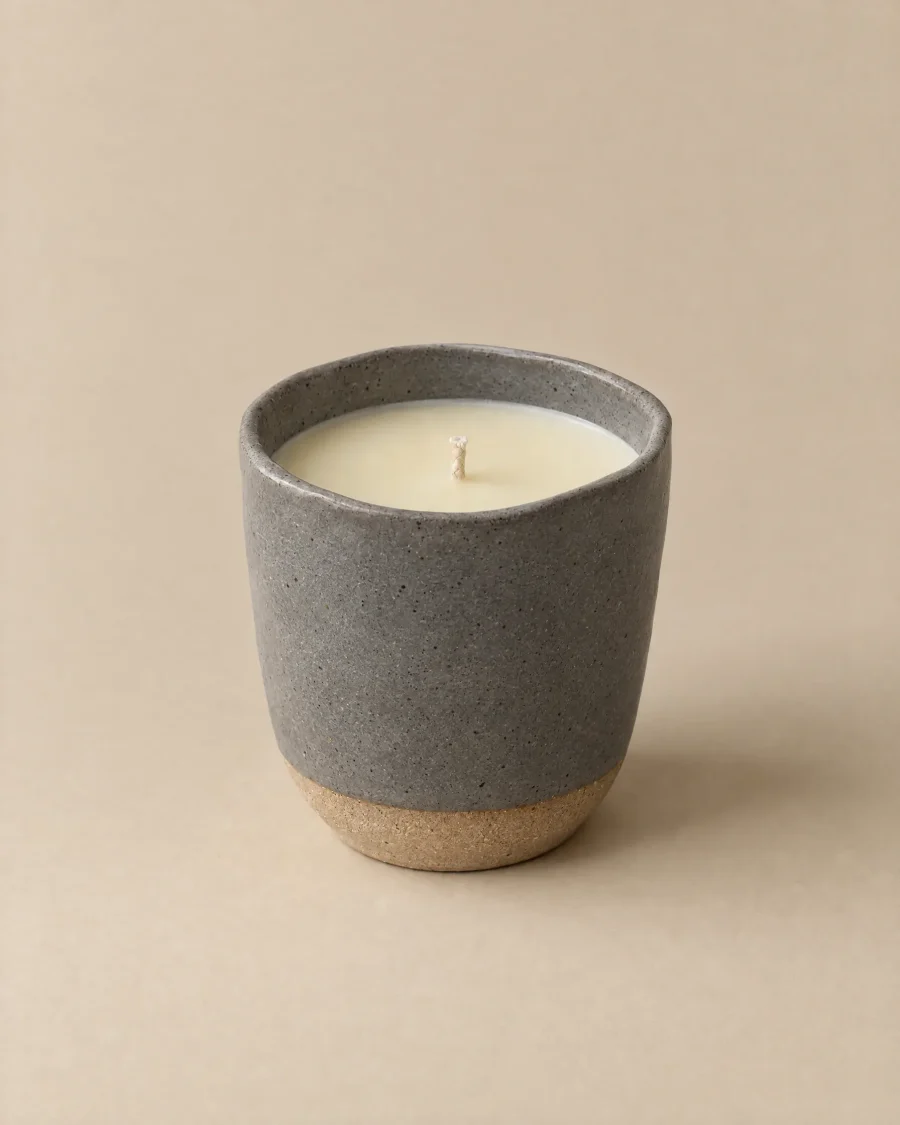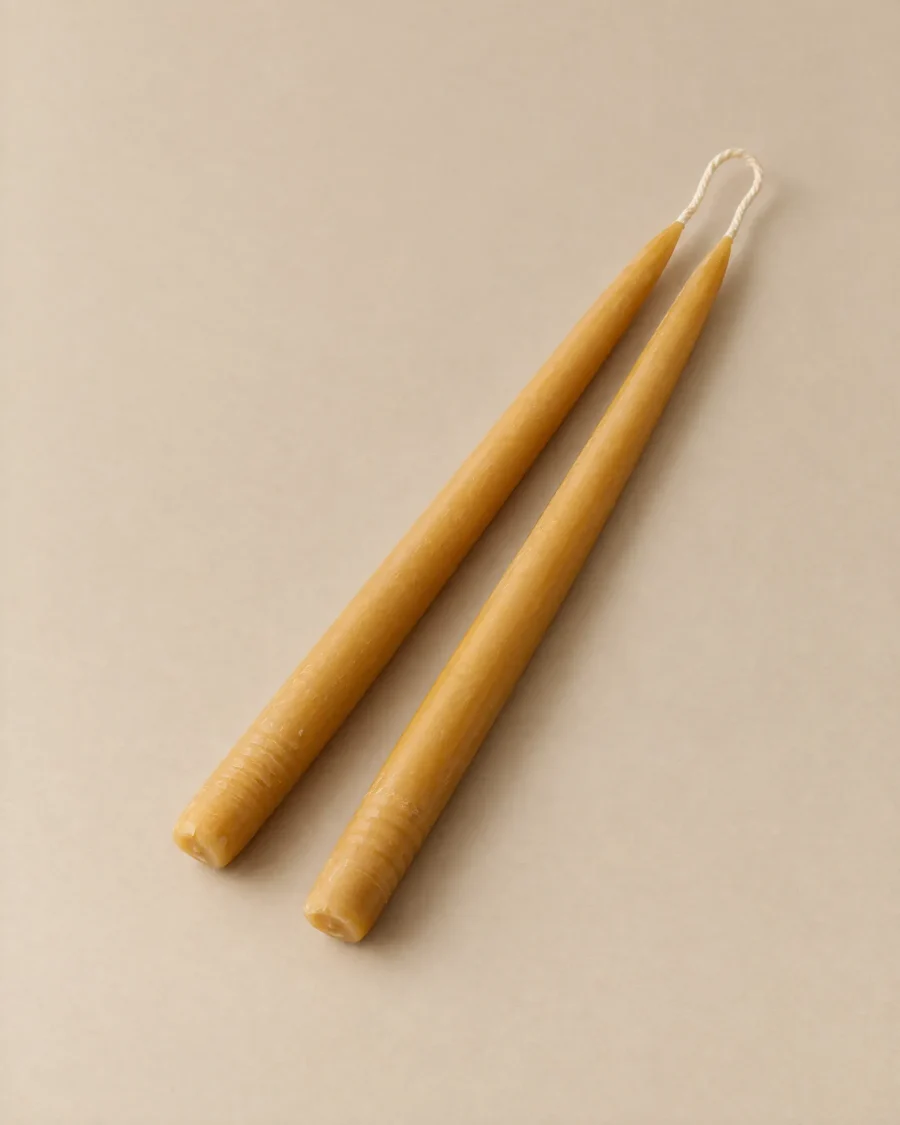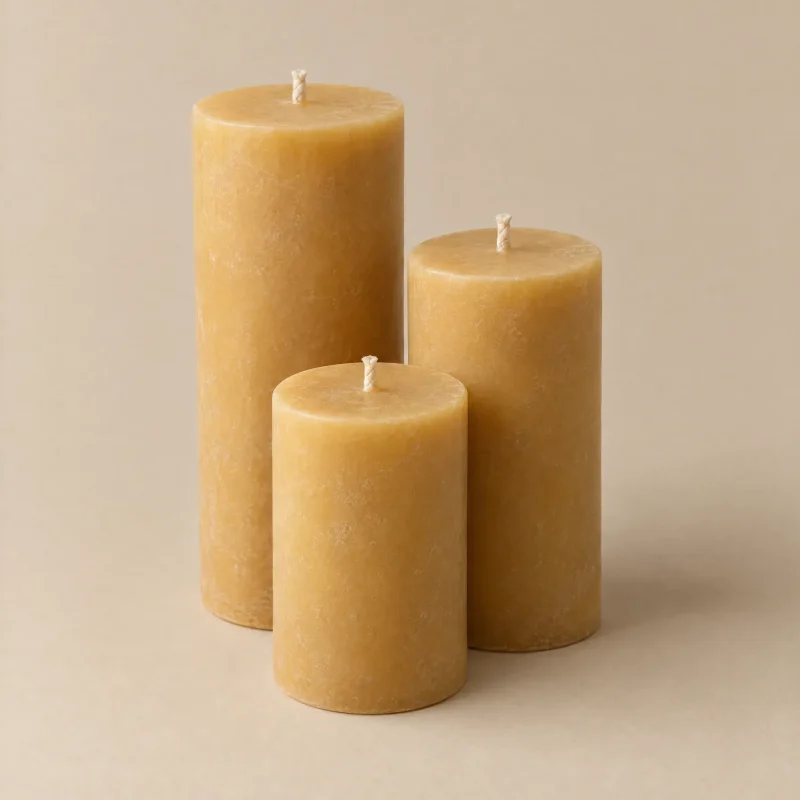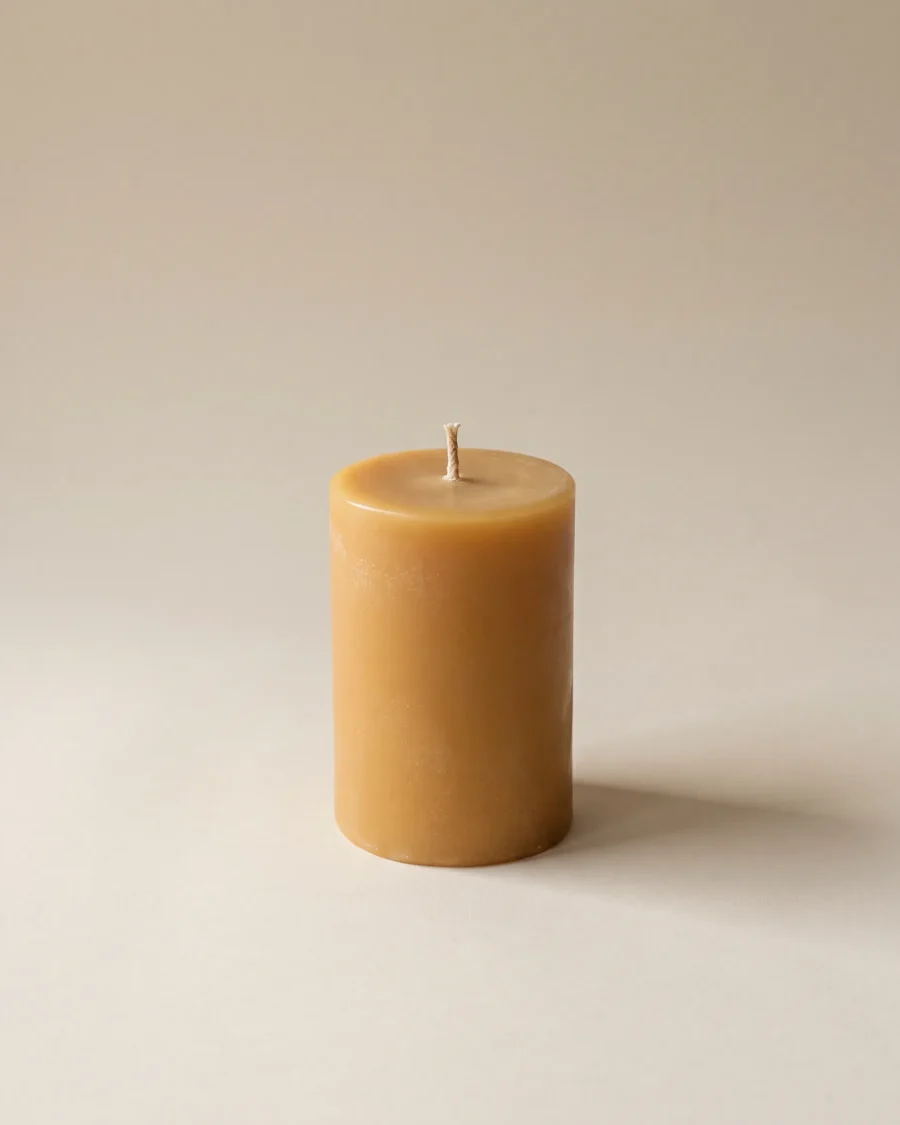
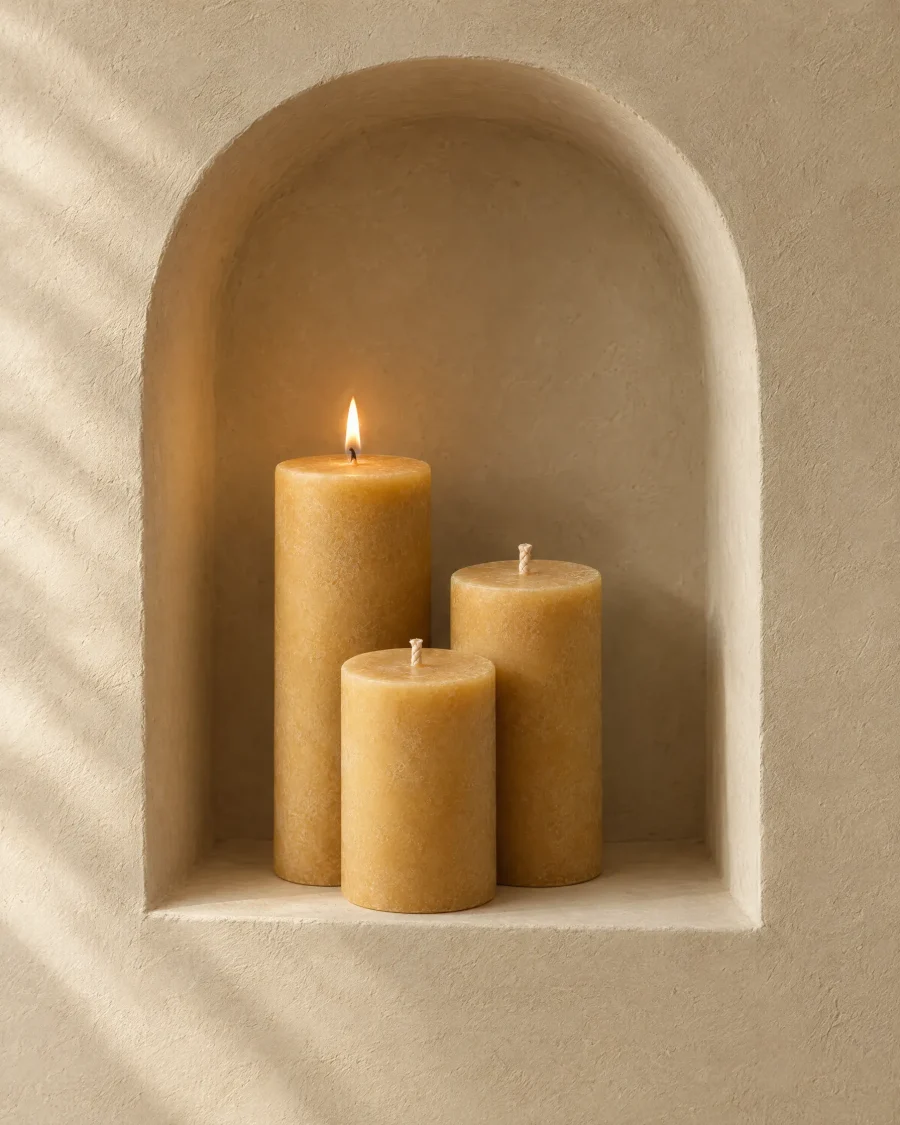
Pure pillar, 10 cm
28,00 €
Unscented, 7 × 10 cm
Buying guide
Paraffin hides behind gentle words like natural wax and soy blend. How to read a candle label, what to ask, and what a truly paraffin-free candle looks like.
Read the guide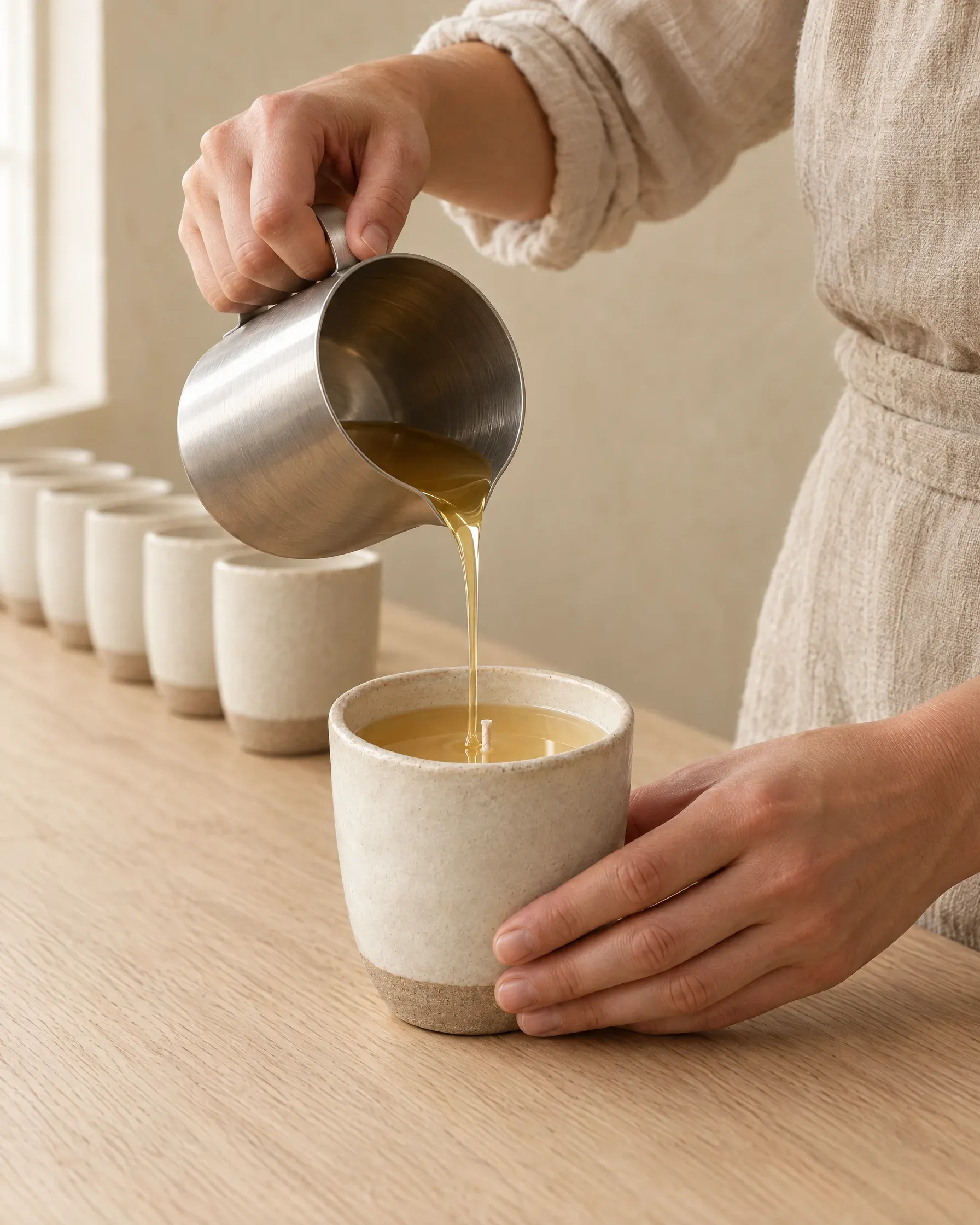
Paraffin-free candles are candles made with no petroleum wax at all, usually from pure beeswax or a 100 % plant wax. The difficulty is that paraffin rarely appears on the front of the box. It hides in blends with soft names, so the only reliable test is a label that names one wax and gives its percentage.
Paraffin wax is a by-product of petroleum refining: the solid fraction left over when crude oil is processed into fuels and lubricants. It is refined, often bleached white, and sold in huge volumes at a low price. Most of the candles in the world are made of it.
It is not used because it is better, but because it is convenient. Paraffin is inexpensive, takes colour and fragrance easily, and can be poured into any mould. For a mass-market scented candle, those qualities are hard to beat.
We would add one honest note. Paraffin-free does not mean emission-free. Every flame releases some particles, whatever the wax, which is why wick trimming and fresh air matter for every candle. Our guide to non-toxic candles goes into that in more detail.
None of these phrases is a guarantee of paraffin. Each one is a reason to read further, or to ask.
A label is the reliable test, but pure beeswax also gives itself away. It is firm and slightly tacky, never greasy. It smells faintly of honey, even unlit. And over time it can grow a soft white haze called bloom, natural oils in the wax rising to the surface. Paraffin and blends do not bloom, so a little white film on a beeswax candle is a good sign rather than a fault. Our Candle care page explains how to wipe it away if you prefer the gold.
Price is a clue too. Pure beeswax is a limited material; a large beeswax candle at a very low price deserves a second look at the label.
A maker of paraffin-free candles will answer all five without hesitation.
For a free-standing candle, a pillar or a taper, choose 100 % beeswax: soy and coconut are too soft to hold the shape on their own. For a strongly scented candle in a jar, a 100 % plant wax is a reasonable paraffin-free option if the label confirms the percentage. For a scented candle with a quieter character and a longer burn, beeswax in a vessel with named essential oils is the middle way. If you are weighing beeswax and soy, our beeswax vs soy candles comparison will help.
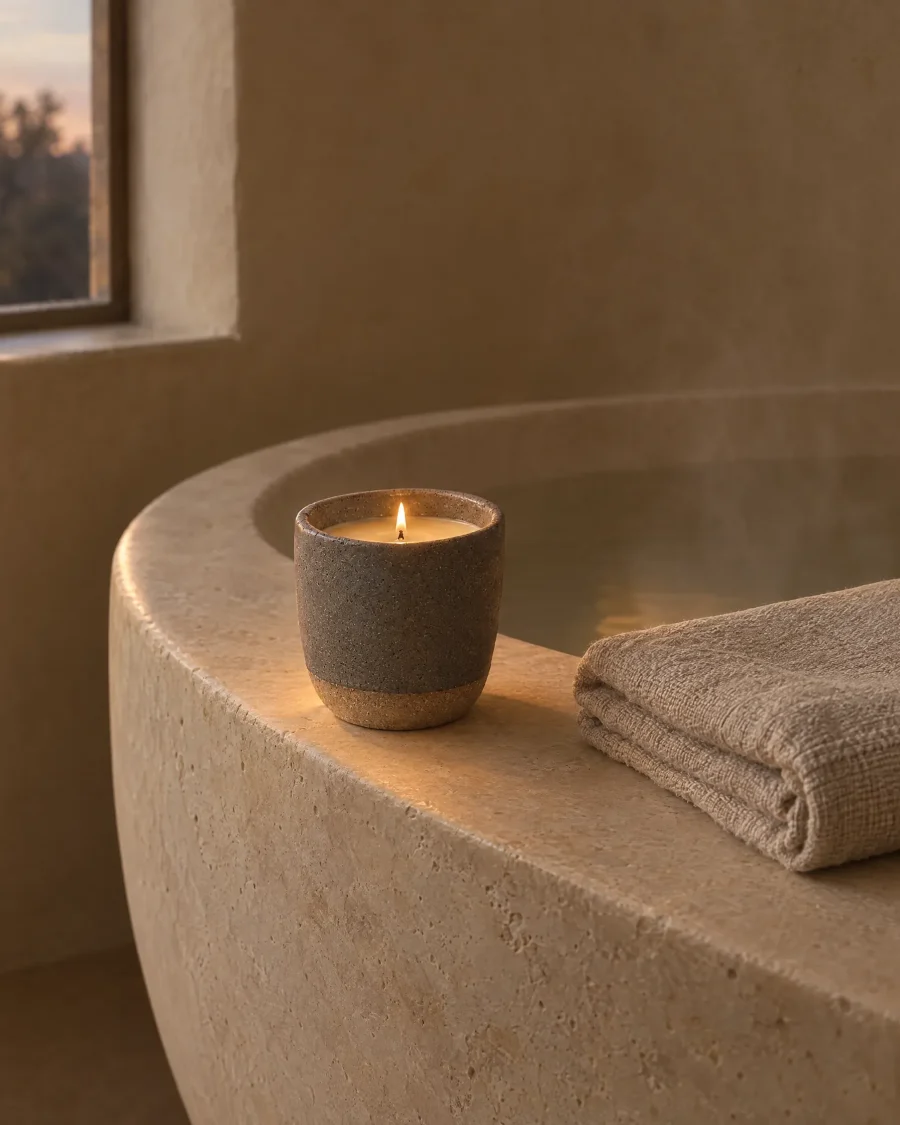
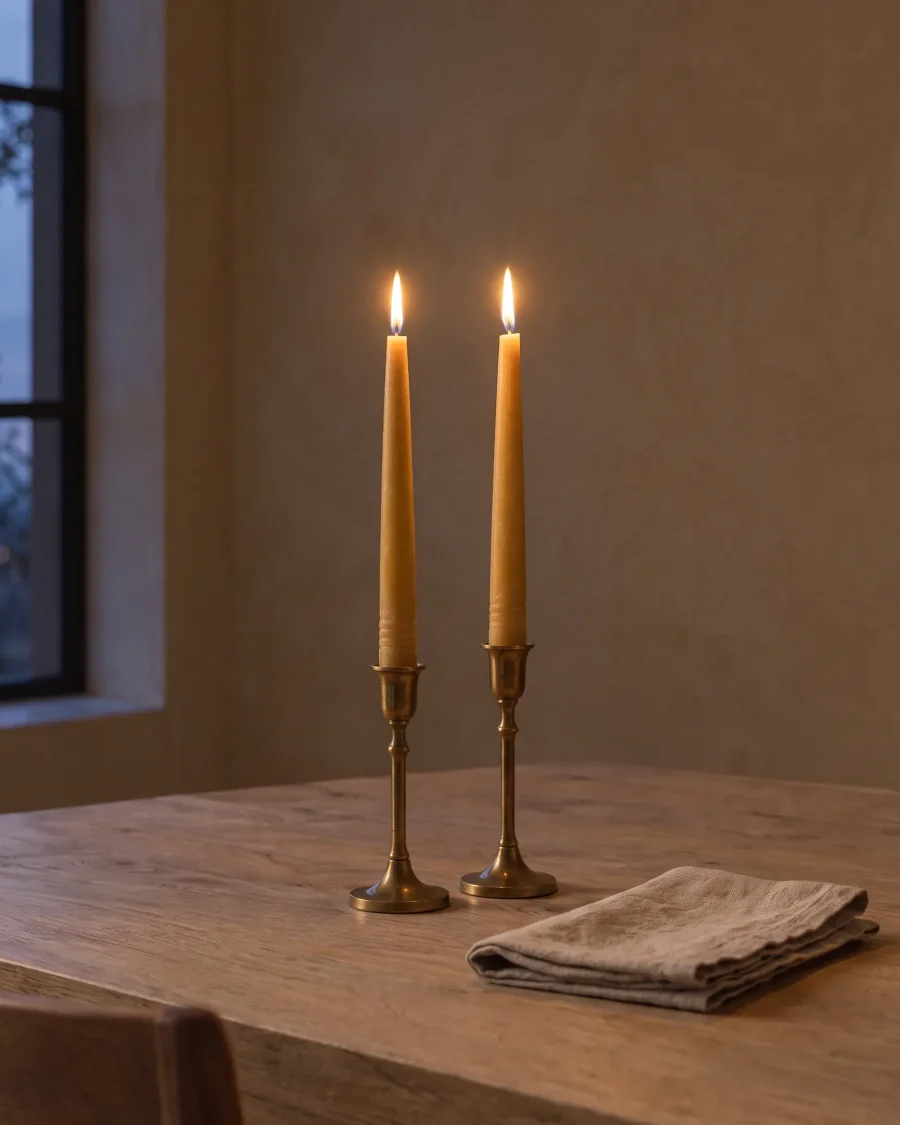
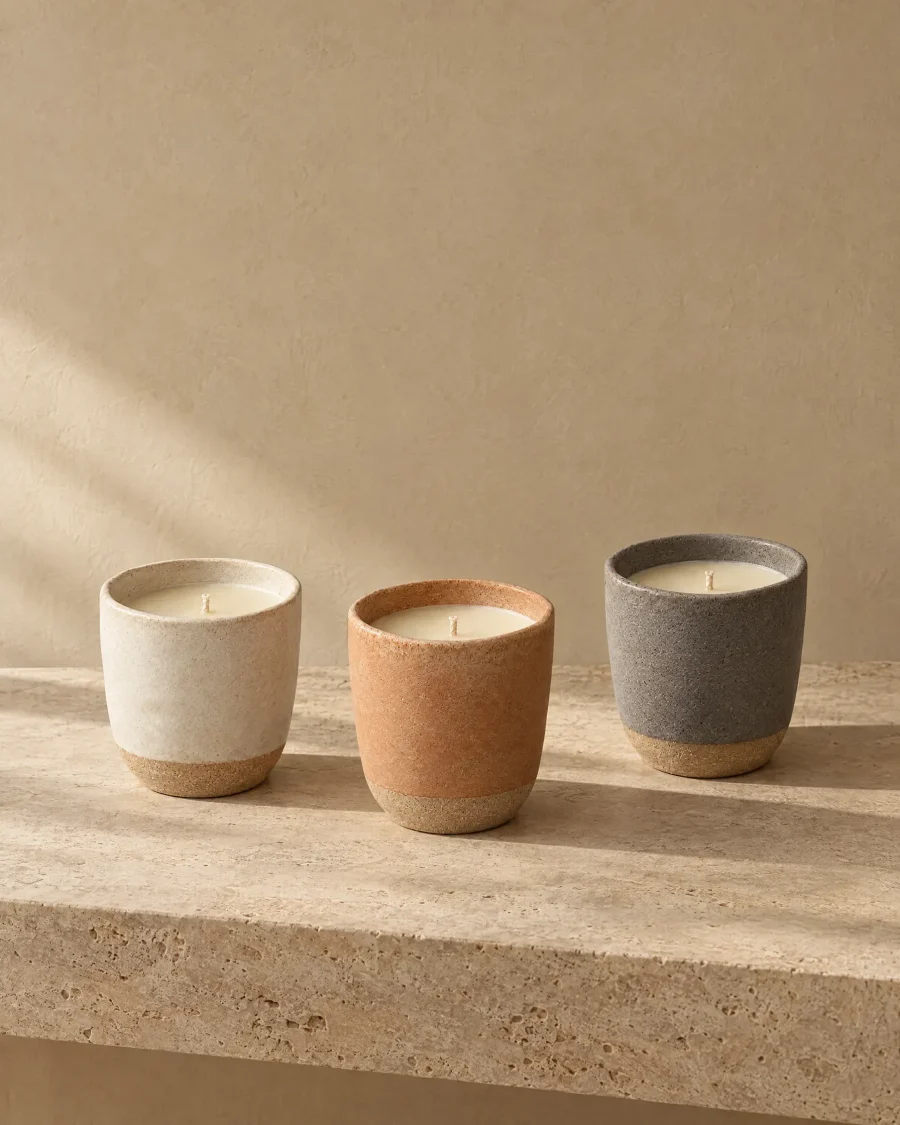
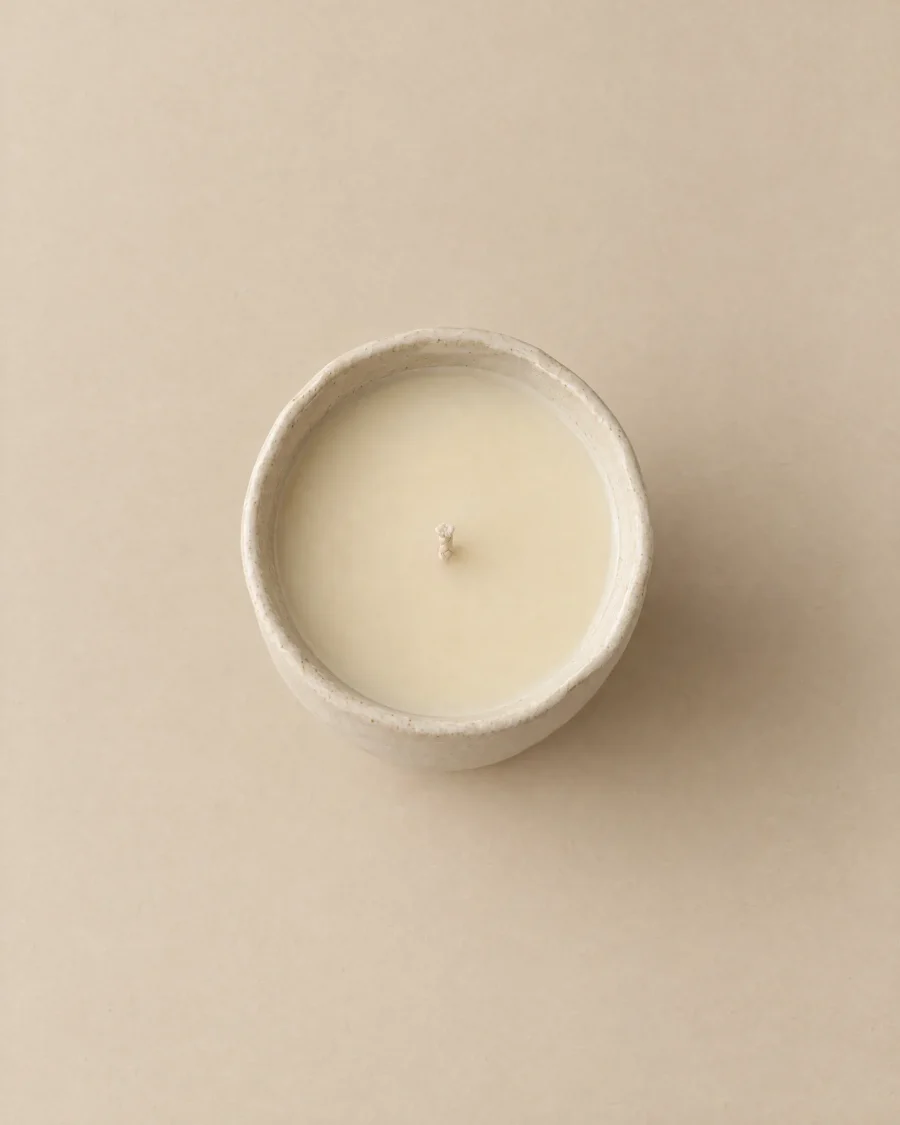
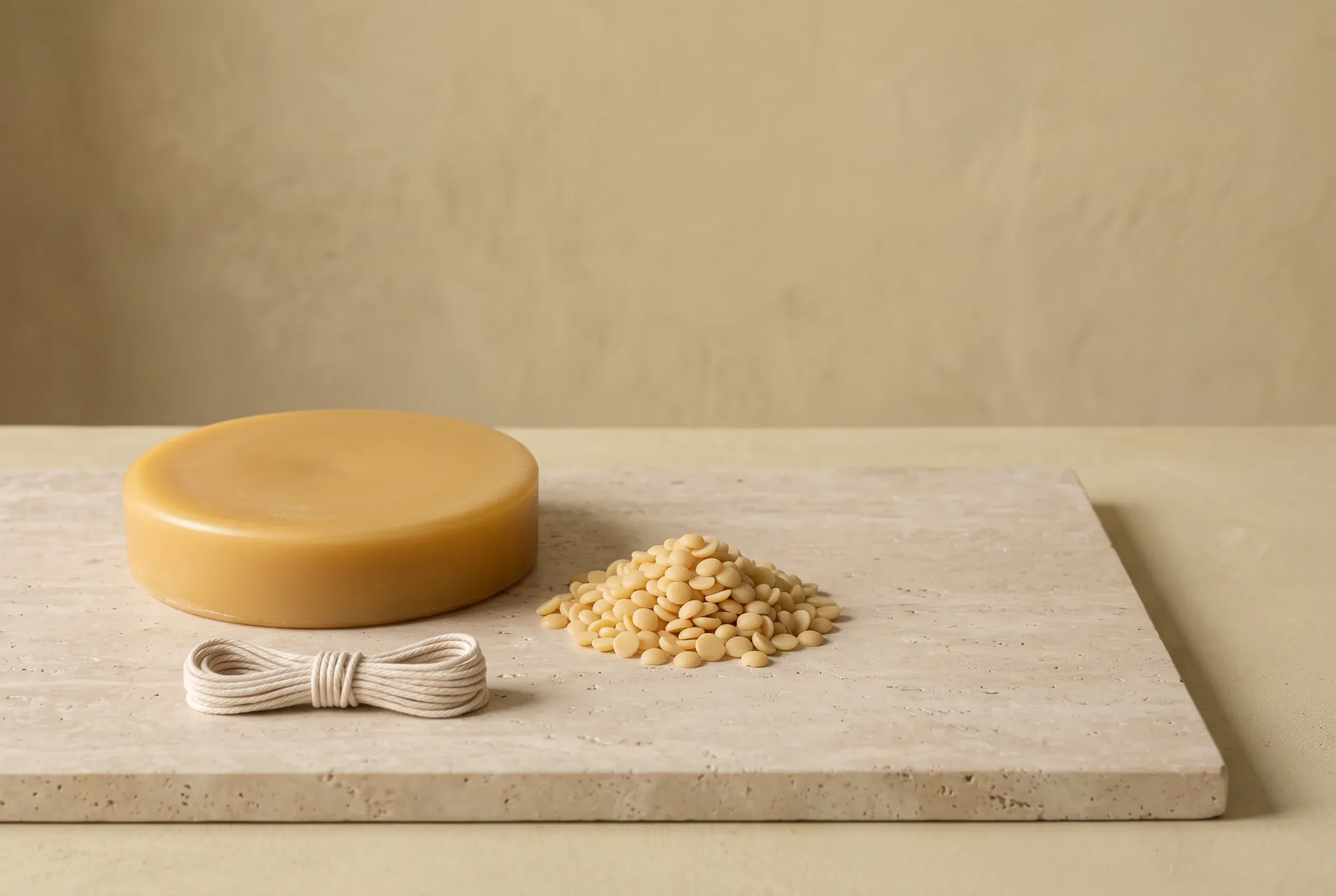
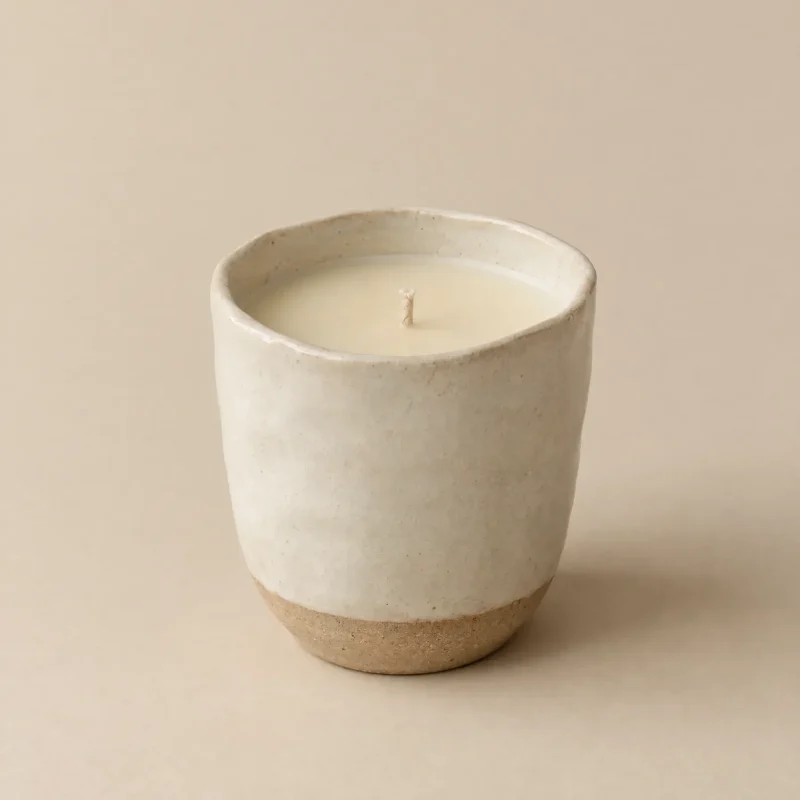
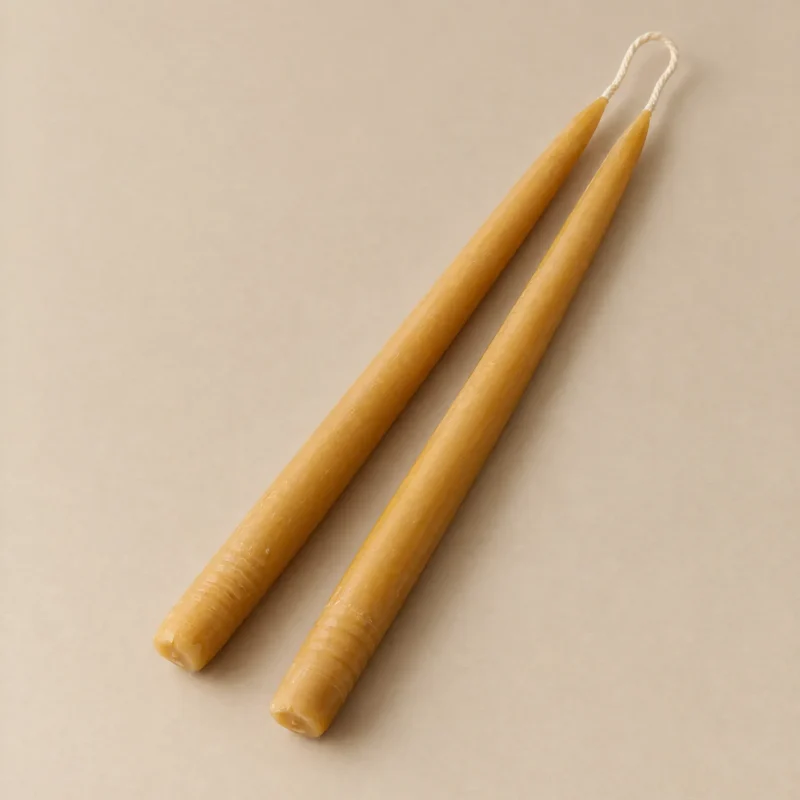
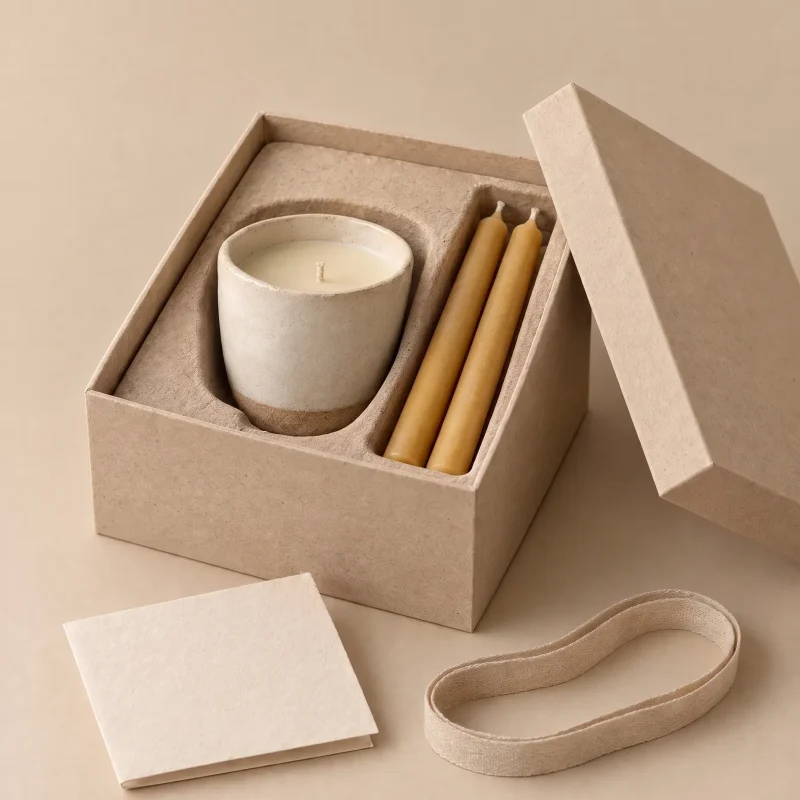
All our candles are 100 % European beeswax and a cotton wick. No paraffin, no soy or other blends, no dyes and no synthetic fragrance. The wax is filtered from the honeycomb and never bleached, so it keeps the colour of its season. Our pillars and tapers are unscented; our three stoneware vessels add organic essential oils. Every candle is poured or dipped by hand in our atelier, then left to cure for at least three weeks before it is packed.
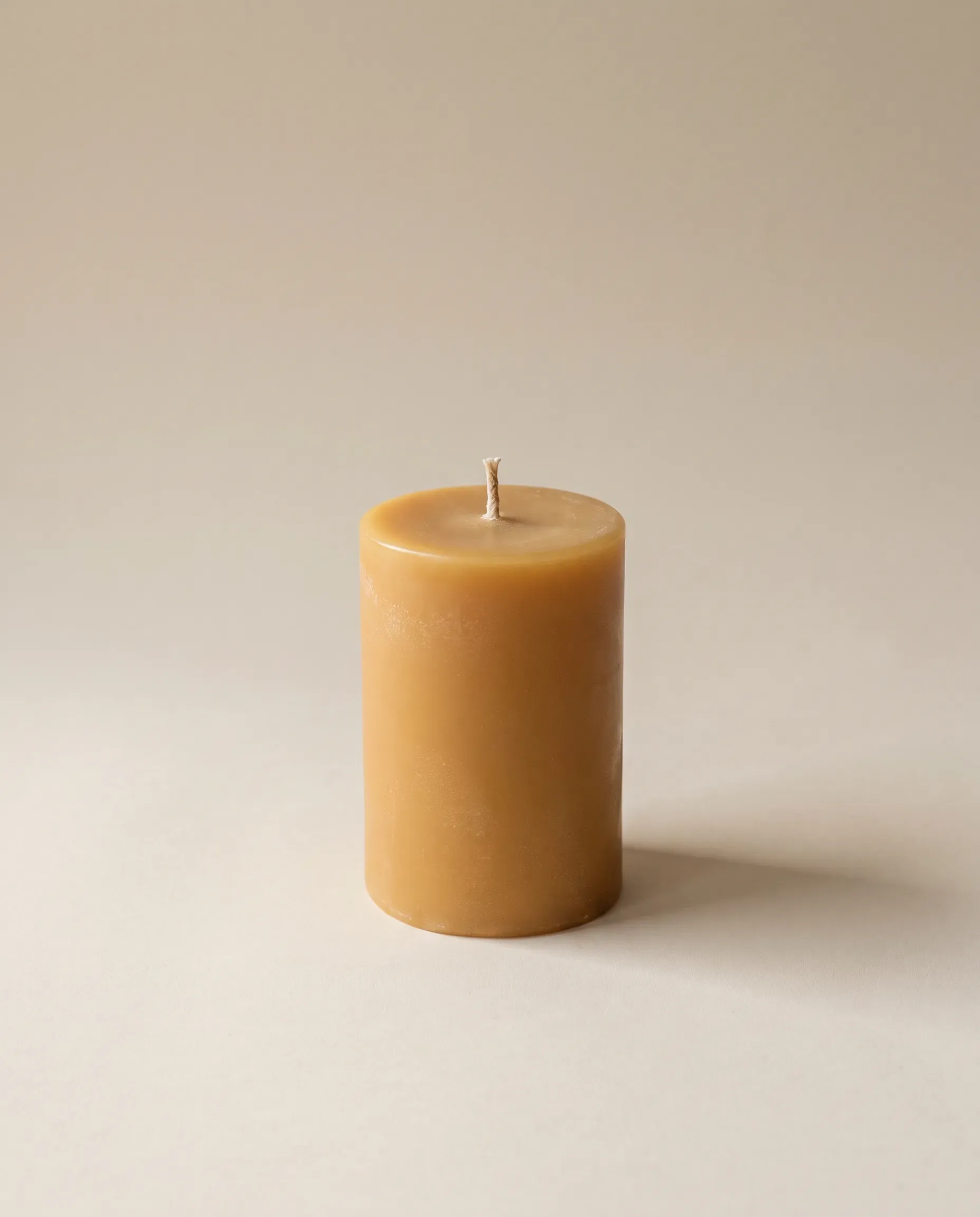
The colour
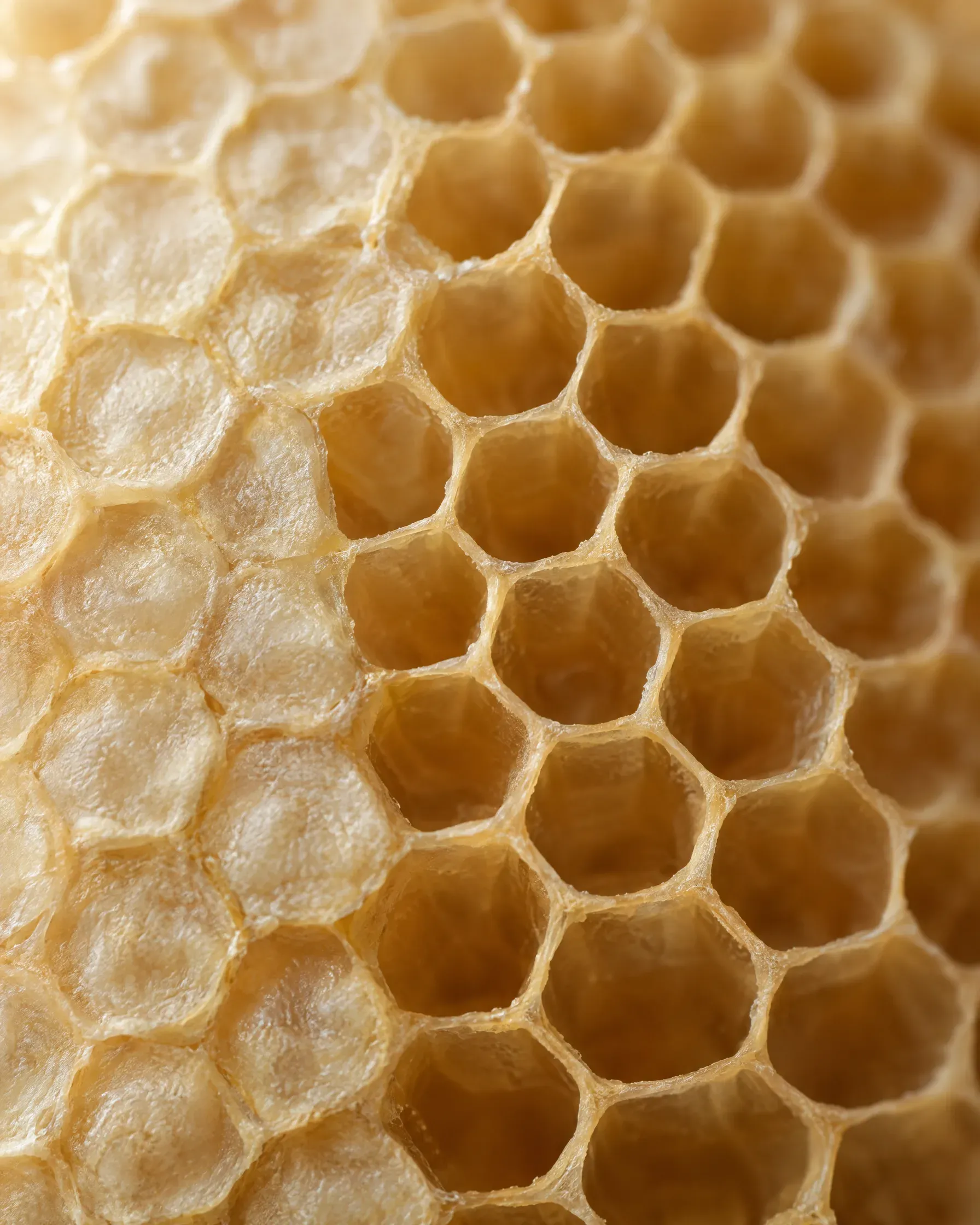
Paraffin is bleached white; pure beeswax keeps the gold the bees made. Ours is filtered and that is all, so each batch carries the shade of its season.
The candles
Questions
Paraffin wax is a by-product of petroleum refining: the solid, waxy fraction separated when crude oil is processed into fuels and lubricants. It is then refined and usually bleached. It is the most common candle wax because it is inexpensive, holds colour and fragrance well and can be moulded into any shape.
Read the wax line. Only a single named wax at 100 % rules paraffin out. Phrases like "natural wax", "soy blend", "made with soy" or "coconut wax" without a percentage may include it. Pure beeswax also tends to bloom with a soft white film over time, which paraffin and blends do not. When in doubt, ask the maker directly.
Not necessarily. "Soy blend" means soy plus something else, and that something is often paraffin. Some blends use other plant waxes instead, but the label rarely says. If you want to avoid paraffin, look for "100 % soy wax" or "100 % beeswax", or ask the maker for the full blend.
Because it is convenient and inexpensive. Paraffin takes dye and fragrance easily, gives a strong scent throw and can be poured into any mould at a low cost. Those qualities suit mass-produced scented candles. Beeswax and pure plant waxes cost more and behave less uniformly, so they are used by makers who choose them on purpose.
A paraffin-free candle avoids petroleum wax, and pure beeswax burns with very little soot. But any flame releases some particles, and wick length, draughts and fragrance load affect emissions as much as the wax does. Trim the wick to about 5 mm, keep the candle out of draughts and air the room after burning.
Yes. Every Beezu candle is 100 % European beeswax with a cotton wick. We use no paraffin, no soy or other blends, no dyes and no synthetic fragrance. Our scented vessels add only organic essential oils. You can read more on Our beeswax.
More guides
Every Beezu candle is 100% European beeswax and a cotton wick. Free shipping over 80 €, 30-day returns.