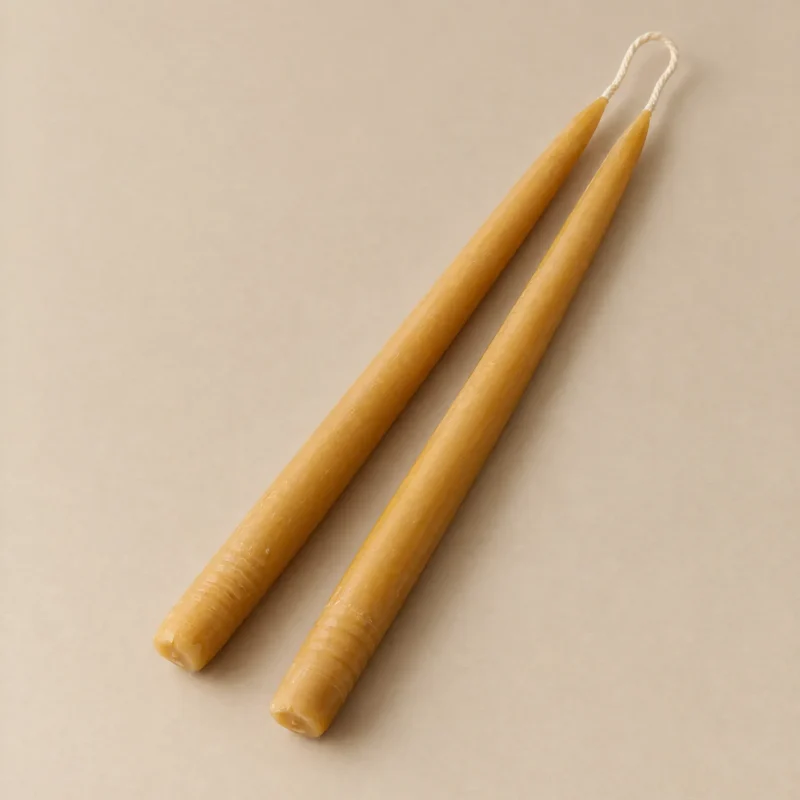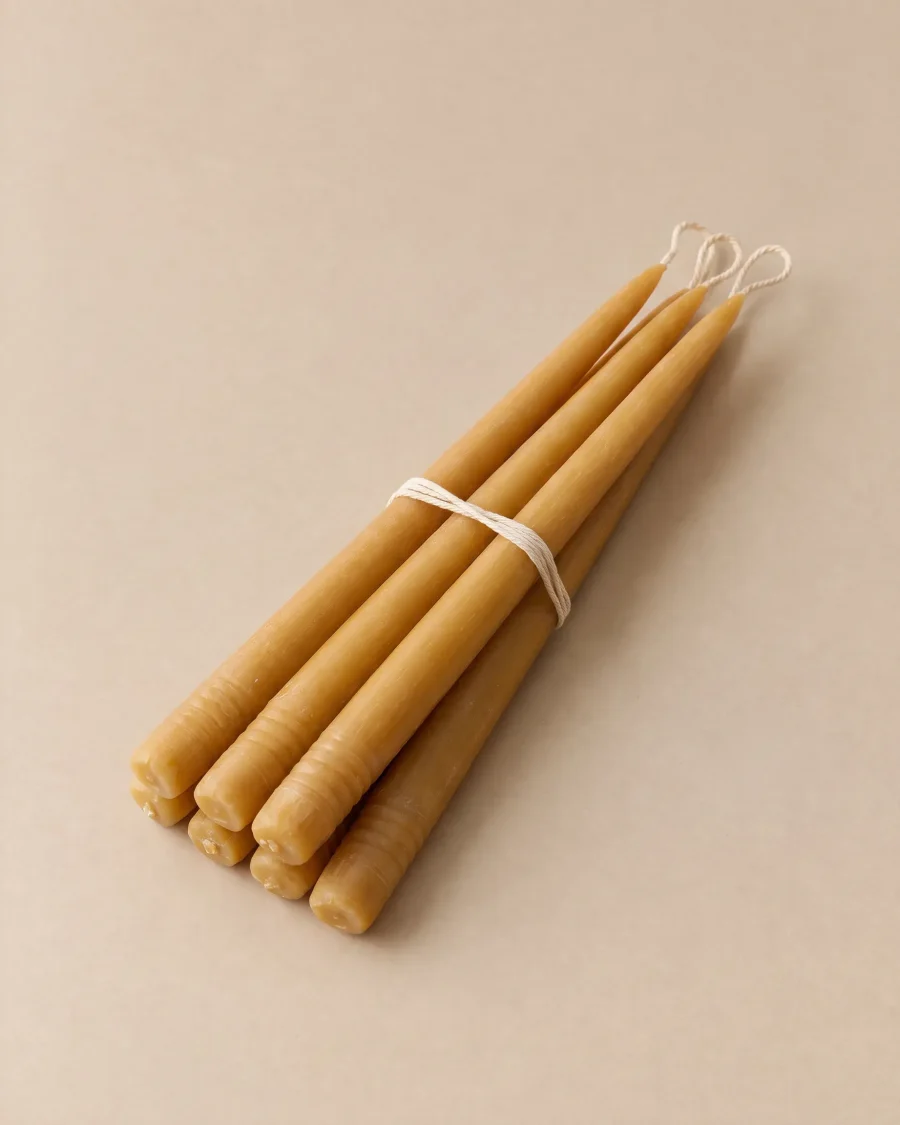
Pure tapers, six
58,00 €
Three pairs, 25 cm
Guide
Natural is an unregulated word on a candle label. What it can mean, how to tell a truly natural candle from a soft claim, and why pure beeswax is as close as it gets.
Read the guide
A natural candle is one made from materials found in nature with as little processing as possible: a wax that has not been chemically altered, a plain cotton wick, and no synthetic fragrance or dye. The word “natural” is not regulated for candles, though, so it can mean anything from pure beeswax to a paraffin blend with a drop of essential oil. The ingredient list, not the word, tells you which.
Unlike food labels, candle labels have no legal definition of natural. A brand can use the word for the wax, for the fragrance, for the look of the box or simply for the mood it wants to set. None of these is necessarily dishonest, but none of them tells you what is in the candle either.
That is why a natural candle is judged by asking three things: where does the wax come from, how much has it been changed on the way, and what has been added to it? The same is true of its stricter-sounding cousin: our guide to organic candles explains what that word can and cannot mean on a candle.
Worker bees make beeswax from tiny flakes they secrete, and shape it into comb to store honey and raise their young. When the honey is harvested, the beekeeper slices the thin wax caps from the comb. That capping wax is melted gently and passed through fine cloth until only clear golden wax is left. It needs no hydrogenation, no hardener and no additive to become a candle.
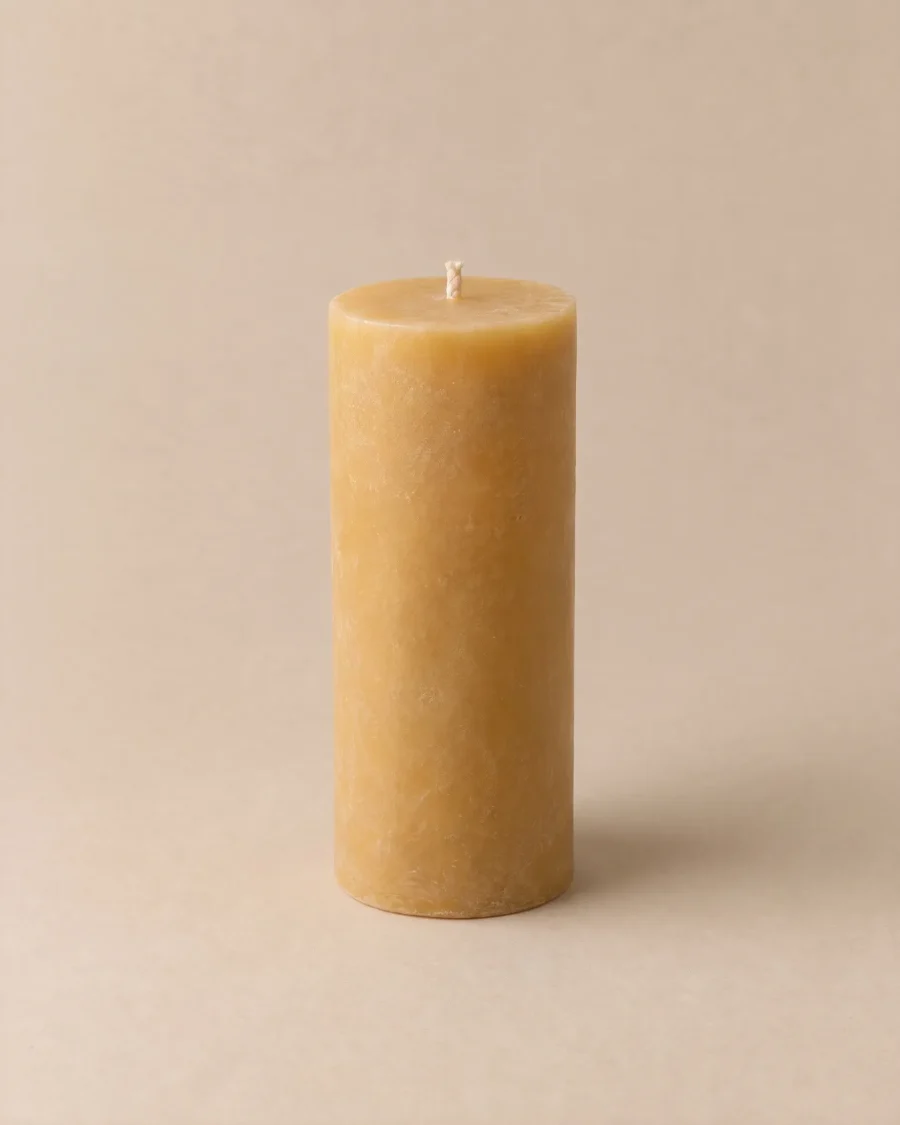
Because nothing is taken out, it keeps the character of the hive. Its colour changes with the flowers the bees visited: spring blossom gives a pale, almost lemon wax, late summer and heather a deep amber. Lit, it smells faintly of honey, which is why our unscented candles are never quite scentless. Our journal explains why beeswax smells of honey, and Our beeswax follows it from the apiary to the atelier.
One honest note: natural does not mean that a candle has no effect on the air. Any flame, natural or not, releases some particles. A natural candle simply leaves out the ingredients that were never needed.
A natural material behaves less uniformly than an industrial one, so it asks for more care from the maker. That care is part of what you are buying.
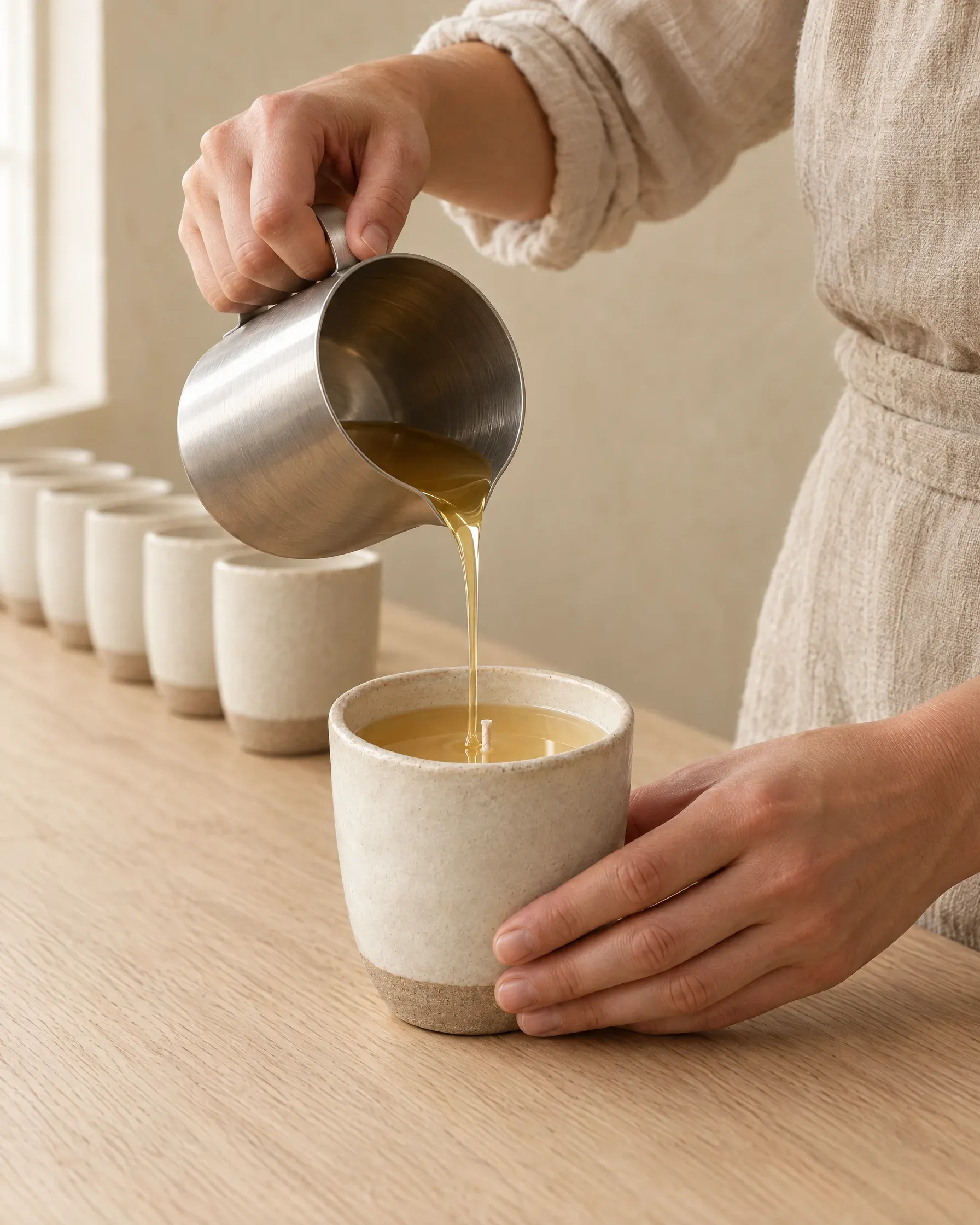
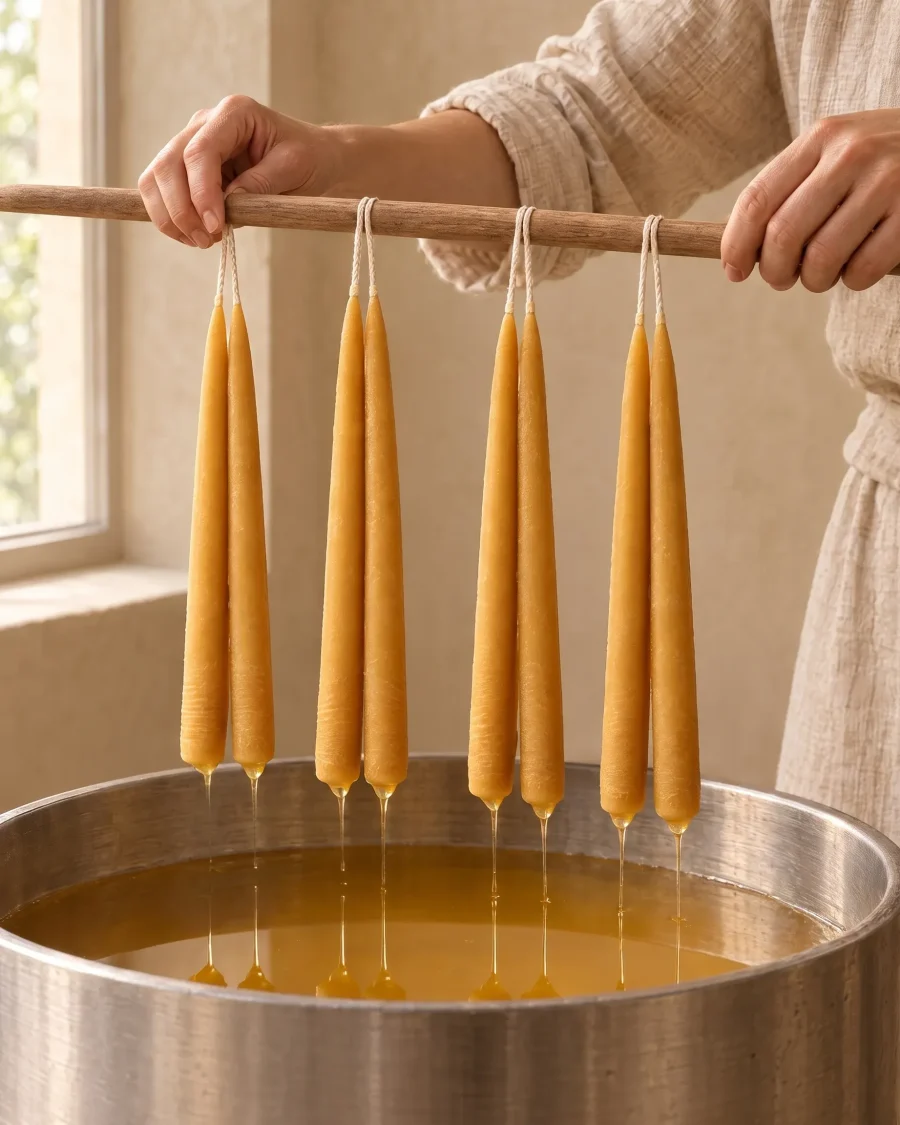
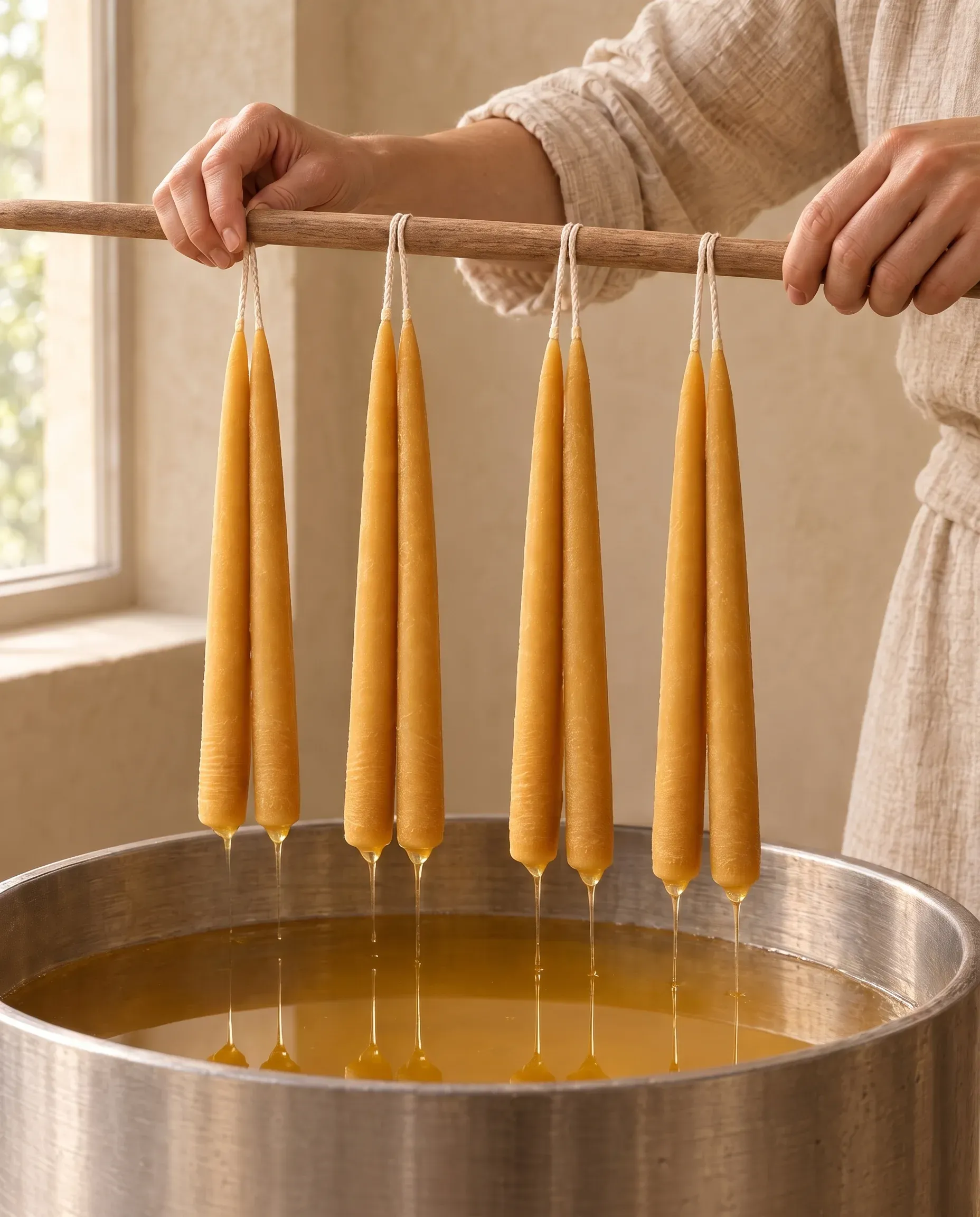
Our vessels and pillars are poured by hand. Our tapers are dipped, the way candles were made for centuries: a length of cotton wick lowered into warm beeswax, lifted out, left to set and lowered again, about thirty times. A pair of tapers takes a full morning. You can watch the process in Dipping tapers by hand.
We pour in batches small enough to check every wick, and to look at every candle before it leaves. No machines pour our candles and no line moves them along. The same few people take each batch from block to box.
Every candle rests on our shelves for at least three weeks before it is packed. As it cures, the wax becomes harder and more even, which is what makes the burn slow and steady. One candle from each batch is burned on a test shelf while the rest wait, so we know how a batch burns before it reaches you.
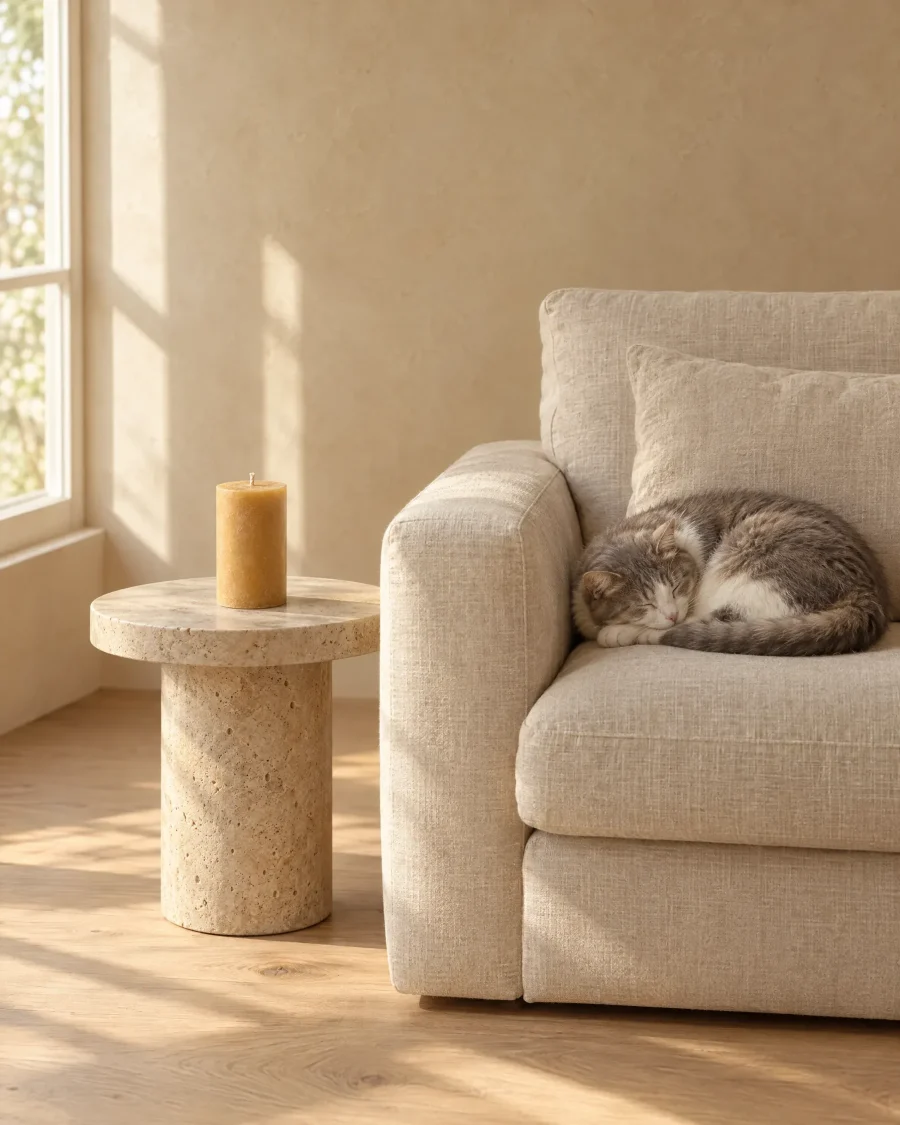
If you want a scented natural candle, look for essential oils named on the label and used in a light measure. They are natural, but still concentrated, and some are not recommended around cats and dogs in closed rooms. In a home with pets, the unscented candles are the gentler choice; our guide to unscented candles covers when and where to use them.
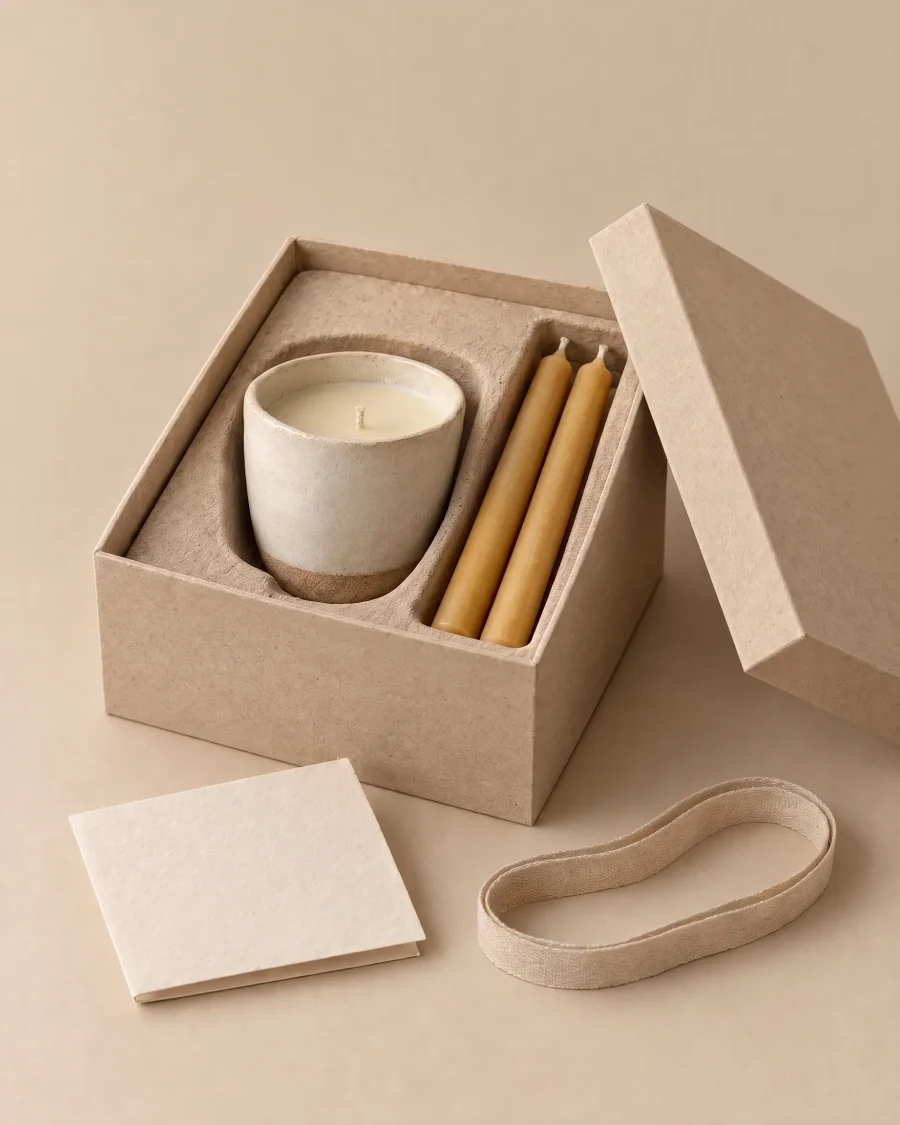
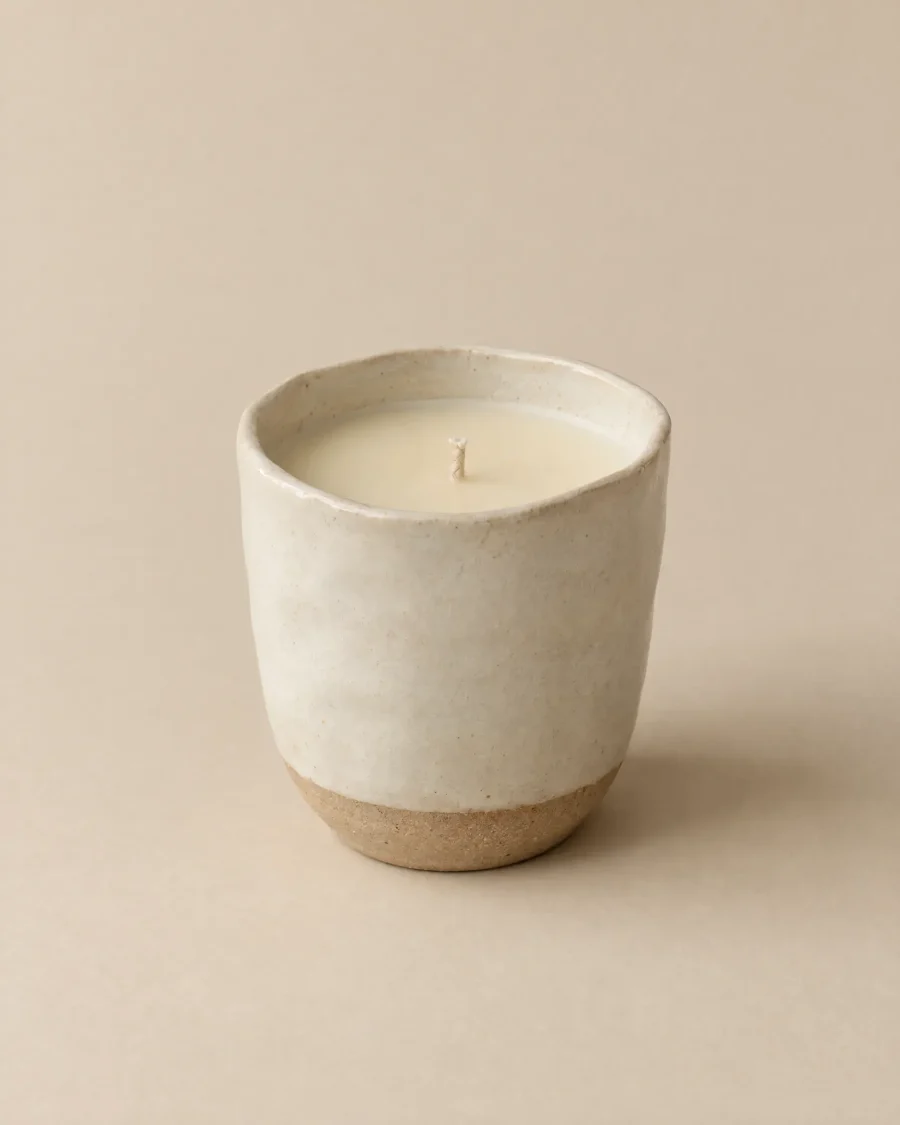
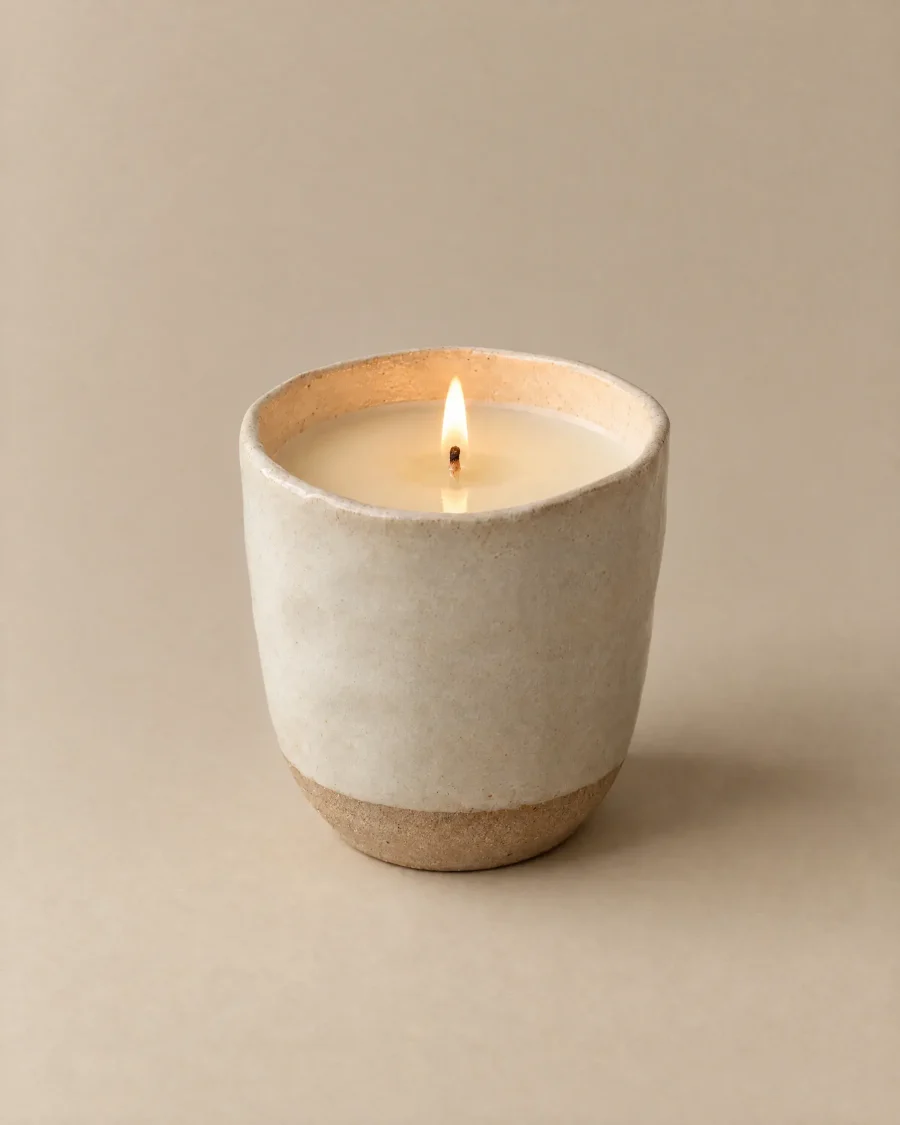
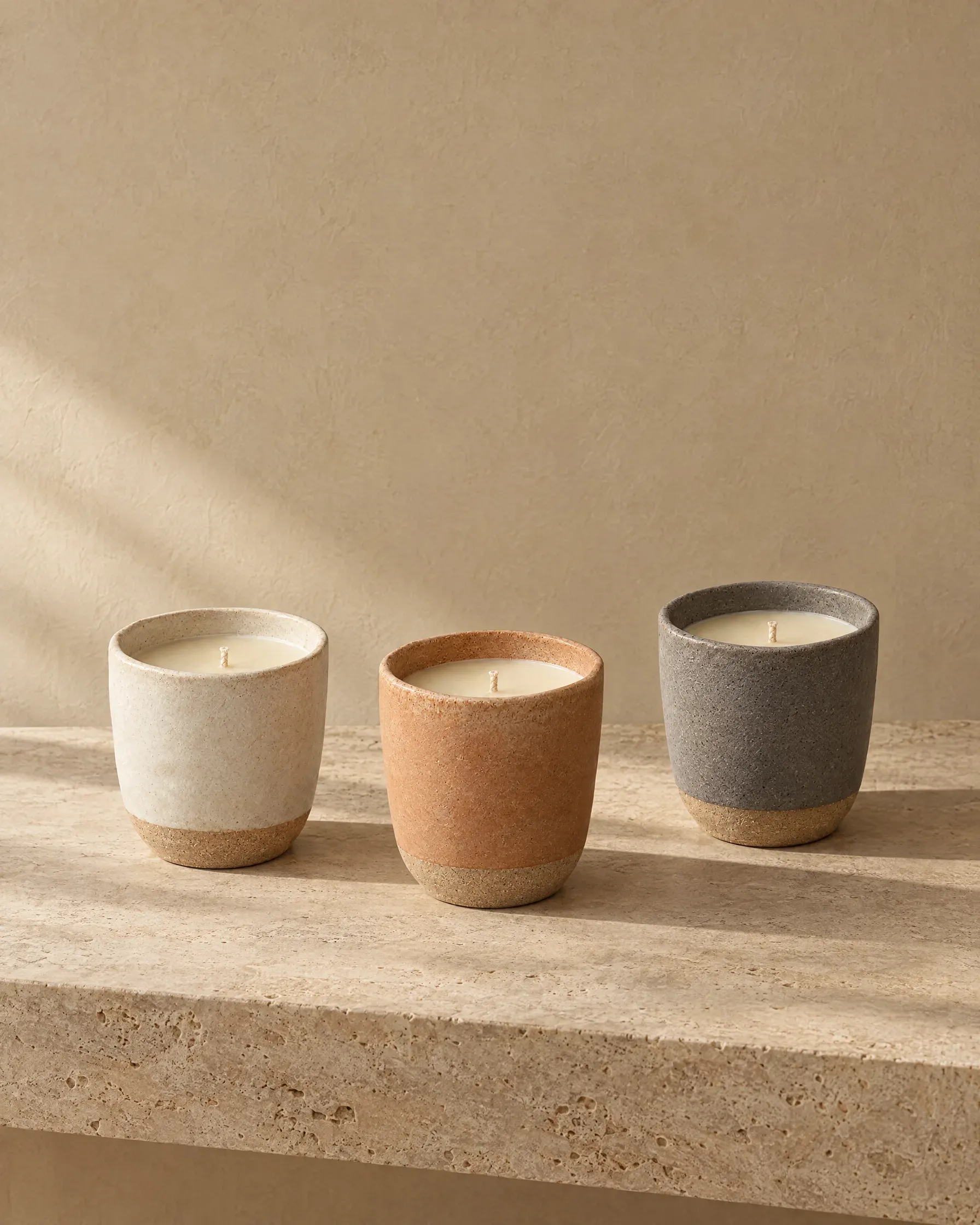
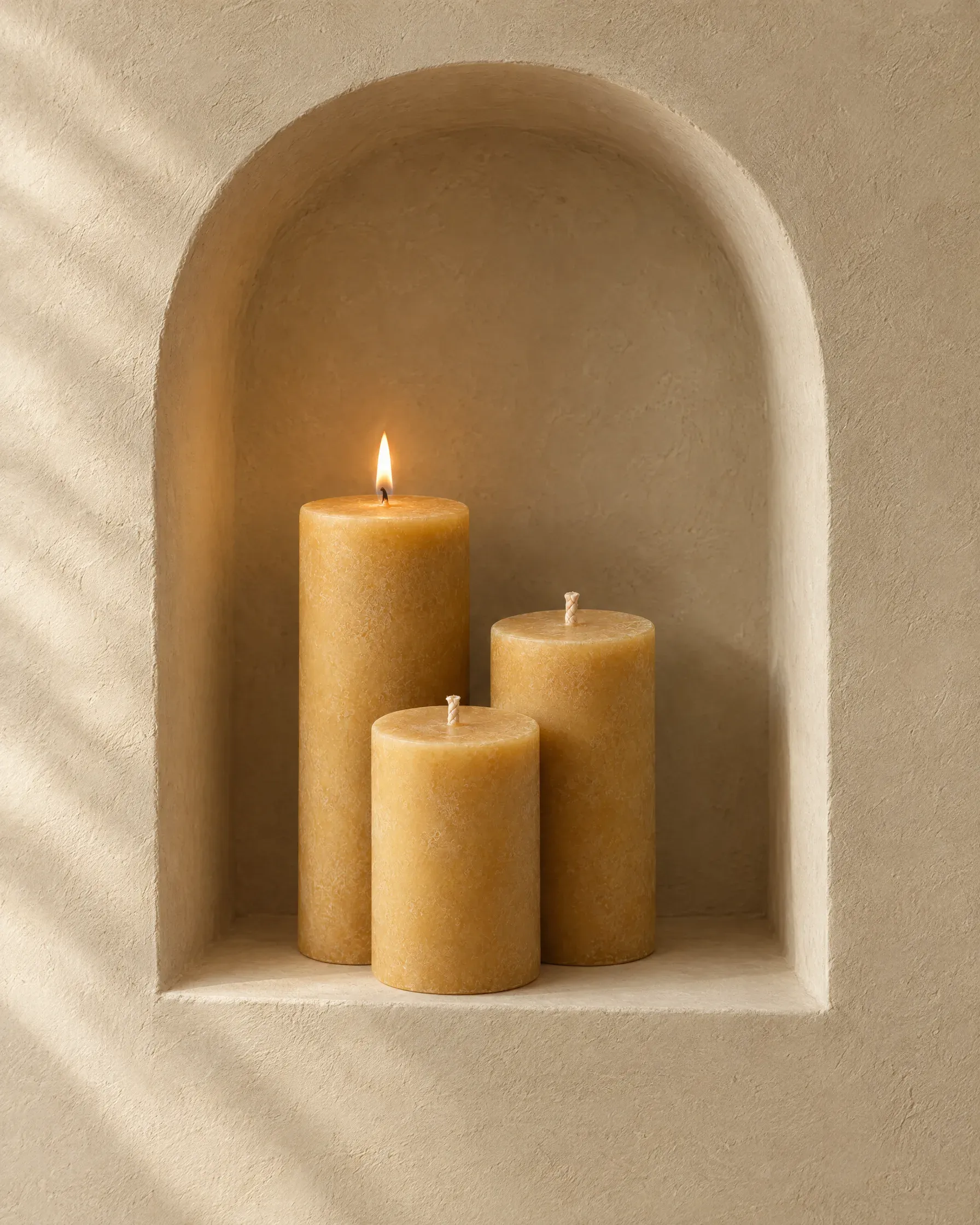
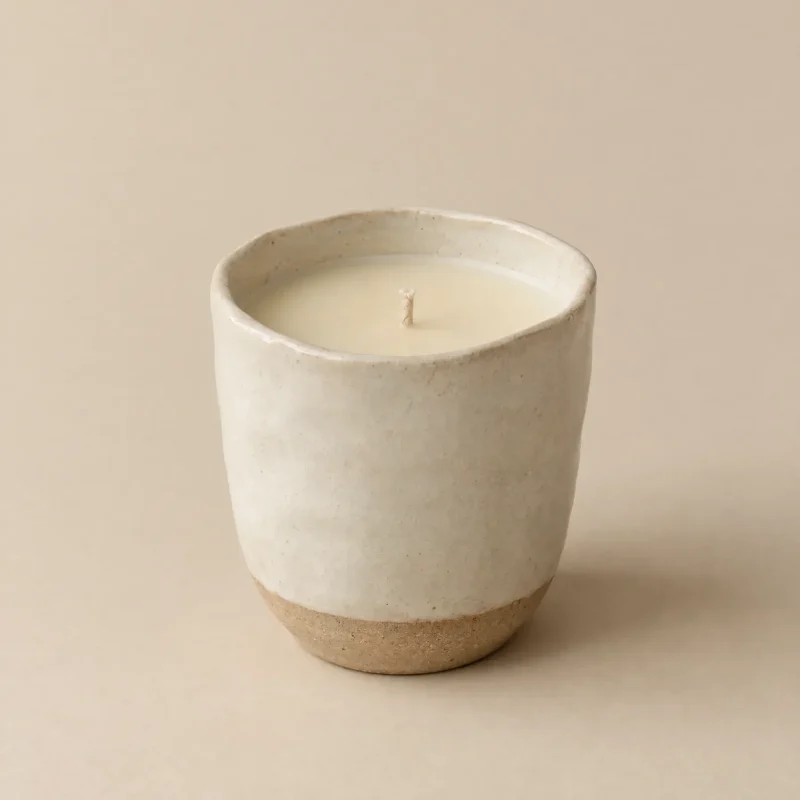
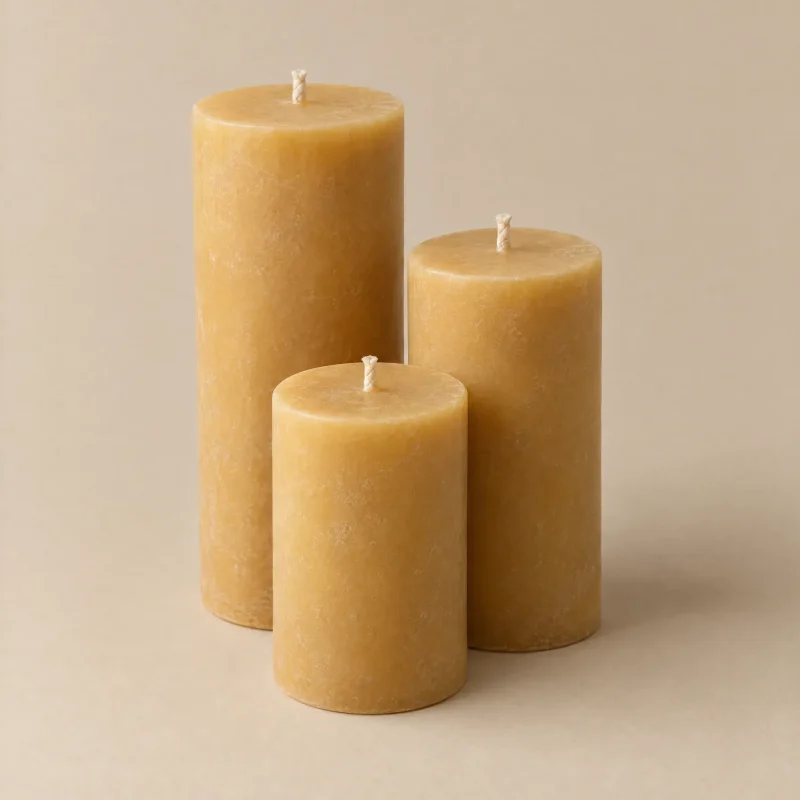
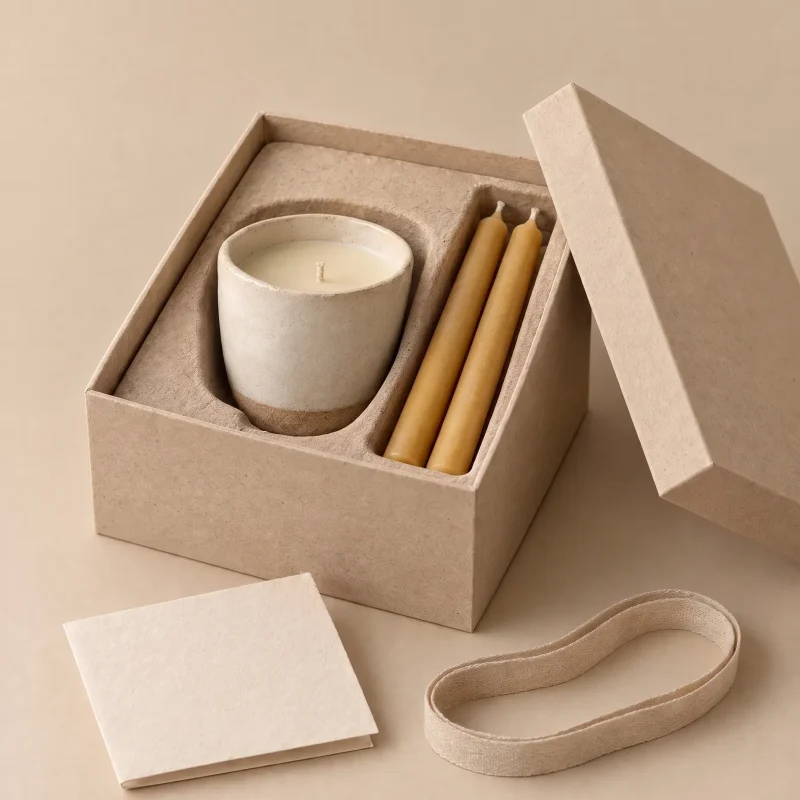
Every Beezu candle is 100 % European beeswax and a cotton wick, from small European apiaries, filtered and never bleached or dyed. There is no paraffin, no soy or other blends and no synthetic fragrance. Choose unscented pillars or hand-dipped tapers that smell only of honeycomb, or one of three stoneware vessels scented with organic essential oils. As with any candle, trim the wick before lighting and never leave a flame unattended.
The craft
Each dip adds a layer thinner than paper. Between dips the wax must set, so a set of tapers takes the whole morning. Nobody hurries it.
The candles
Questions
A truly natural candle is made of a wax found in nature, a plain cotton wick and, if it is scented, natural oils rather than synthetic fragrance. Pure, unbleached beeswax is the closest to its natural state. Plant waxes such as soy are plant-based but hydrogenated. Because "natural" is not regulated for candles, always check the ingredient list.
Soy wax comes from a natural source, soybean oil, but it is processed: the oil is hydrogenated to make it solid, and it is often blended with other waxes or additives. A 100 % soy candle is plant-based and free of petroleum. It is less close to nature than pure beeswax, which needs only melting and filtering.
The colour of beeswax comes from the flowers the bees visited, so it changes with the season and the apiary. Spring blossom gives a pale, almost lemon wax; late summer and heather a deep amber. We do not bleach or dye our wax, so no two batches are exactly alike.
That is bloom, a natural sign of pure beeswax. Over time, natural oils in the wax rise to the surface and form a soft white haze, especially in cool rooms. It is harmless, does not change the burn and wipes away with a soft cloth. Paraffin and blends do not bloom. See Candle care.
The essential oils are natural, but the candle is only as natural as its wax. Essential oils in a paraffin candle still make a paraffin candle. Look for named essential oils in a 100 % natural wax, used in a light measure. Some essential oils are not recommended around pets, so choose unscented candles for rooms where animals spend their time.
In our small atelier in Europe. Every Beezu candle is melted, poured or dipped, cured and packed by hand, in batches small enough to check every wick. Our wax comes from small European apiaries. You can read about a working day in Poured slowly: a day in the atelier.
More guides
Pure, unbleached European beeswax, poured and dipped by hand in small batches. Free shipping over 80 €.