Guide
In the EU, organic is a protected word for agricultural ingredients, not for candles as a whole. What an organic candle claim can honestly mean, and what to look for instead.
Read the guide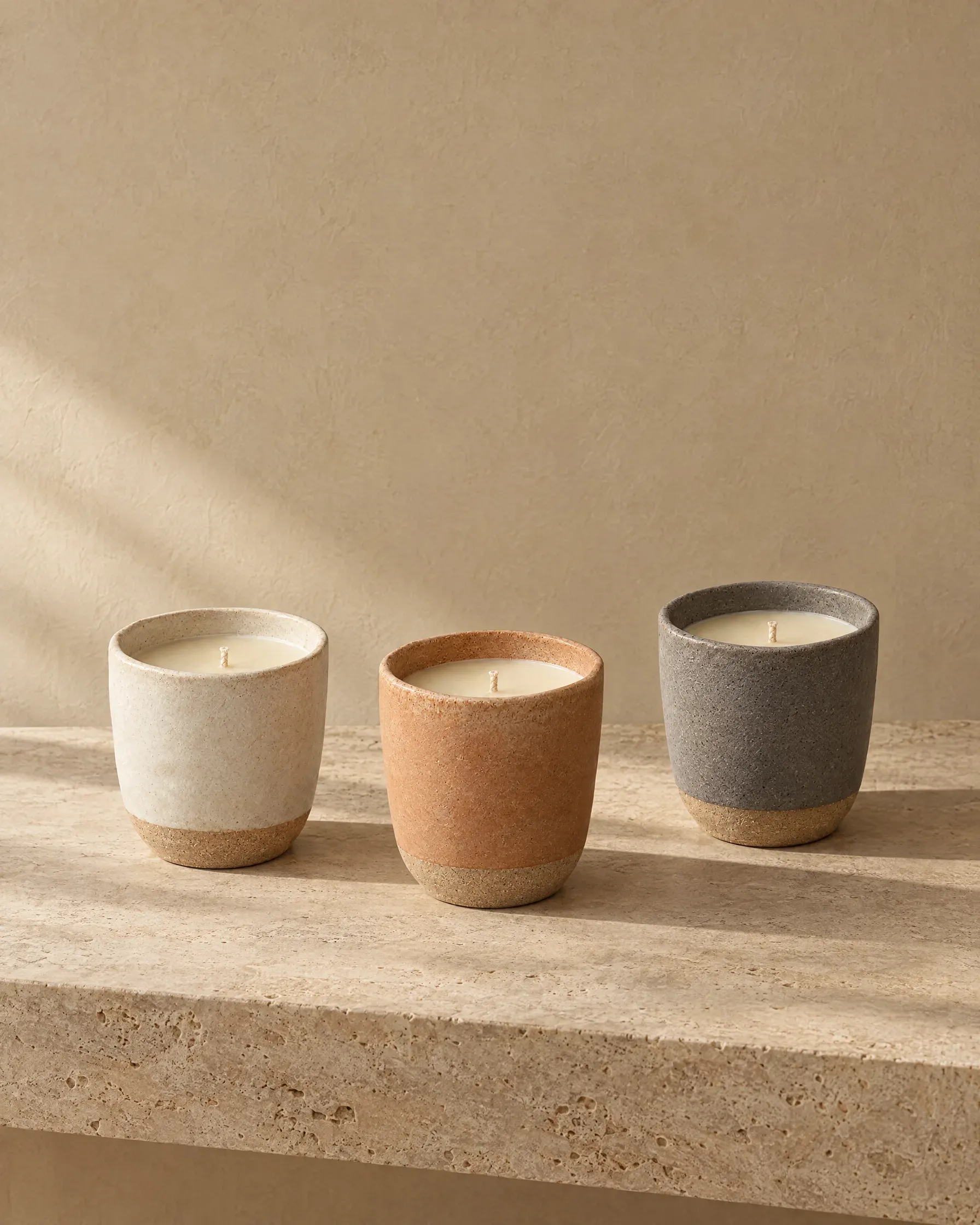
In the EU, “organic” is a protected term for agricultural products and ingredients produced and certified under EU organic rules. There is no single standard for an “organic candle” as a finished object, so a candle described as organic usually means that one ingredient, often the essential oils or a plant wax, is certified. Certified organic beeswax exists, but it is rare.
Organic farming in the EU is governed by a common set of rules. Farms and processors are inspected by approved control bodies, and certified products can carry the EU organic logo, the leaf of stars, together with the code of the control body that checked them. Those rules are written for agriculture: crops, livestock, and the ingredients that come from them.
A candle is not an agricultural product. It is an object made from several materials, some of which may come from farms and some of which do not. So the useful question is never “is this candle organic?” but “which ingredient is organic, and who certified it?”
Organic essential oils are widely available and genuinely certifiable. That is why many “organic candles” turn out to be candles with organic oils in them. That is a fair claim if it is stated as such. It becomes misleading when the oil is organic and the wax is paraffin.
Some brands use “organic” to mean natural, handmade or simply pleasant. In the EU, describing a product as organic when it is not certified is not allowed for agricultural products, and misleading claims are not allowed at all. If a candle says organic without saying which ingredient, or without a control body code, treat it as a loose claim.
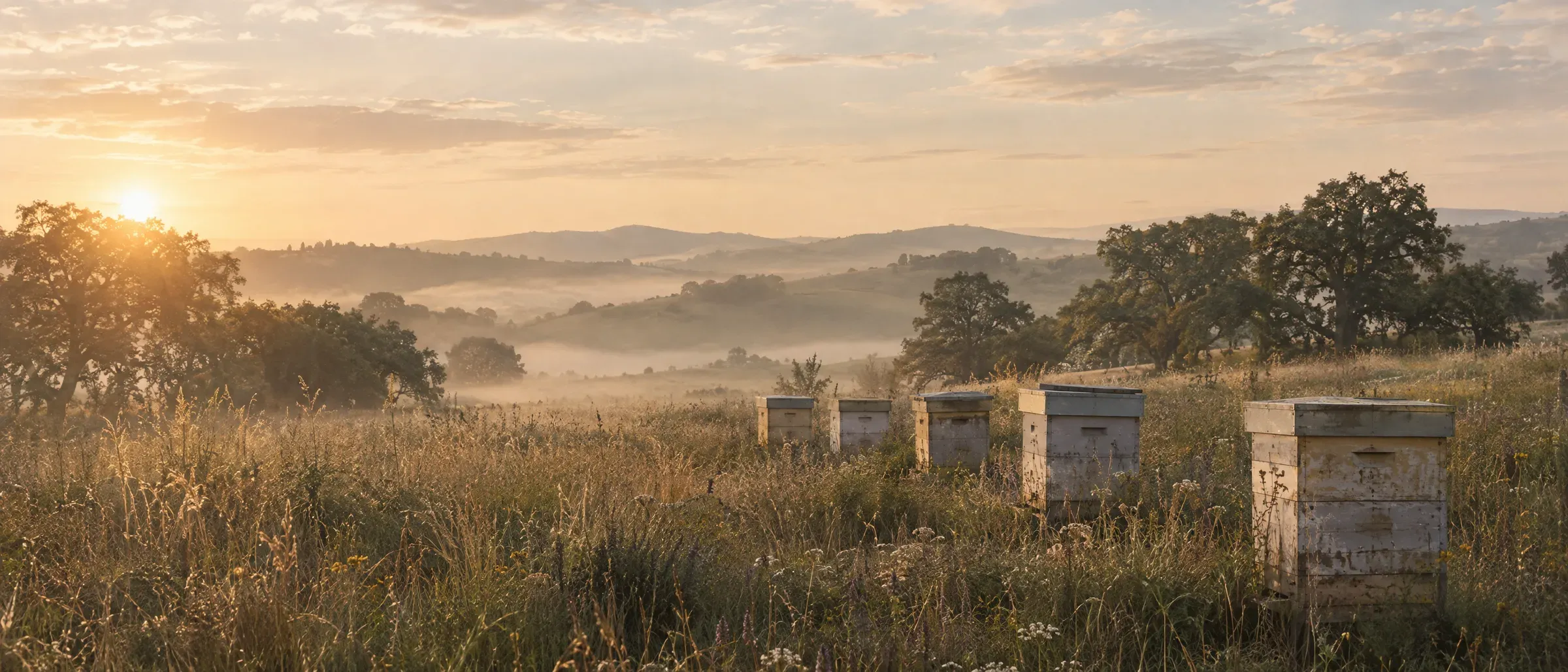
Bees forage freely, often several kilometres from the hive, and a beekeeper cannot control which flowers they visit. Organic beekeeping rules therefore ask that the land within the bees’ range be mainly organic crops or wild flora, away from sources of contamination, and they set rules for how the hives are kept and treated and for the wax used in them. In much of Europe’s farmed countryside, those conditions are hard to guarantee. Certified organic beeswax exists, but in small quantities, and very few candles are made from it.
That does not make other beeswax poor. It means the organic label is the wrong tool for judging it. The questions that tell you more are where the wax comes from, whether it is pure, and what has been done to it.
Often, what people searching for organic candles want is a candle with fewer and simpler ingredients. Our guides to natural candles and non-toxic candles look at that question directly.
We would rather be precise than impressive, so here it is plainly.
You can follow the wax from hive to atelier on Our beeswax, or read about a morning at the hive.
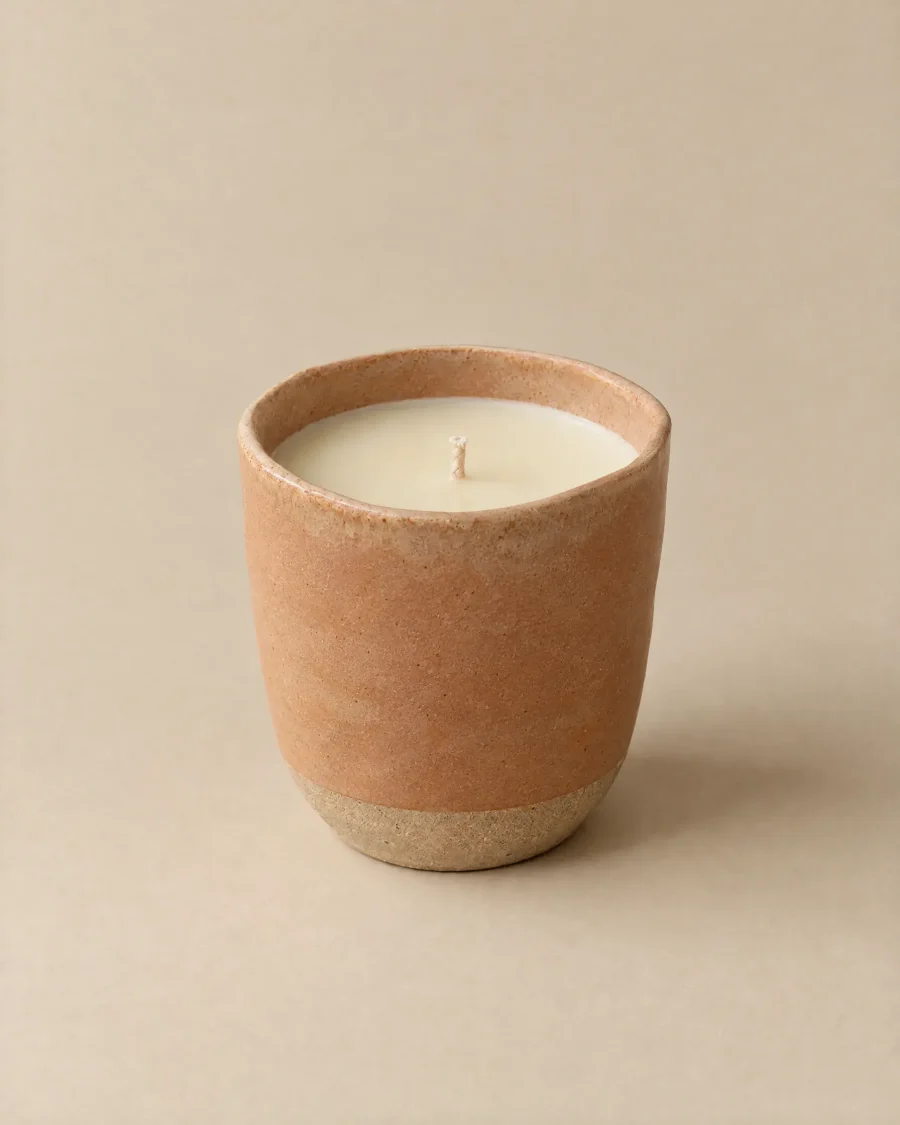
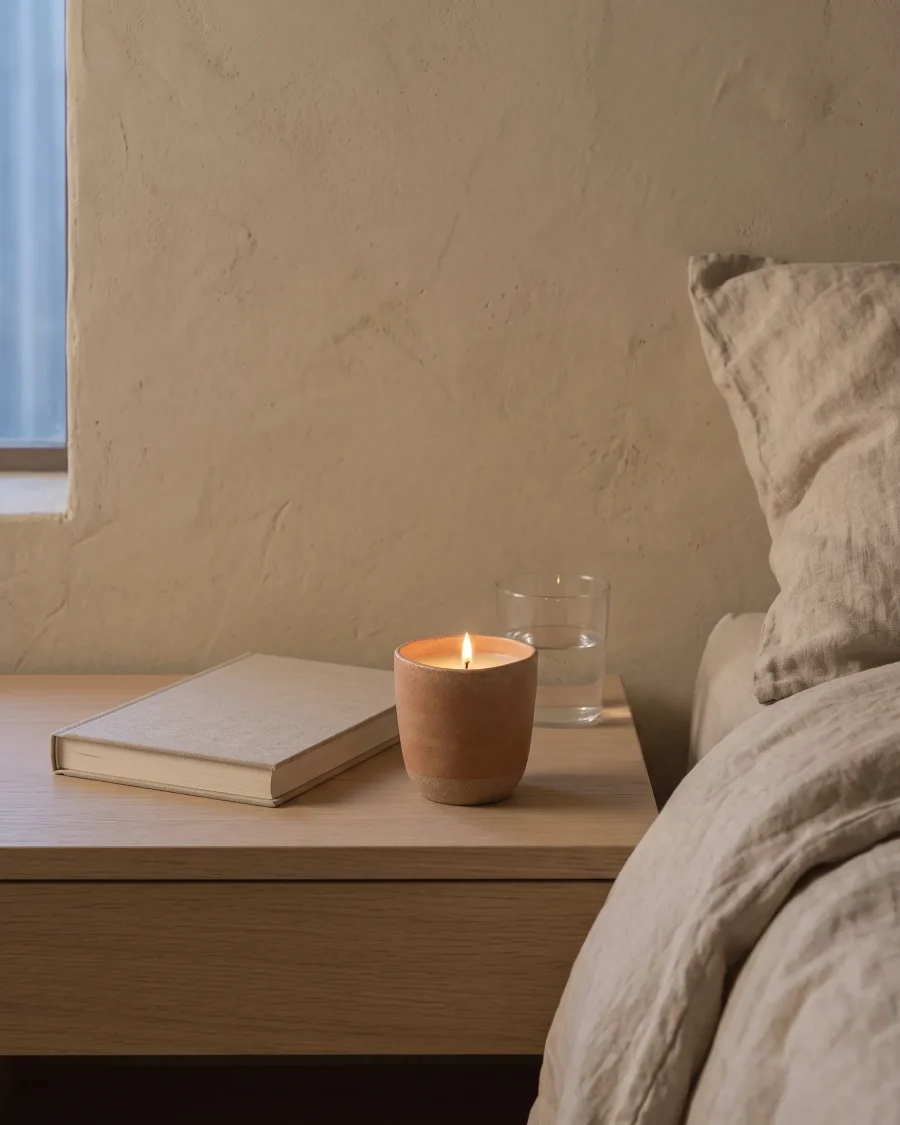
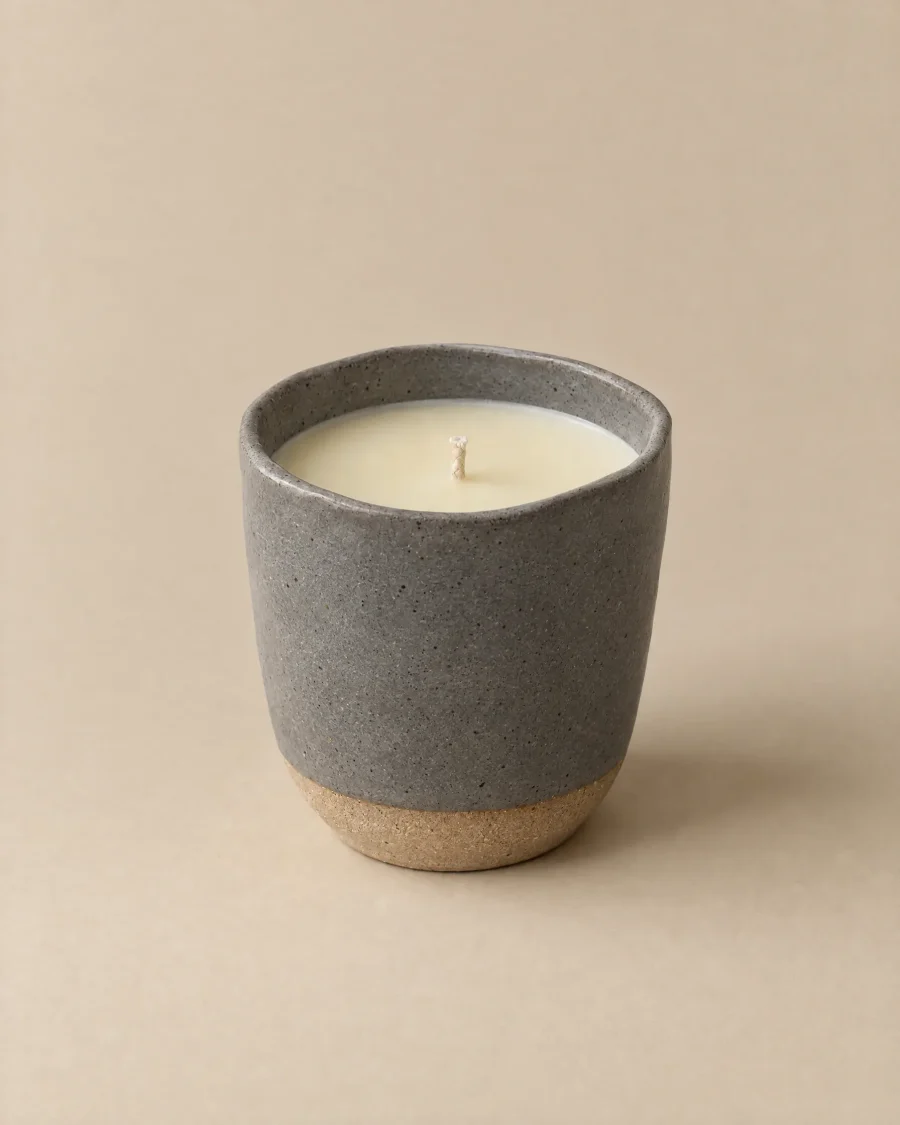
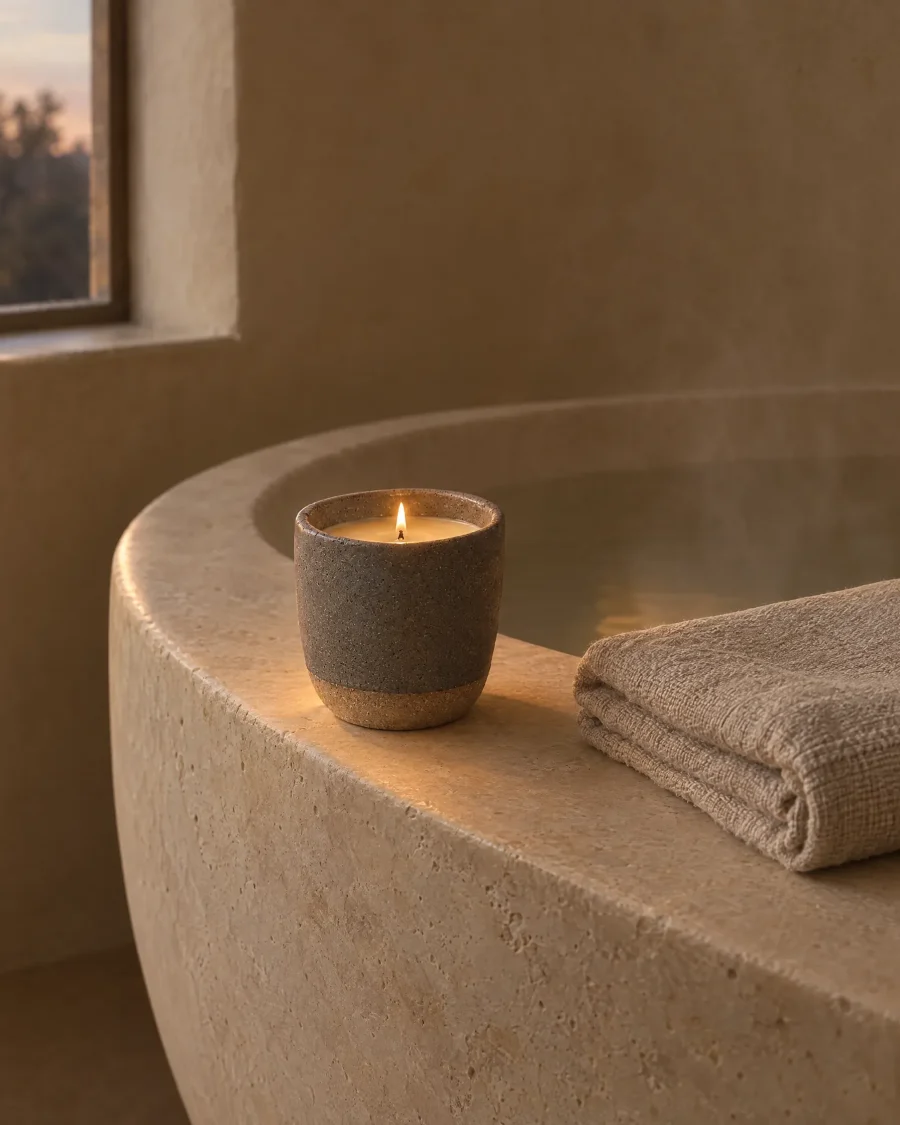
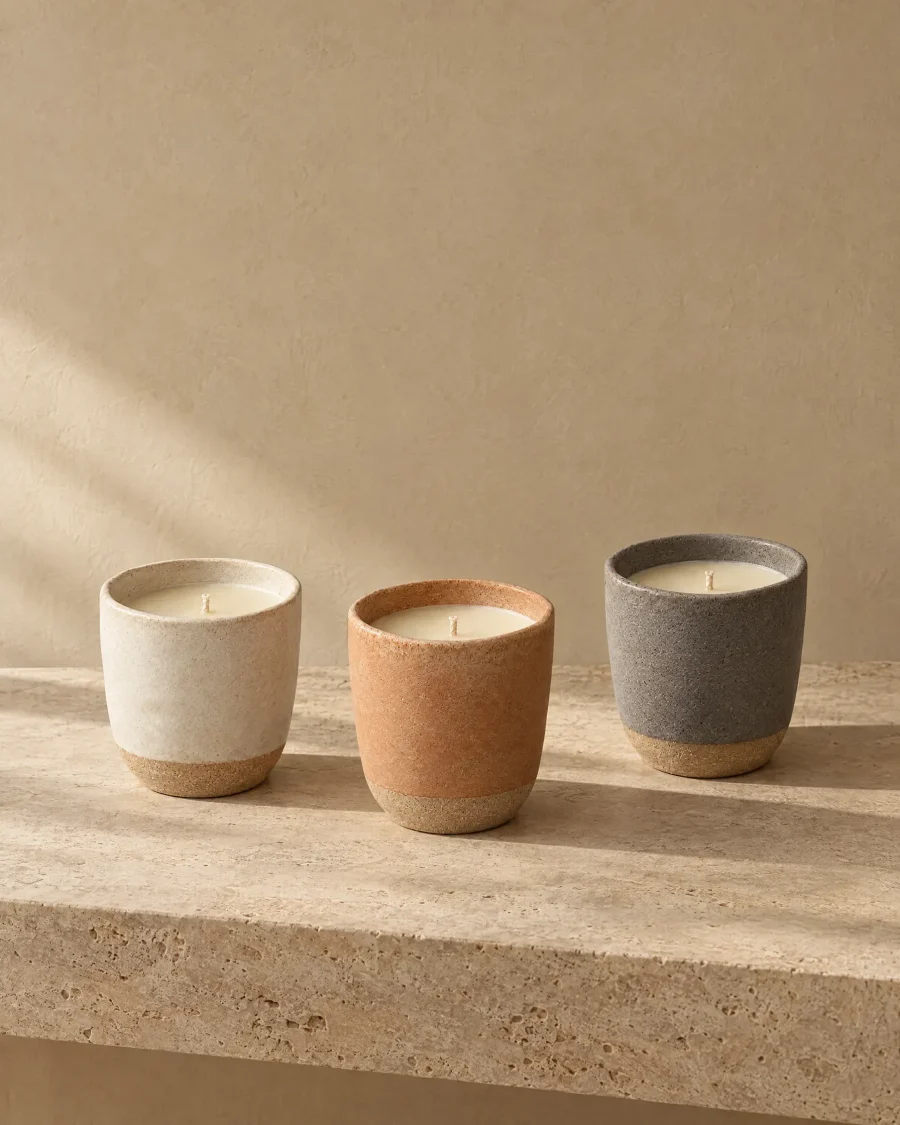
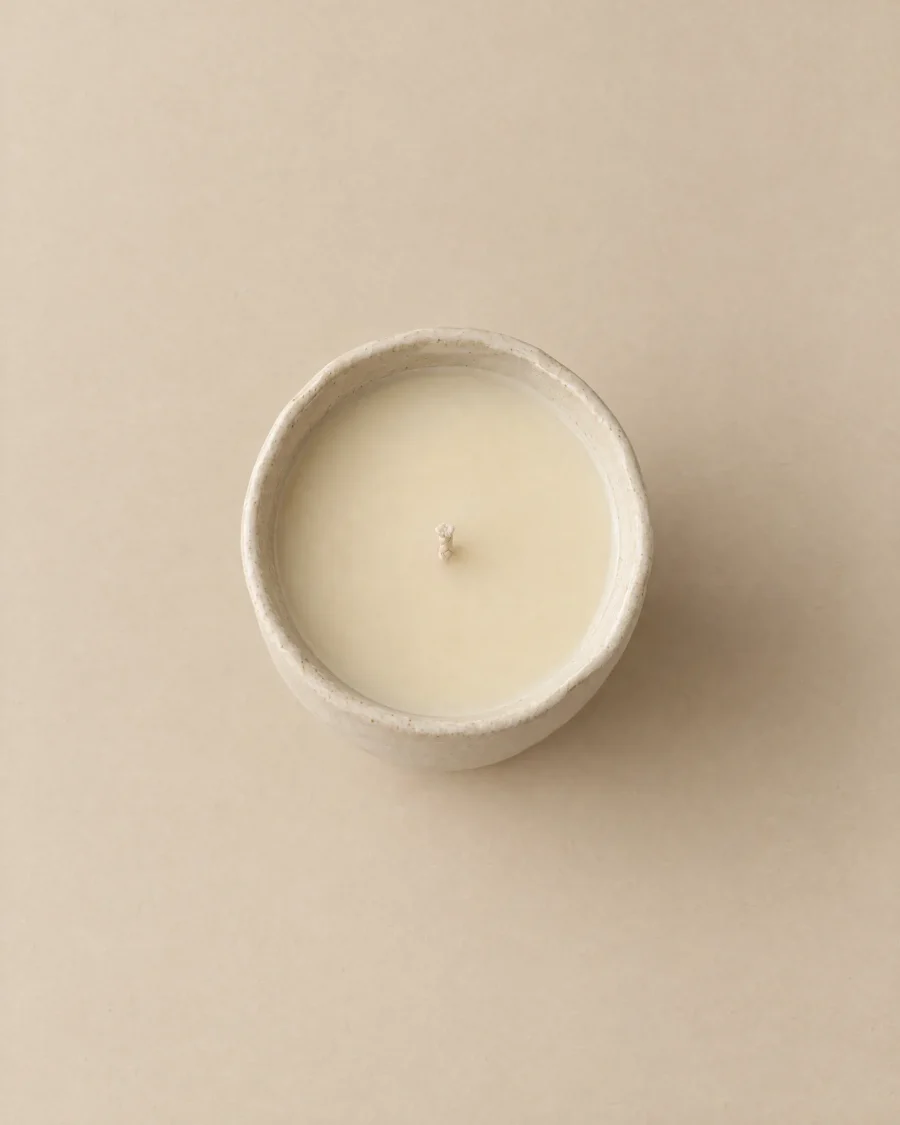
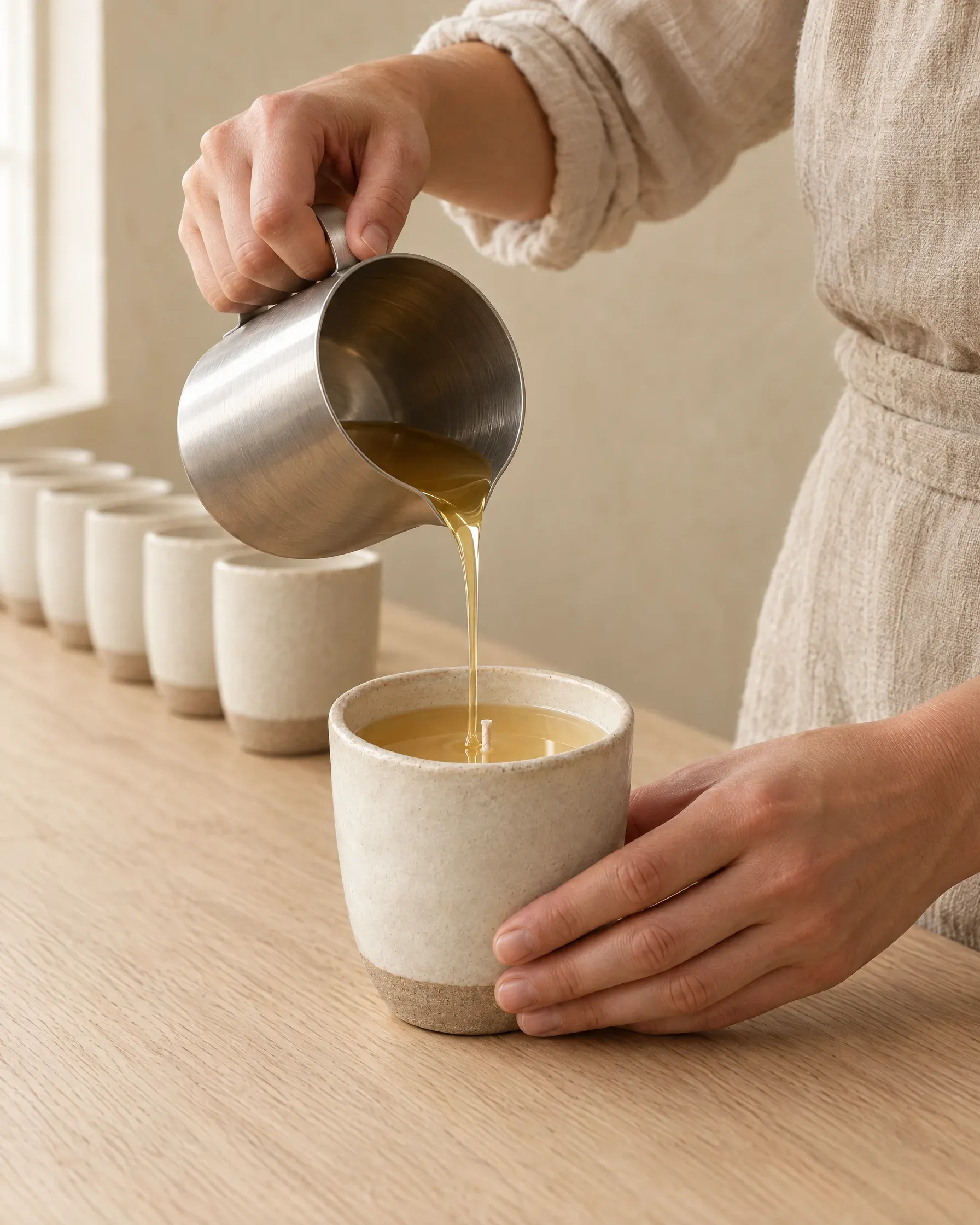
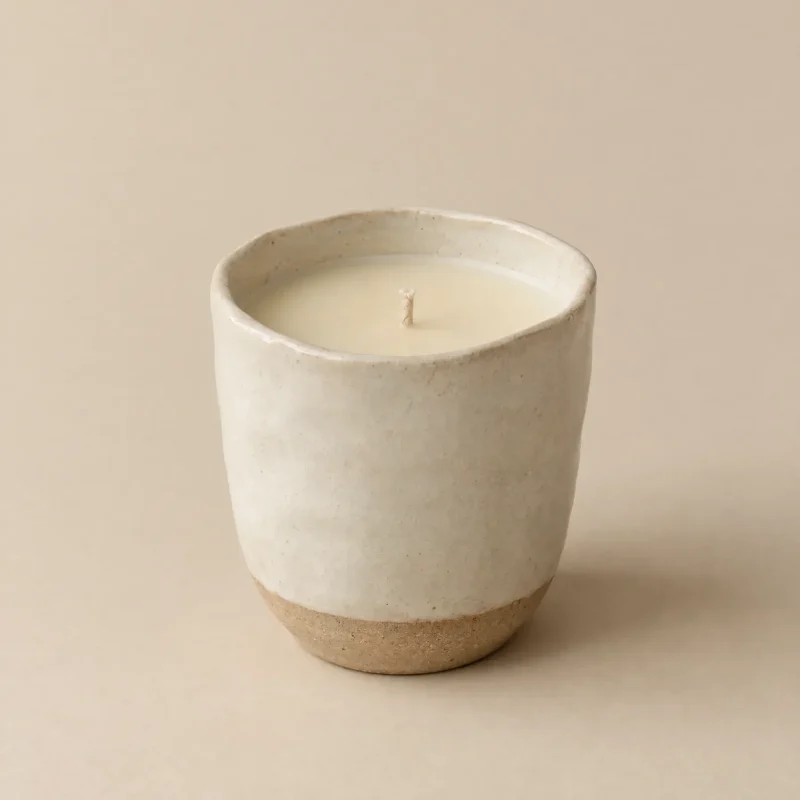
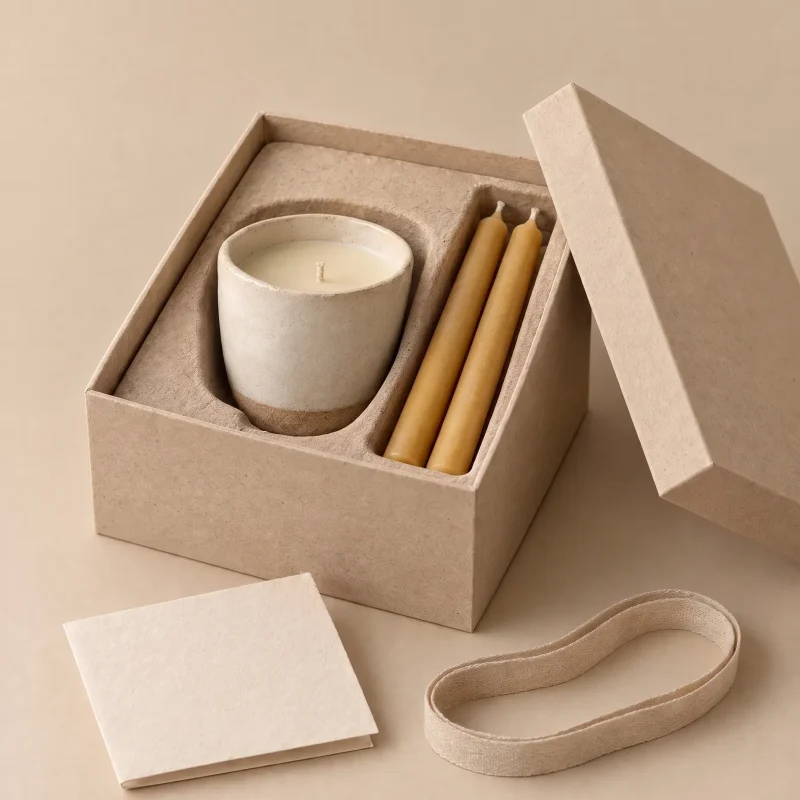
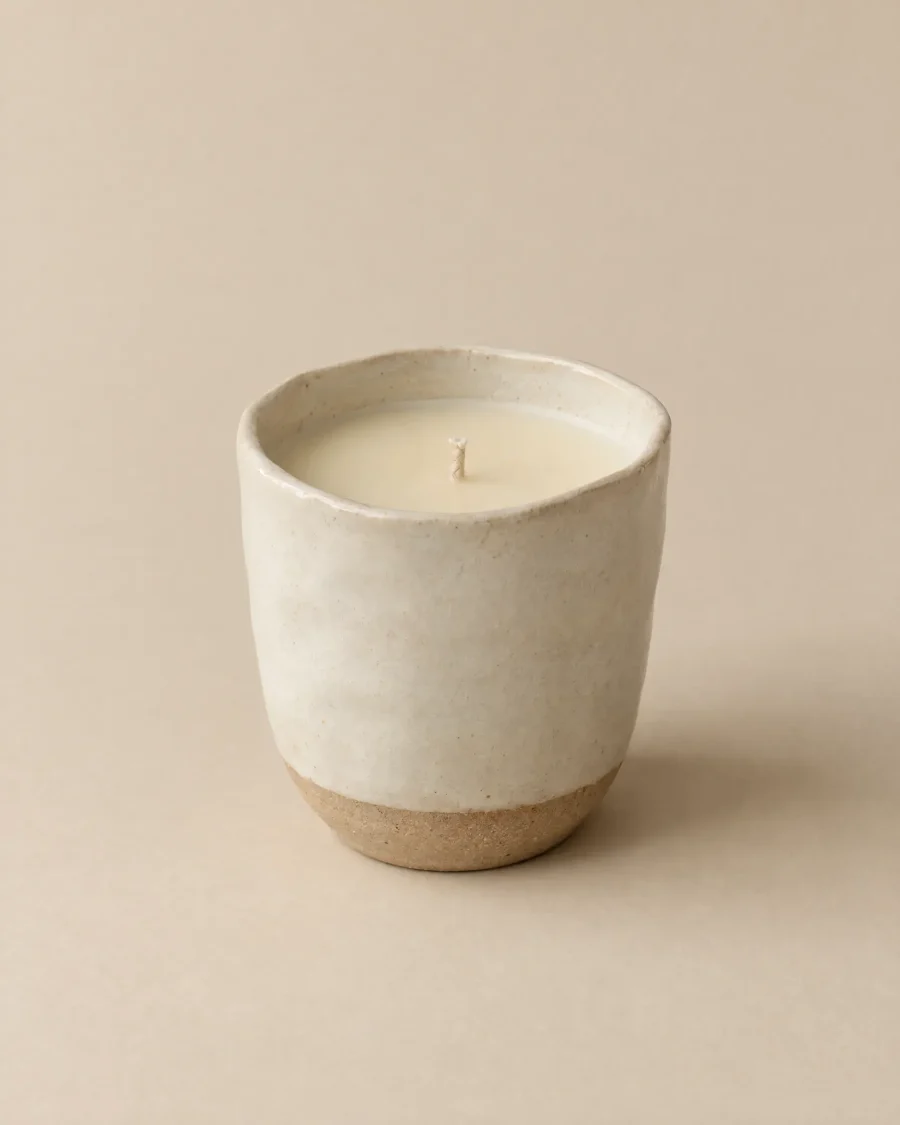
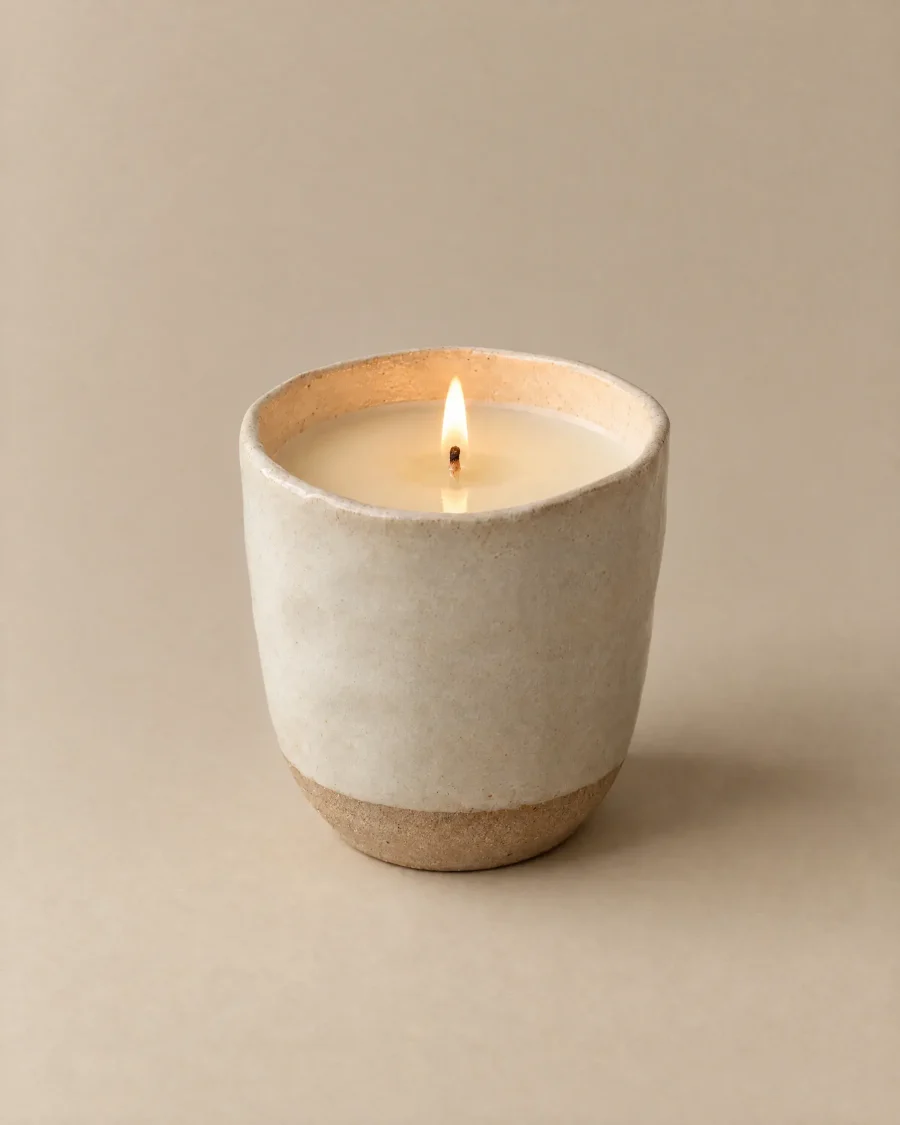
Each vessel is a hand-thrown stoneware cup filled with 220 g of 100 % European beeswax, poured by hand and scented with organic essential oils. Each burns for about 45 hours.
All three come together as The Three Glazes. Essential oils are concentrated, and some are not recommended around cats and dogs in closed rooms, so in a home with pets we suggest our unscented pillars instead. Burn any candle in a ventilated room, trim the wick before each lighting and never leave a flame unattended.
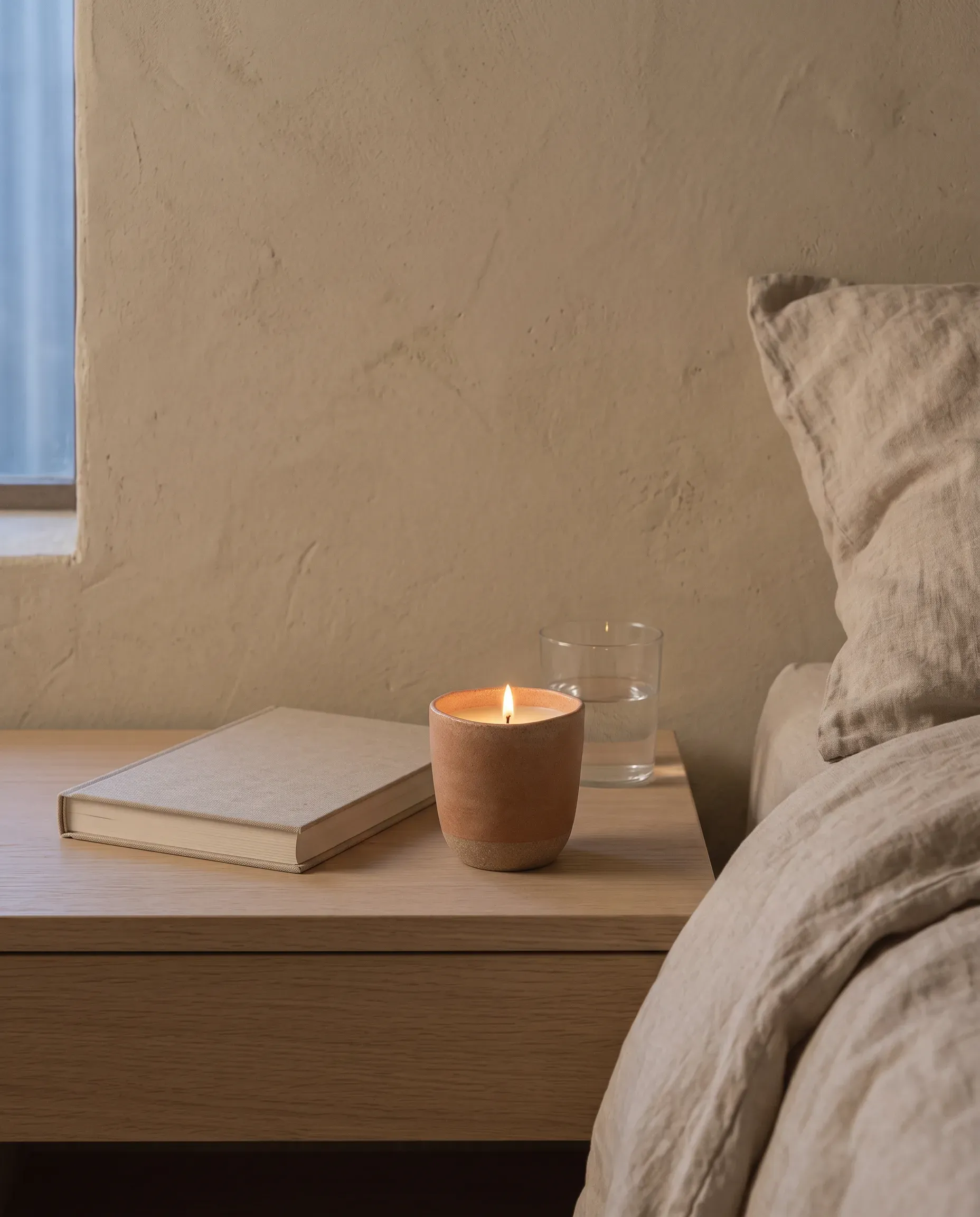
The Vessel, Clay
Organic essential oils in 100% beeswax, in a measure light enough to let the honey note through. About 45 hours of slow, quiet scent.
The candles
Questions
A few, but EU organic rules are written for agricultural products and ingredients, not for candles as finished objects. Most candles sold as organic have one certified ingredient, usually the essential oils or a plant wax. If a whole candle is presented as certified organic, look for the EU organic logo and the code of the control body that certified it.
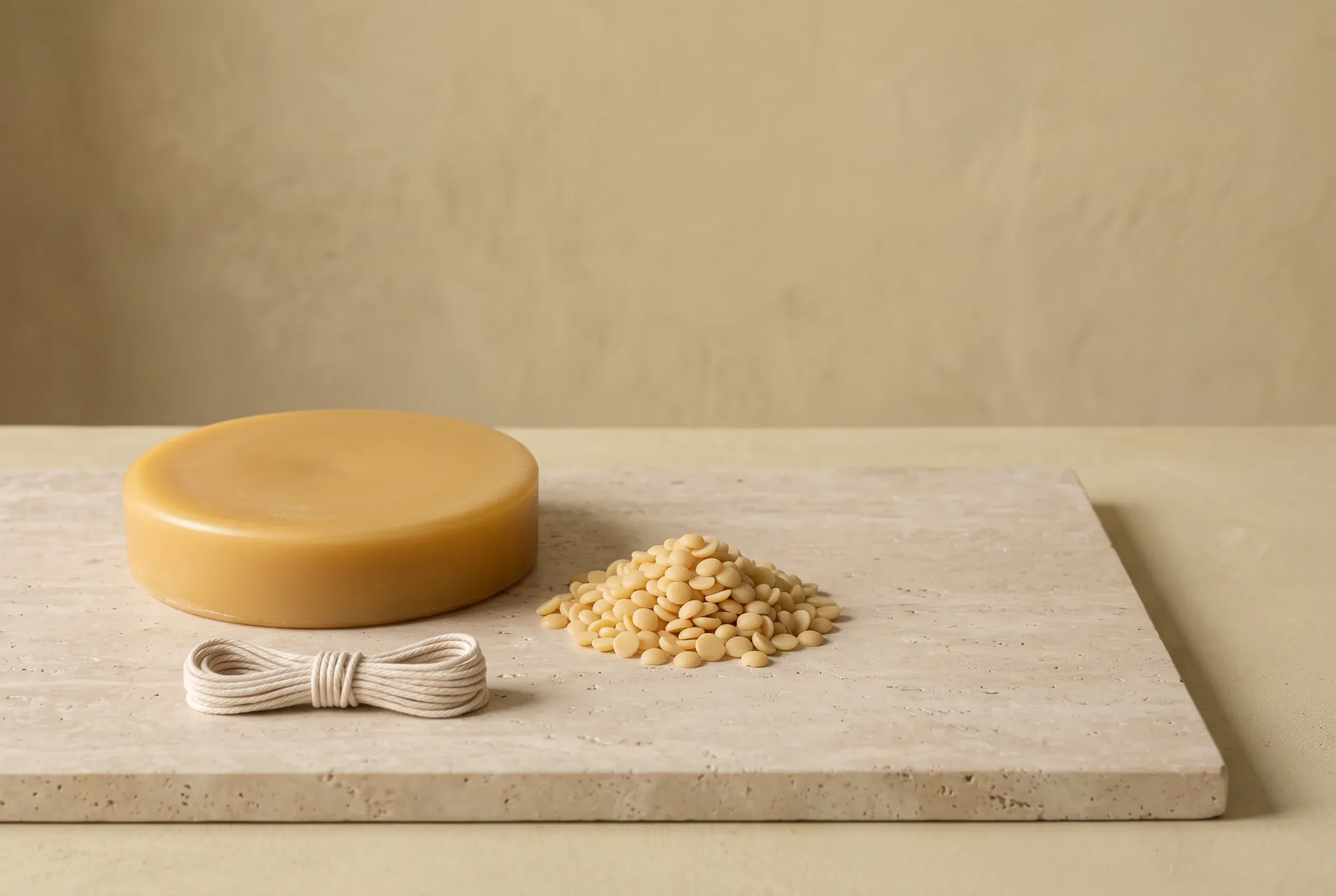
Certified organic beeswax comes from apiaries that meet organic beekeeping rules, including where the bees forage. It is rare and costly. For how a candle burns, what matters most is that the beeswax is pure, unblended and untreated, with a well-sized cotton wick. A 100 % pure beeswax candle burns slowly and cleanly whether or not the wax is certified.
No. Paraffin is a by-product of petroleum refining, not an agricultural product, so it cannot be certified organic. A paraffin candle scented with organic essential oils contains an organic ingredient, but the candle itself is still mostly petroleum wax. Read the wax line on the label, not just the scent.
Soy wax is plant-based but not automatically organic. It is made from soybean oil that is hydrogenated to make it solid, and most of it is not certified. Organic soy wax exists but is uncommon. If organic matters to you, look for the certification on the wax itself, and check that the candle is 100 % soy rather than a blend.
It means the essential oils used for scent were produced and certified under organic rules. It describes the scent only, not the wax or the wick. It is a precise, honest claim when stated this way. Our three stoneware vessels are scented with organic essential oils, in 100 % European beeswax that is not certified organic.
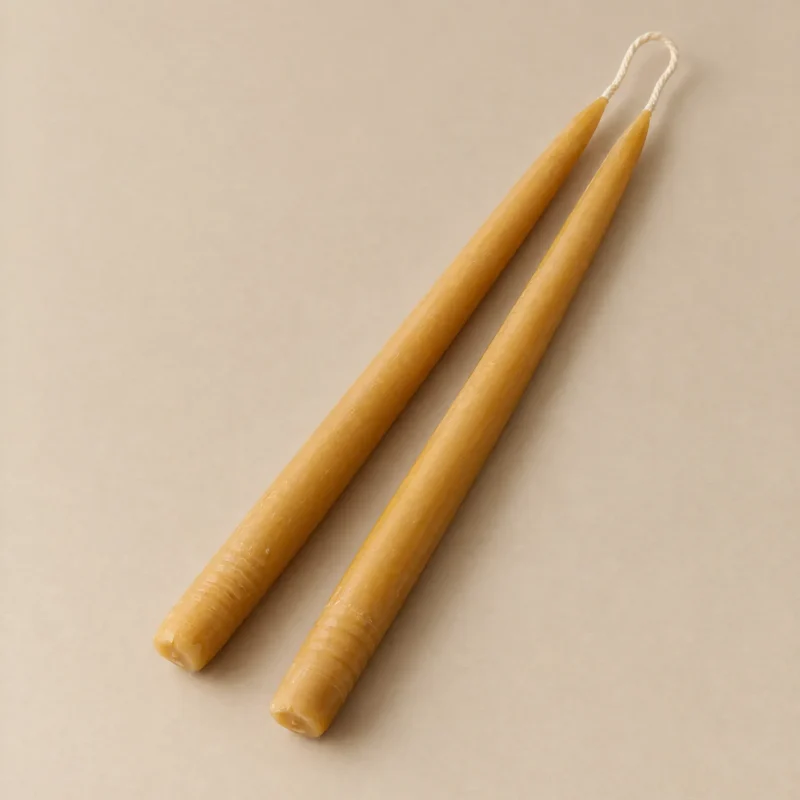
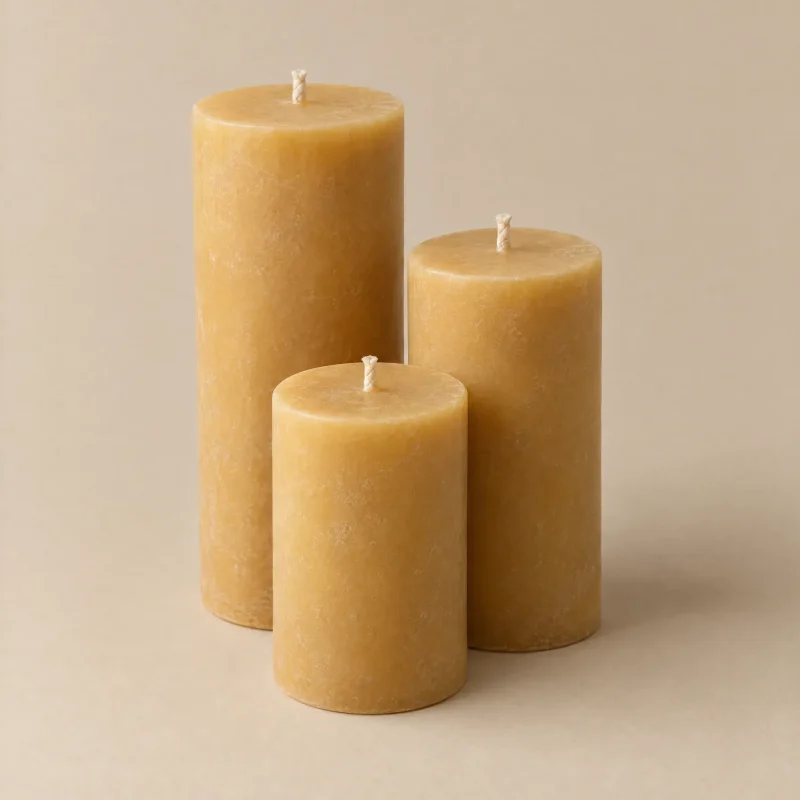
We do not call them organic. The essential oils in our three vessels are organic. Our beeswax is 100 % European, filtered and never bleached, deodorised or dyed, but it is not certified organic. Our pillars and tapers are beeswax and a cotton wick only, with no scent. Read more on Our beeswax.
More guides
Pure beeswax in hand-thrown stoneware, scented with organic essential oils. Free shipping over 80 €.