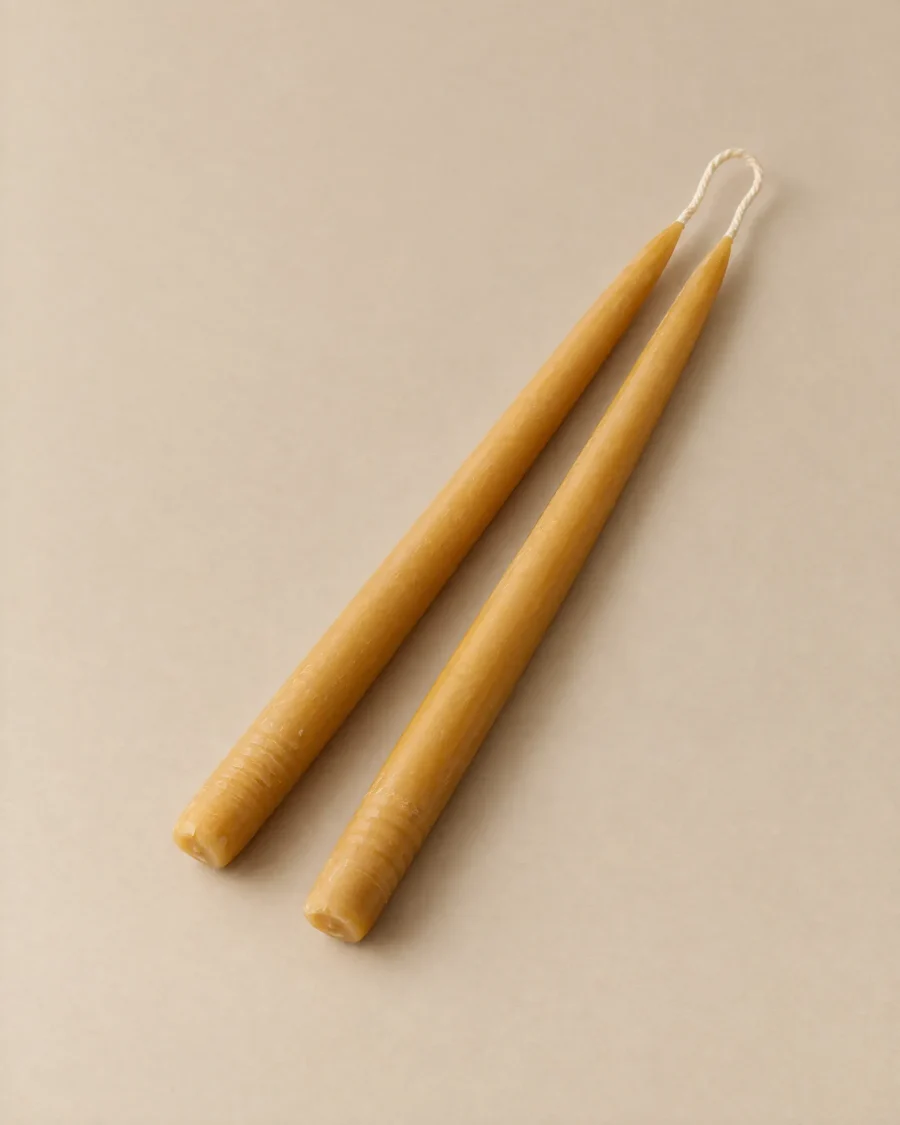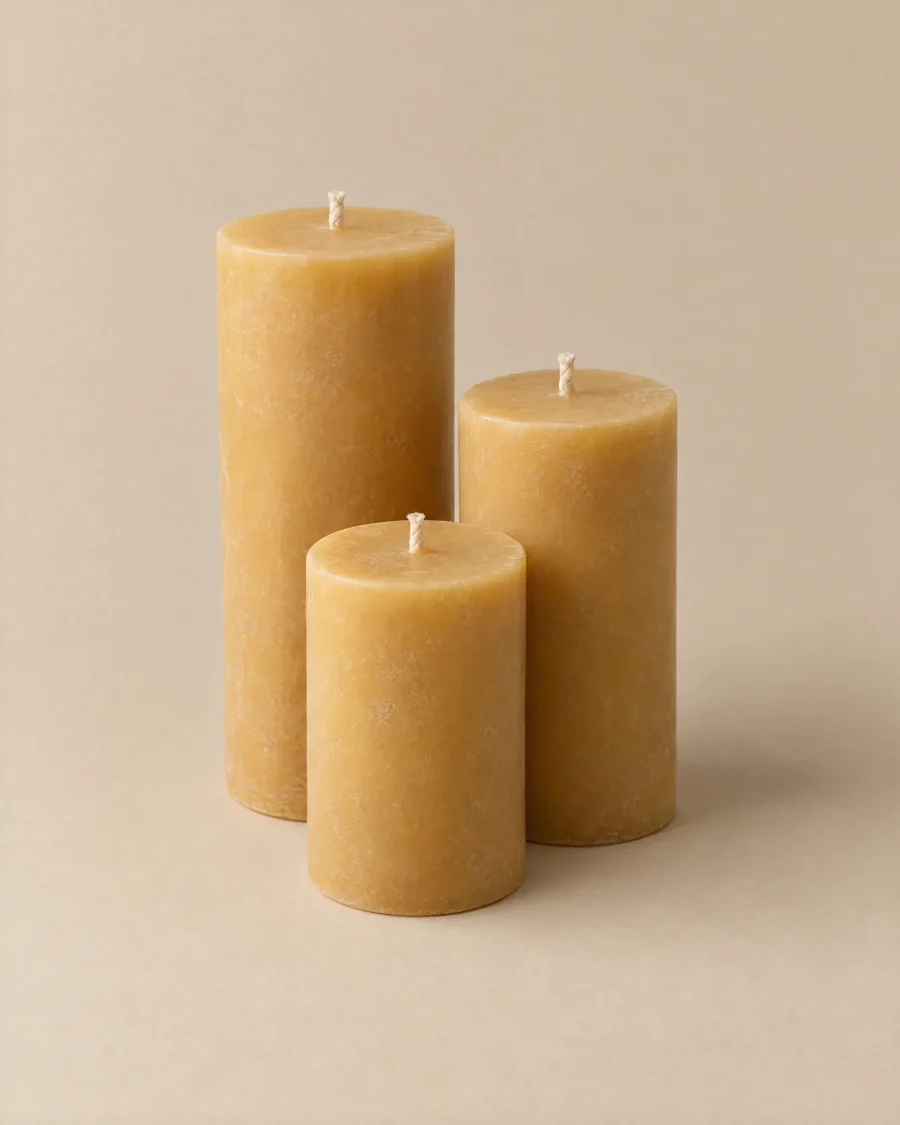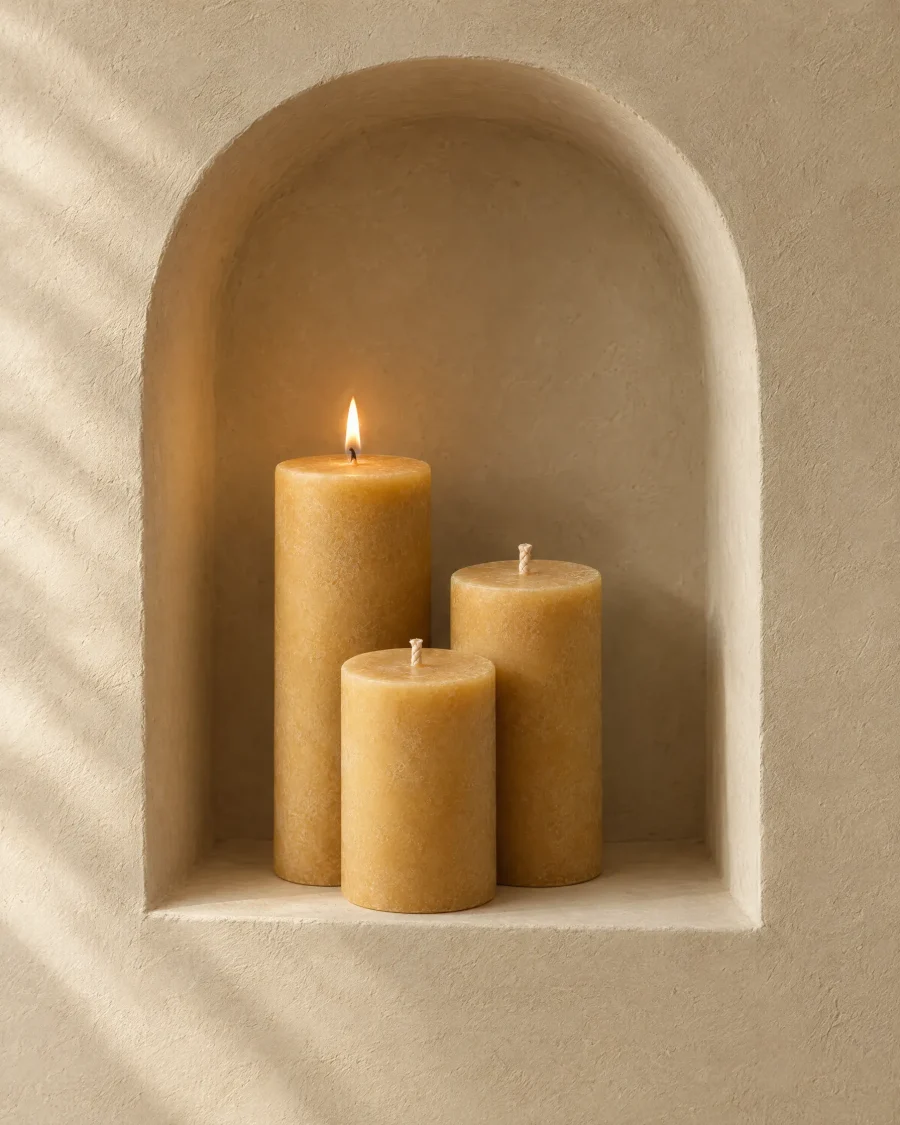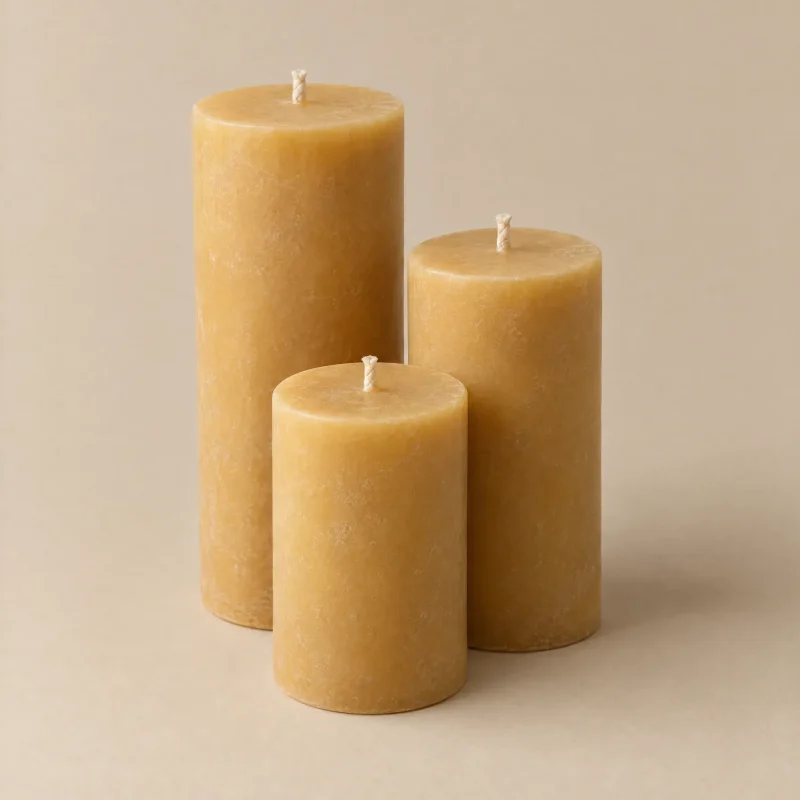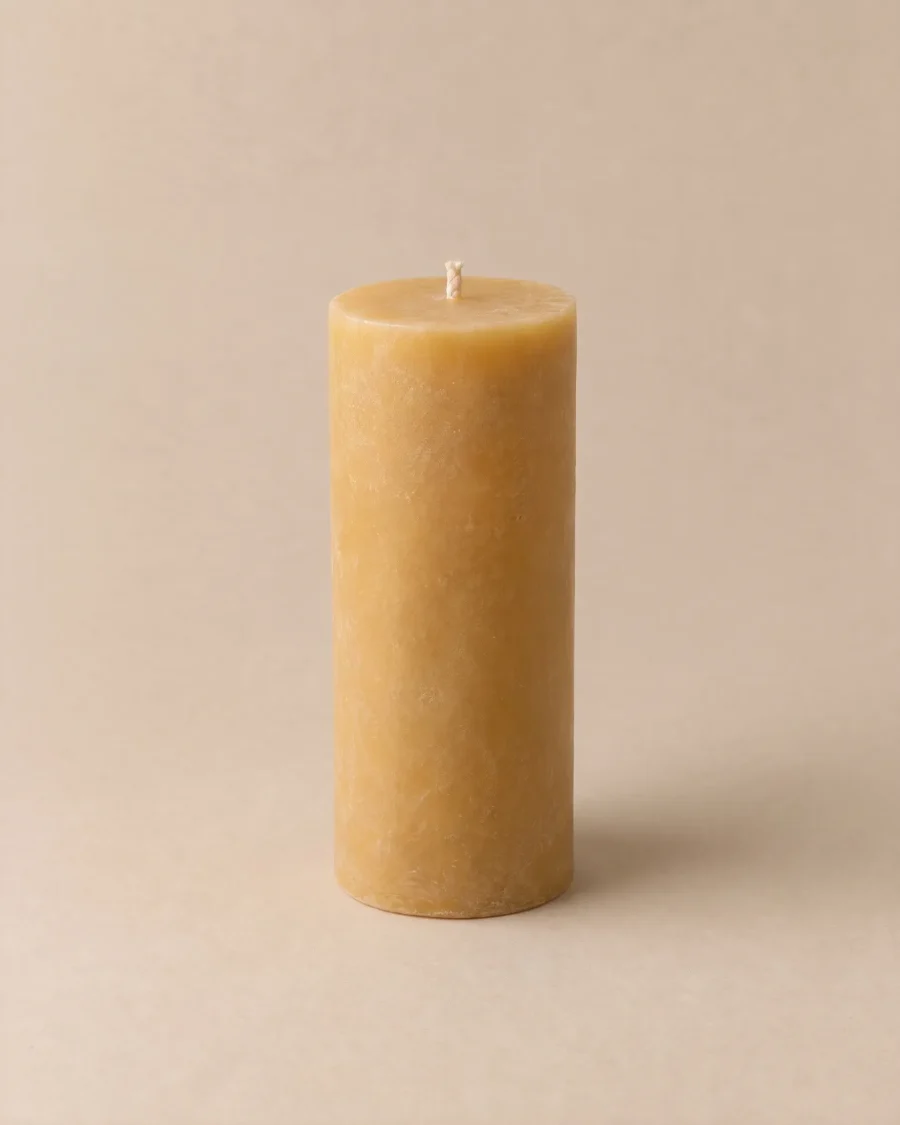
Pure pillar, 15 cm
36,00 €
Unscented, 7 × 15 cm
Guide
What people mean by non-toxic candles, which ingredients to leave out, and why the way you burn a candle matters as much as what it is made of.
Read the guide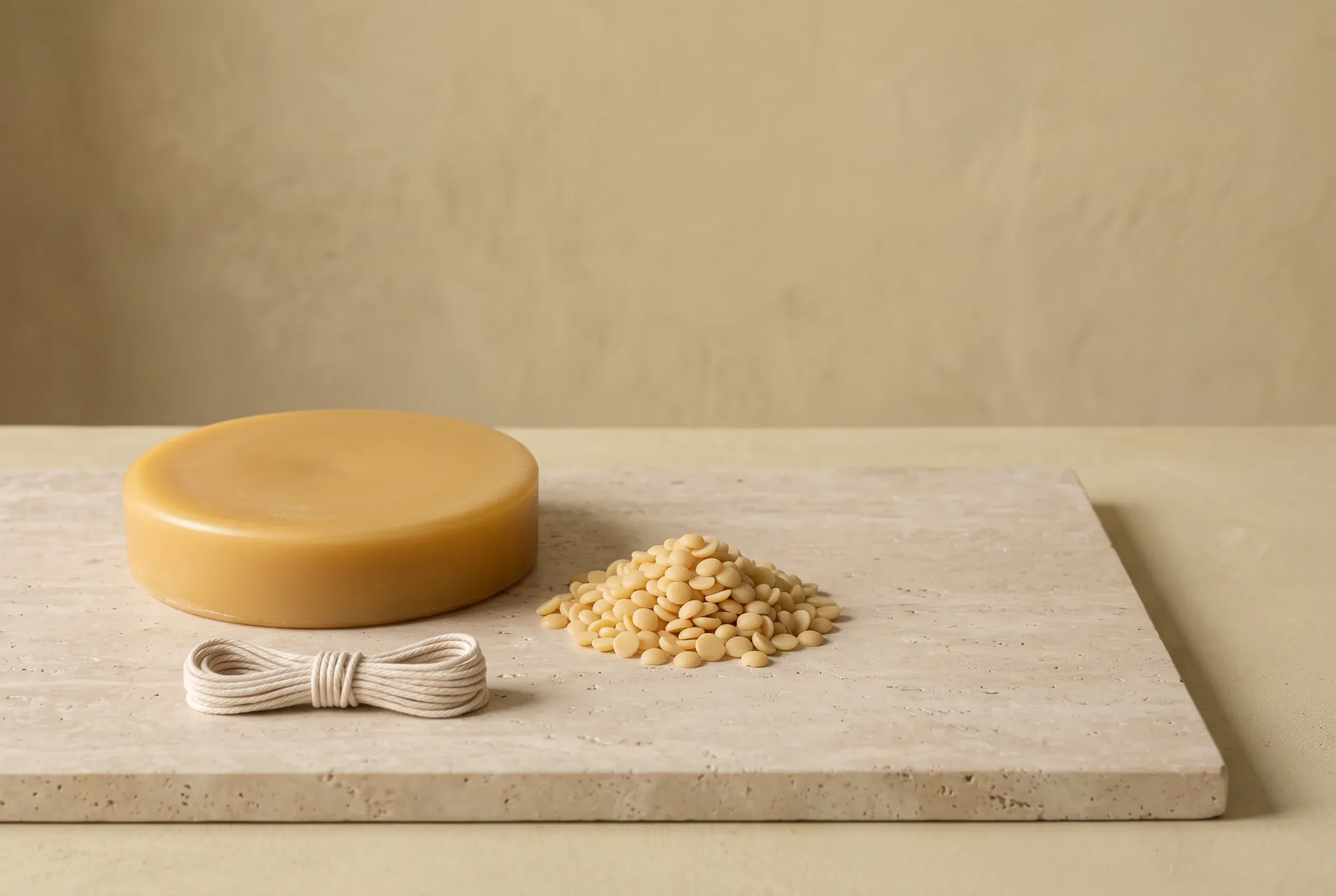
When people search for non-toxic candles, they usually mean candles made without the ingredients they would rather not breathe: paraffin, synthetic fragrance, dyes and metal-core wicks. No candle is entirely free of emissions, because every flame releases some particles and gases. What you can choose is a candle with a short, simple ingredient list, and then burn it well.
The phrase is not a legal or technical standard. No authority tests and certifies a candle as non-toxic, so a label that says so tells you about the maker’s intentions rather than about a measurement. What shoppers are really asking is narrower and more useful: what is this candle made of, and how cleanly does it burn?
That question has clear answers. A candle is only ever a handful of things: a wax, a wick and, sometimes, a scent and a colour. Each of them can be simple or complicated, disclosed or hidden. The fewer there are, and the more plainly they are named, the easier it is to know what you are lighting.
It is worth saying plainly. Any open flame, from a candle to a gas hob, produces fine particles, carbon dioxide and water vapour, and a flame that is too large or unsteady produces visible soot. A candle of pure beeswax and cotton still does this, in small amounts. So the honest goal is not zero. It is less: fewer added ingredients, a calmer flame and a well-aired room.
Research comparing candle waxes is limited, and the results depend heavily on how a candle is burned. A long wick, a draught or a heavily fragranced candle can matter as much as the wax itself. Keep that in mind whenever a brand promises more than a flame can deliver, including claims that a candle cleans the air.
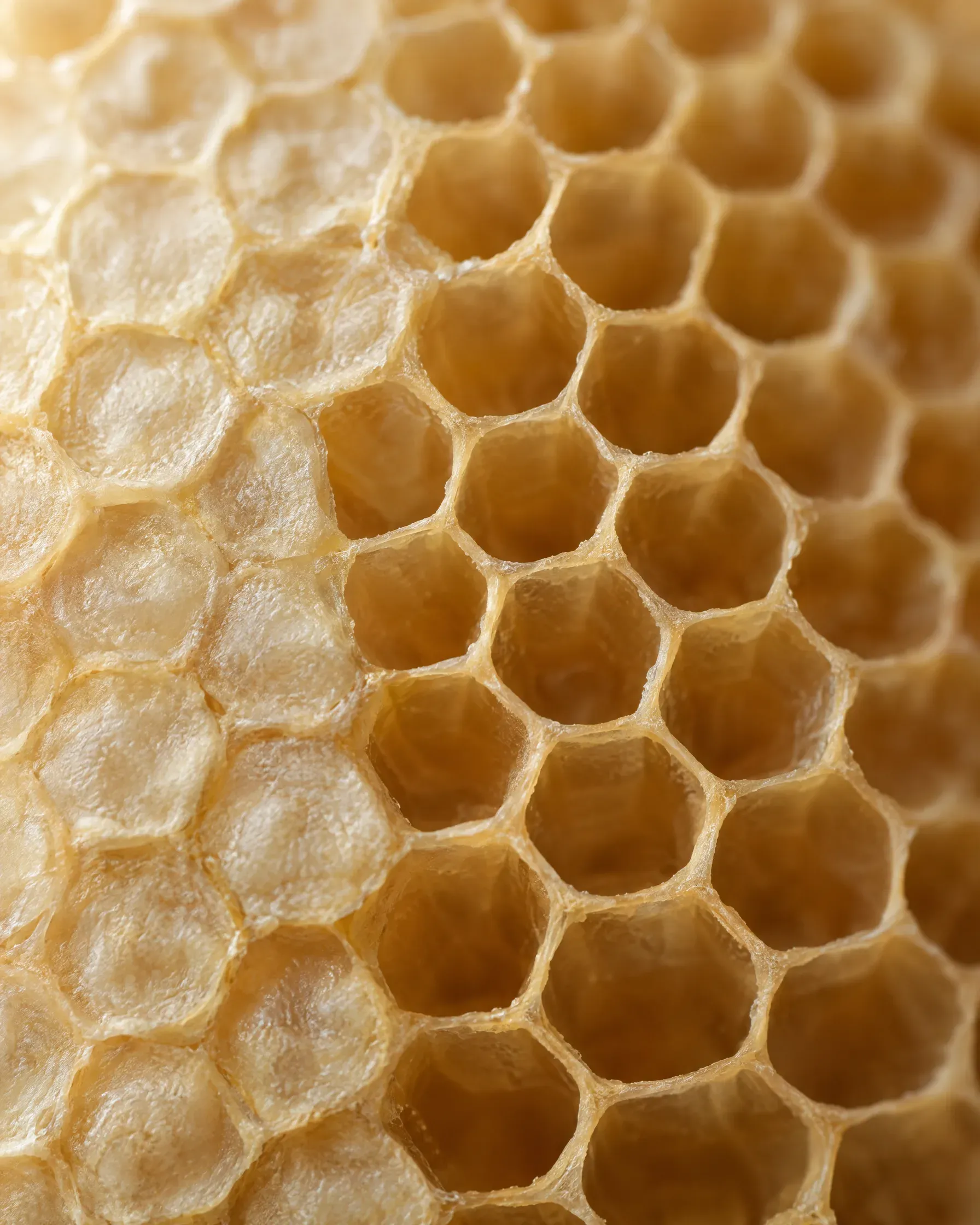
Look for a single named wax, ideally at 100 %. Pure beeswax is dense and melts at a high temperature, around 62 to 64 °C, so it burns slowly and brightly with very little soot. Soy and other plant waxes avoid petroleum but are softer, and they are often blended. Our beeswax vs soy candles comparison sets the main waxes side by side.
A plain cotton wick, sized to the candle. A wick that is too large gives a tall, smoking flame; one that is too small drowns in its own pool of wax. Wick sizing never appears on a label, so it says something when a maker publishes a burn time and stands behind it.
Unscented is the simplest choice. If you want scent, look for a named source, such as essential oils used in a light measure, rather than an unnamed “fragrance”. Bear in mind that essential oils are still concentrated aromatic compounds. Natural does not mean gentle for everyone, and some are not recommended around cats and dogs.
A short, specific ingredient list, a stated place of manufacture and measured burn times are the signs of a maker with nothing to hide. If a brand cannot tell you what its wax is, that is an answer too.
Six yeses do not make a candle harmless, because nothing with a flame is. They do mean you know exactly what you are burning.
The way a candle is burned changes what it releases more than most labels do. A few habits help with every wax.
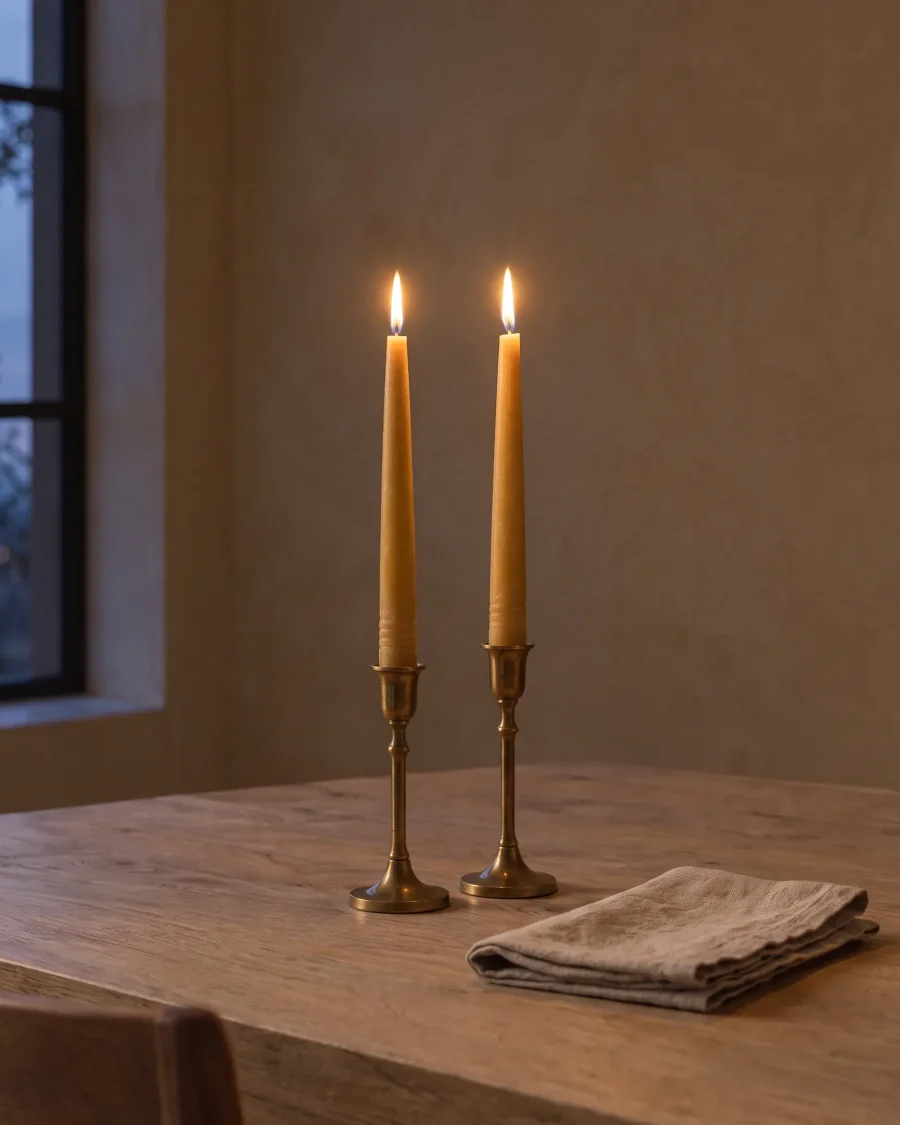
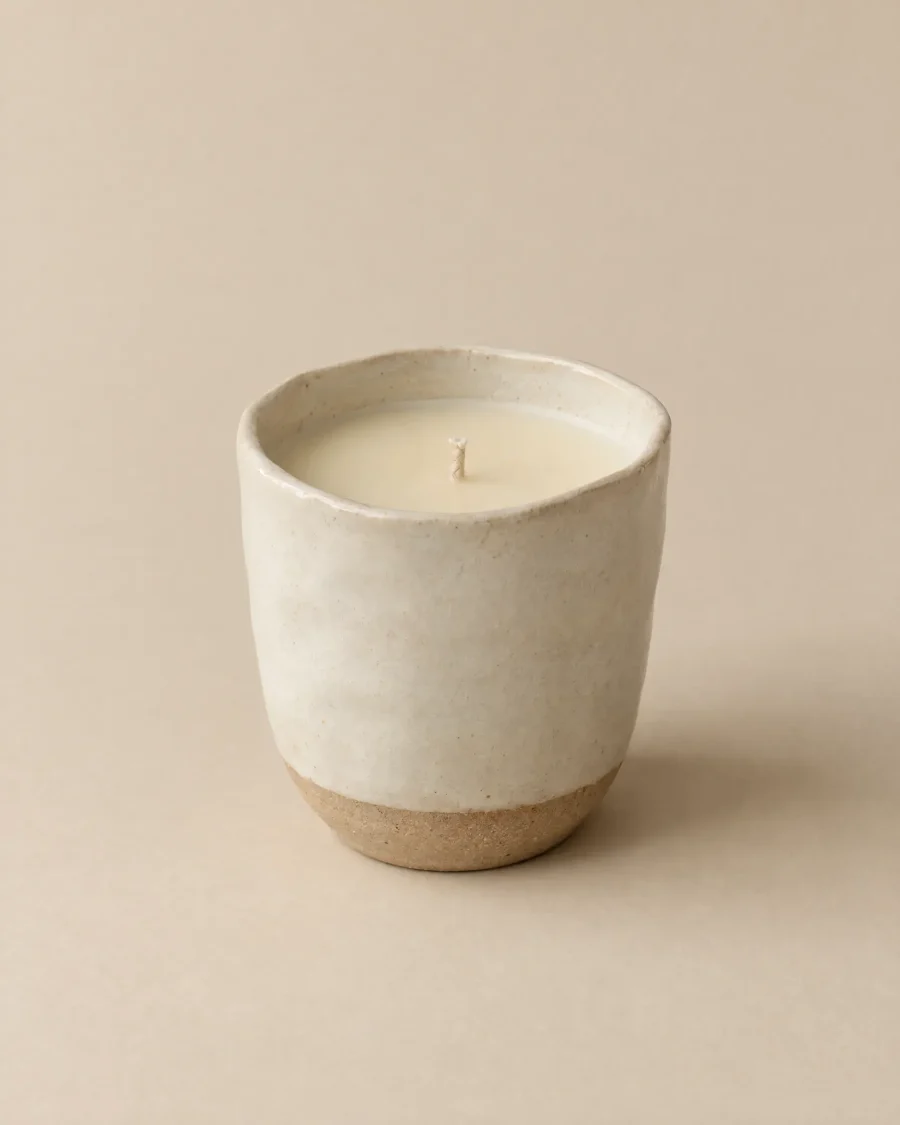
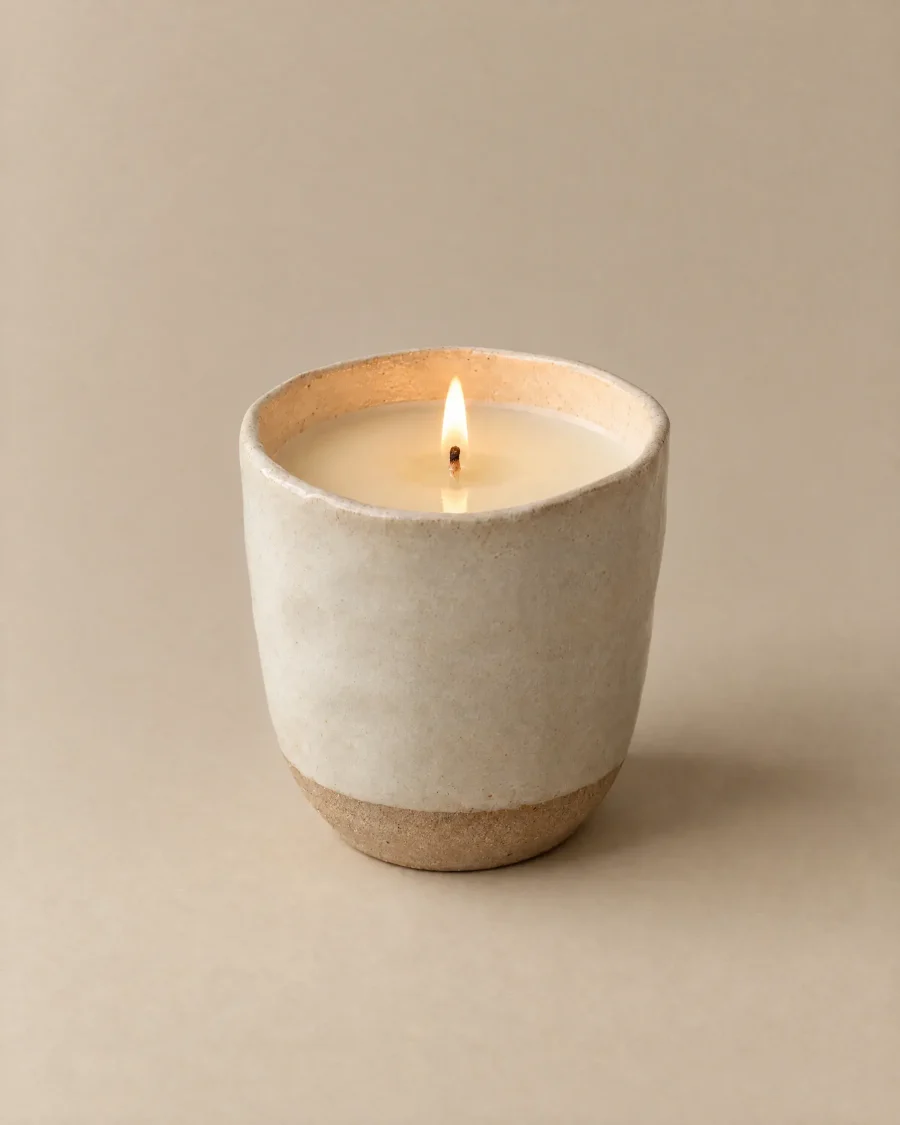
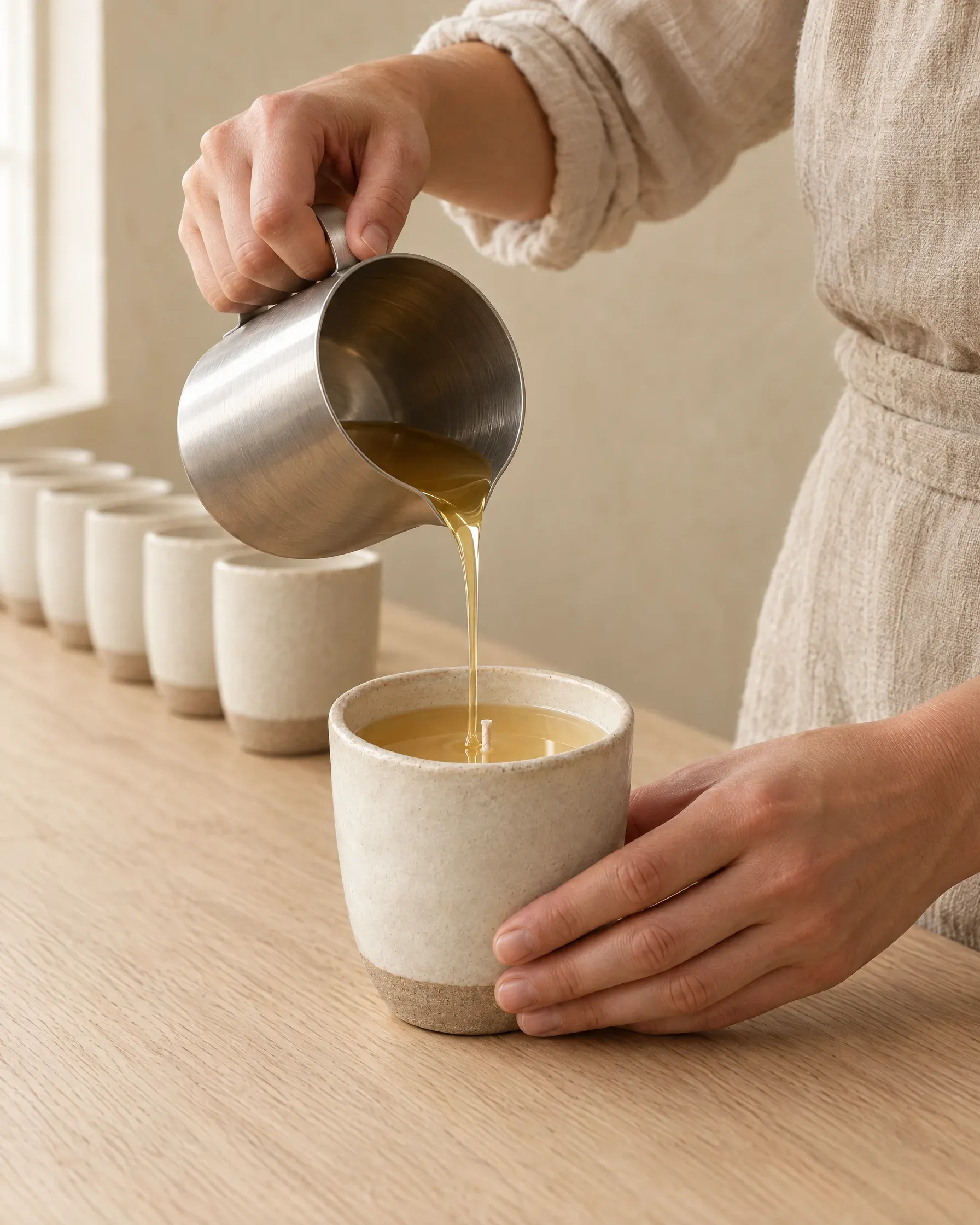
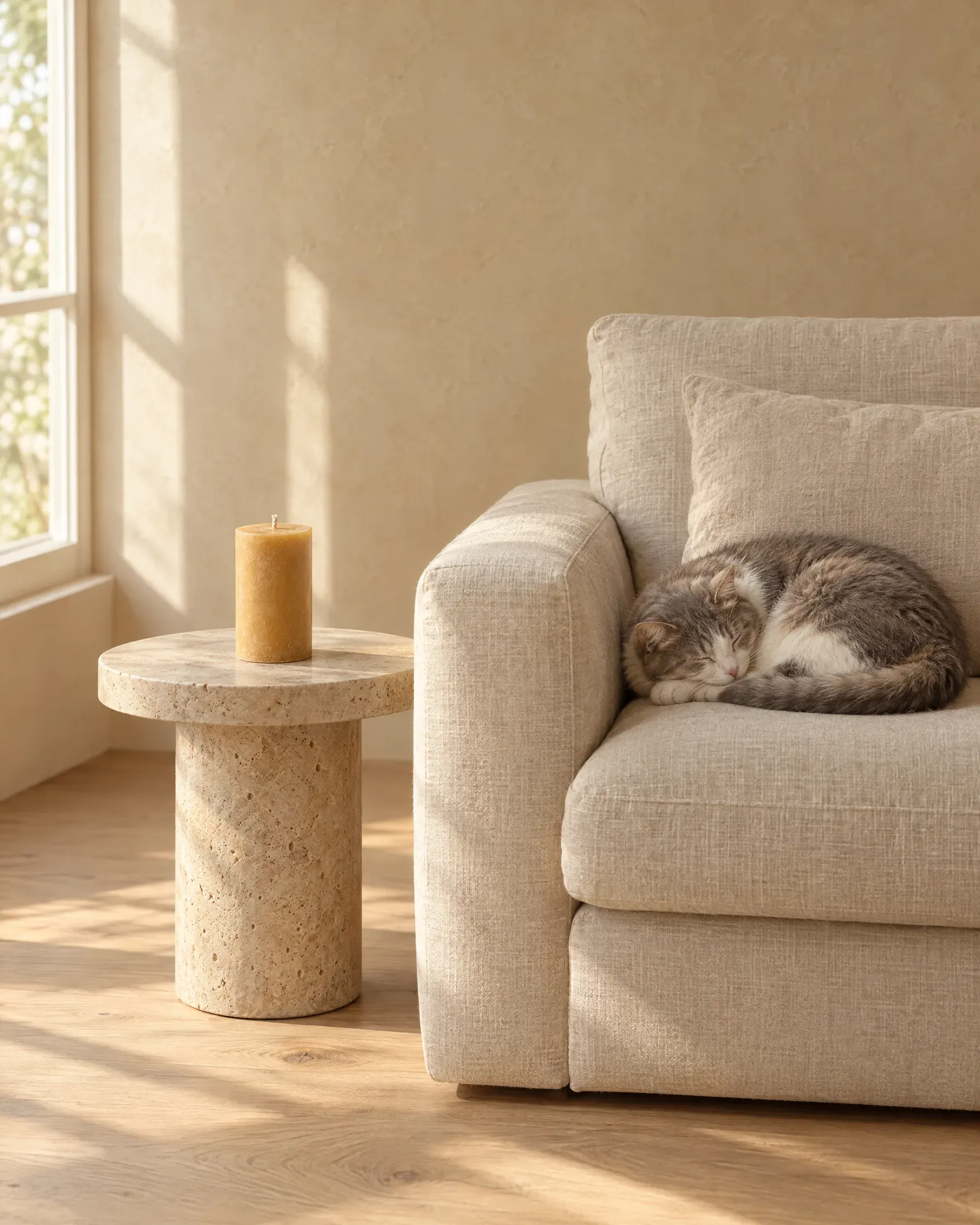
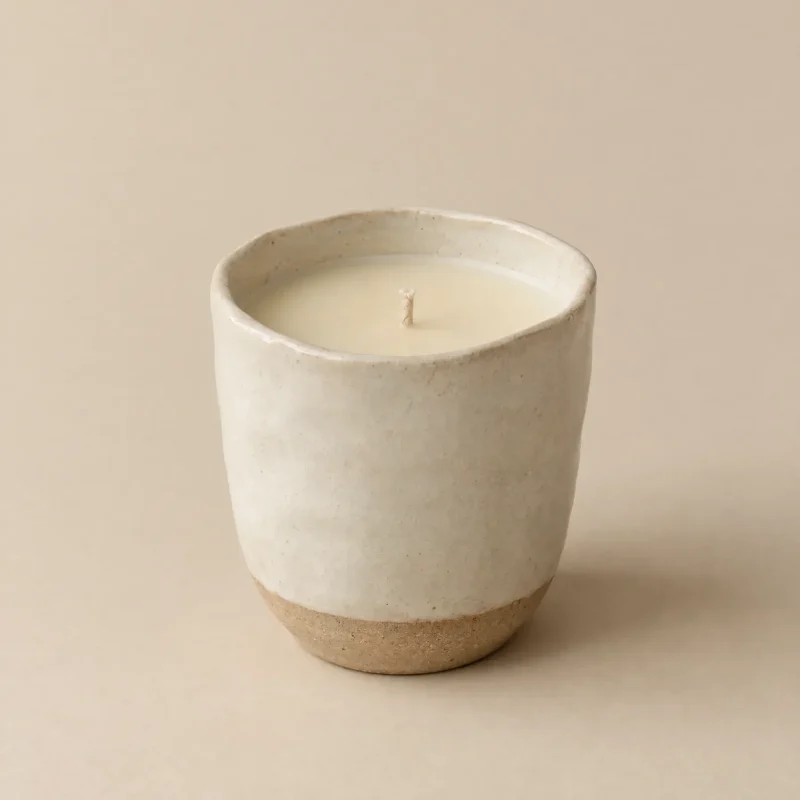
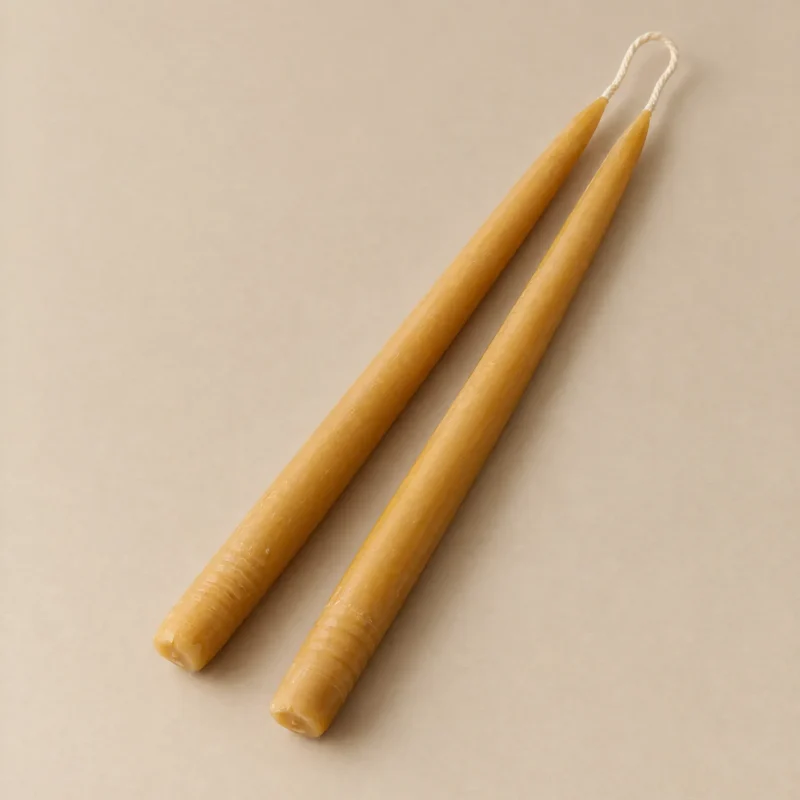
We make candles from 100 % European beeswax and a cotton wick, poured or dipped by hand in small batches in our atelier in Europe. There is no paraffin, no soy or other blends, no dyes and no synthetic fragrance. Our pillars and tapers are unscented: lit, they smell only faintly of honeycomb. Our three stoneware vessels add organic essential oils, in a measure light enough to let the beeswax through.
We do not claim more than that. A Beezu candle is still a flame. It is simply one made with as few ingredients as a candle can have. Read where the wax comes from on Our beeswax, then choose an unscented pillar, a pair of tapers for the table, or a scented vessel.
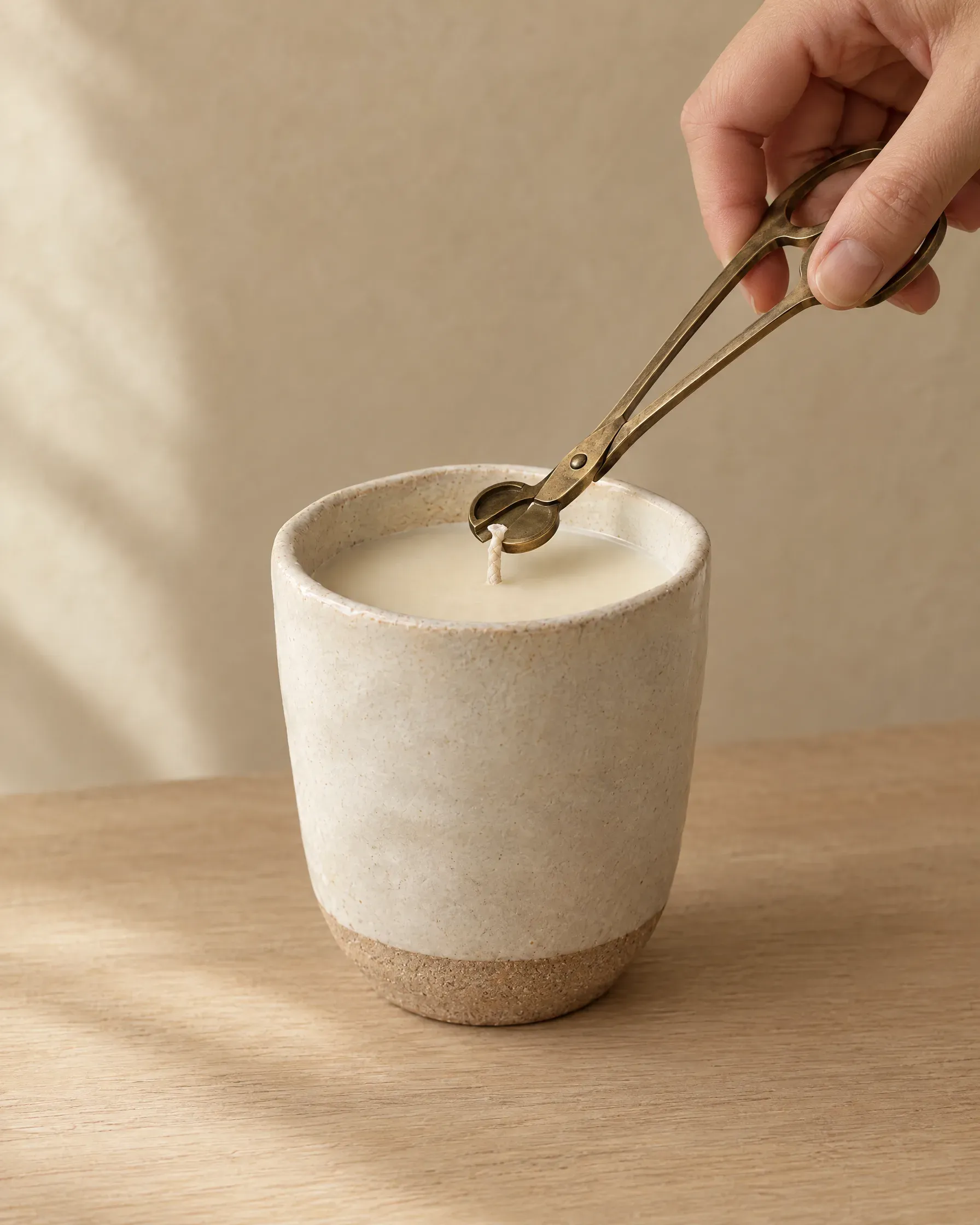
The wick
Most soot comes from a wick that is too long. Trim it to about 5 mm before every burn and the flame stays small, bright and steady.
The candles
Questions
"Non-toxic" is not a defined standard for candles, so be wary of anyone who promises it. Pure beeswax contains no petroleum by-products, burns with very little soot and needs no added fragrance or dye. It is still a flame and still releases some particles, so burn it in an aired room, keep the wick trimmed and never leave it unattended.
Look for a single named wax, such as pure beeswax or a 100 % plant wax, a plain cotton wick, no dyes, and either no scent or a named, natural one used lightly. Then burn it well: a trimmed wick, no draughts and no more than four hours at a time. How you burn a candle matters as much as what it is made of.
Fragrance adds compounds to the air, and many scented candles use synthetic fragrance blends that are not listed on the label. If you are sensitive to scent, choose unscented candles, or ones scented with named essential oils in a light measure. Essential oils are still strong aromatic compounds, so air the room and take care around pets.
Soy wax is made from hydrogenated soybean oil rather than petroleum, which is why many people prefer it. Read the label carefully, though: many soy candles are soy blends that include paraffin. Soy is also soft, so it is mostly sold in jars. Our beeswax vs soy candles guide compares them in detail.
A plain cotton wick avoids metal cores, but soot depends mostly on the size of the flame. A wick that is too long or too thick for the candle makes a tall, flickering flame that smokes. Trim it to about 5 mm before each burn and keep the candle away from draughts, and any well-made candle will smoke far less.
Yes, with care. Place candles high and out of reach, never leave a flame unattended and put it out when you leave the room. Unscented candles are a gentler choice for homes with pets, since some essential oils are not recommended around cats and dogs. Read more in Candles in a home with pets.
More guides
100% European beeswax and a cotton wick, poured by hand in small batches. Free shipping over 80 €.