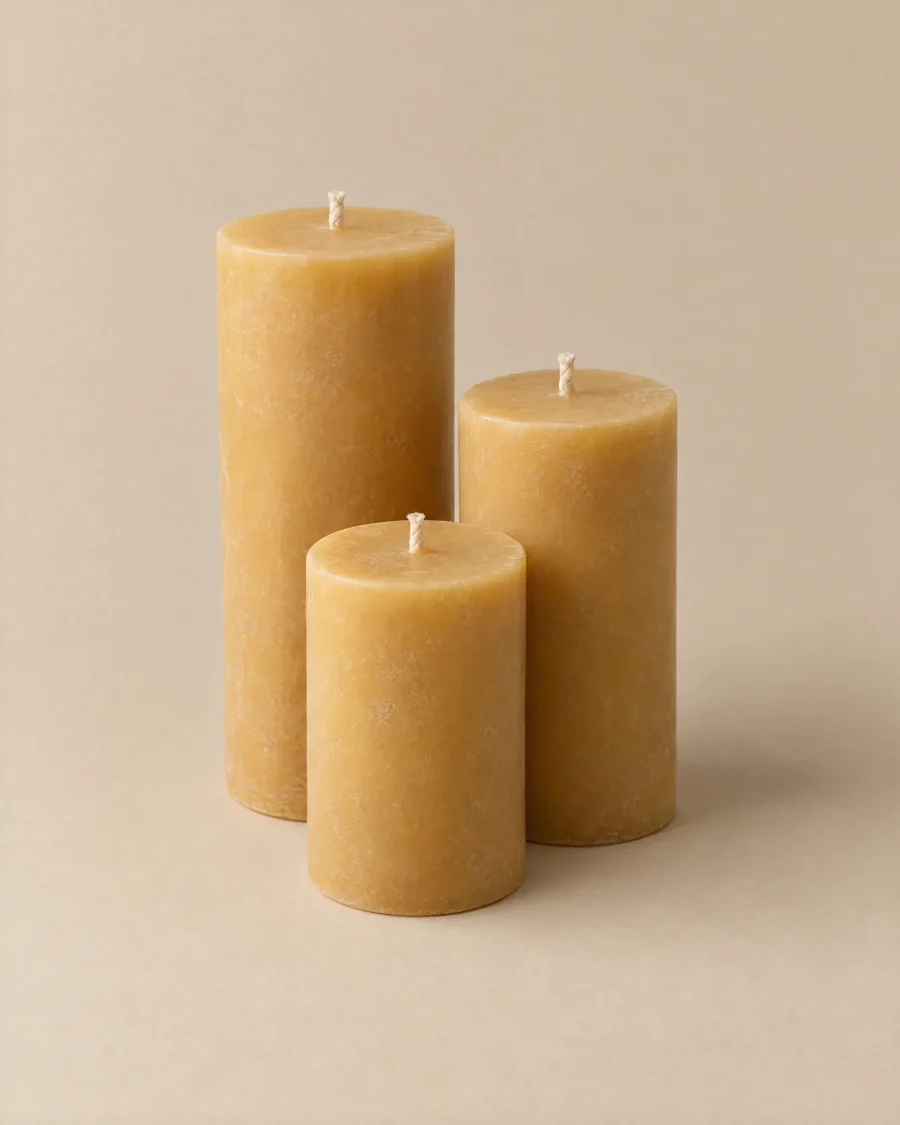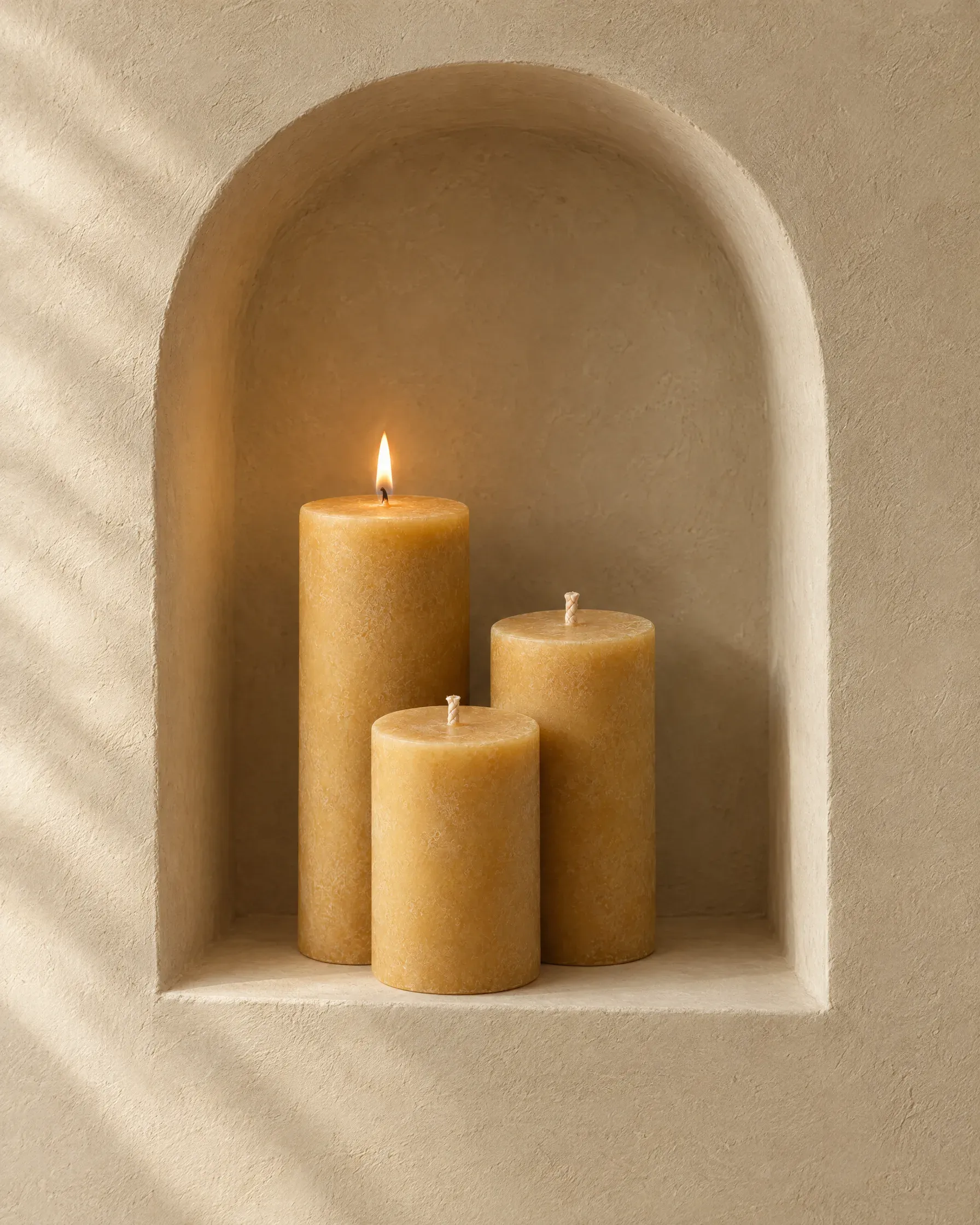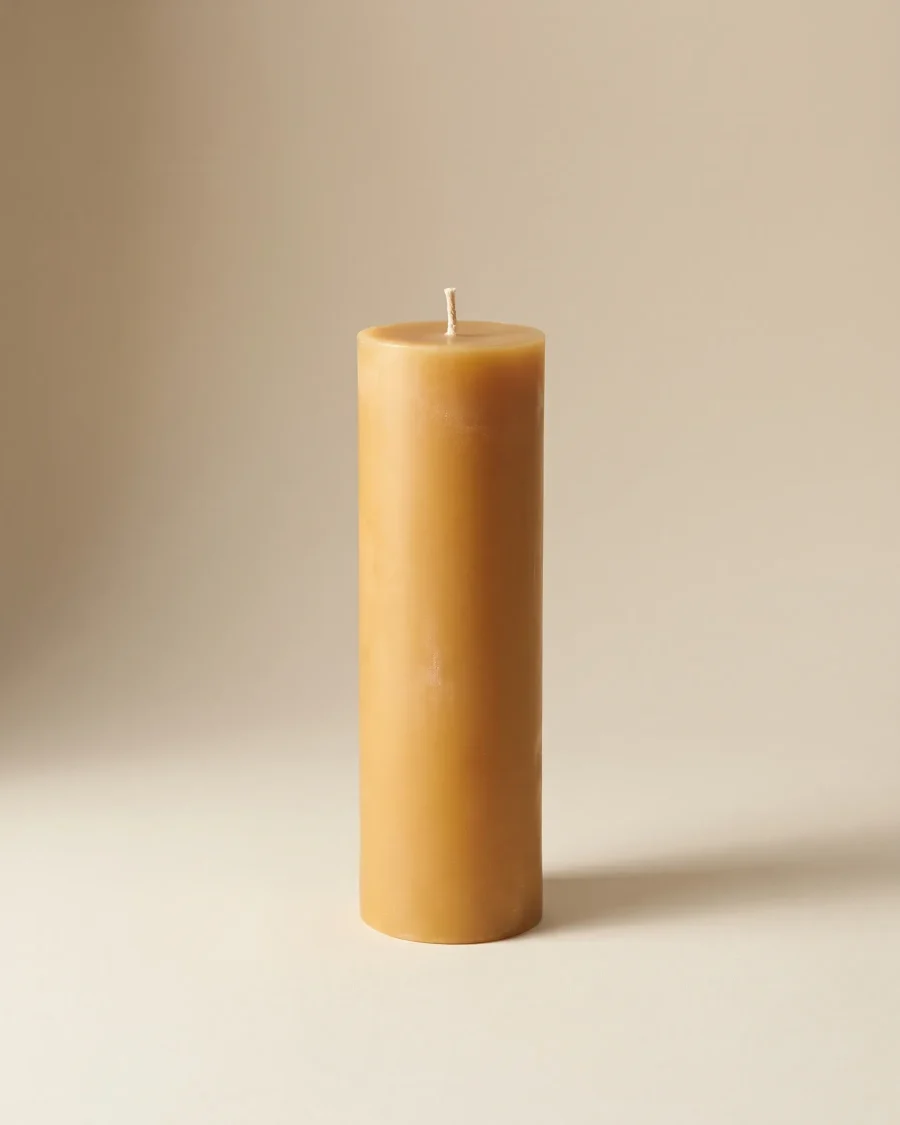
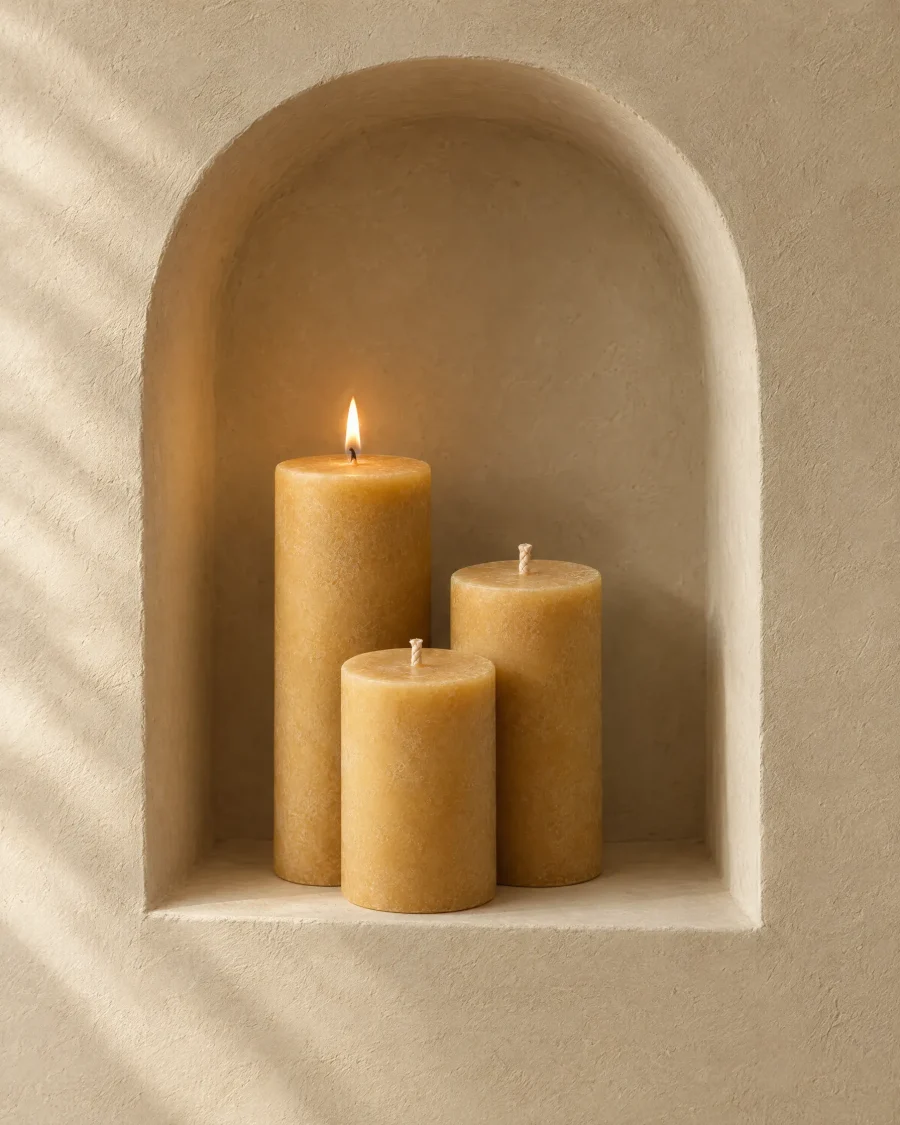
Pure pillar, 20 cm
44,00 €
Unscented, 7 × 20 cm
Comparison
Beeswax, soy, paraffin and coconut blends, side by side: where each wax comes from, how it burns, what it costs, and which one suits you.
Read the guide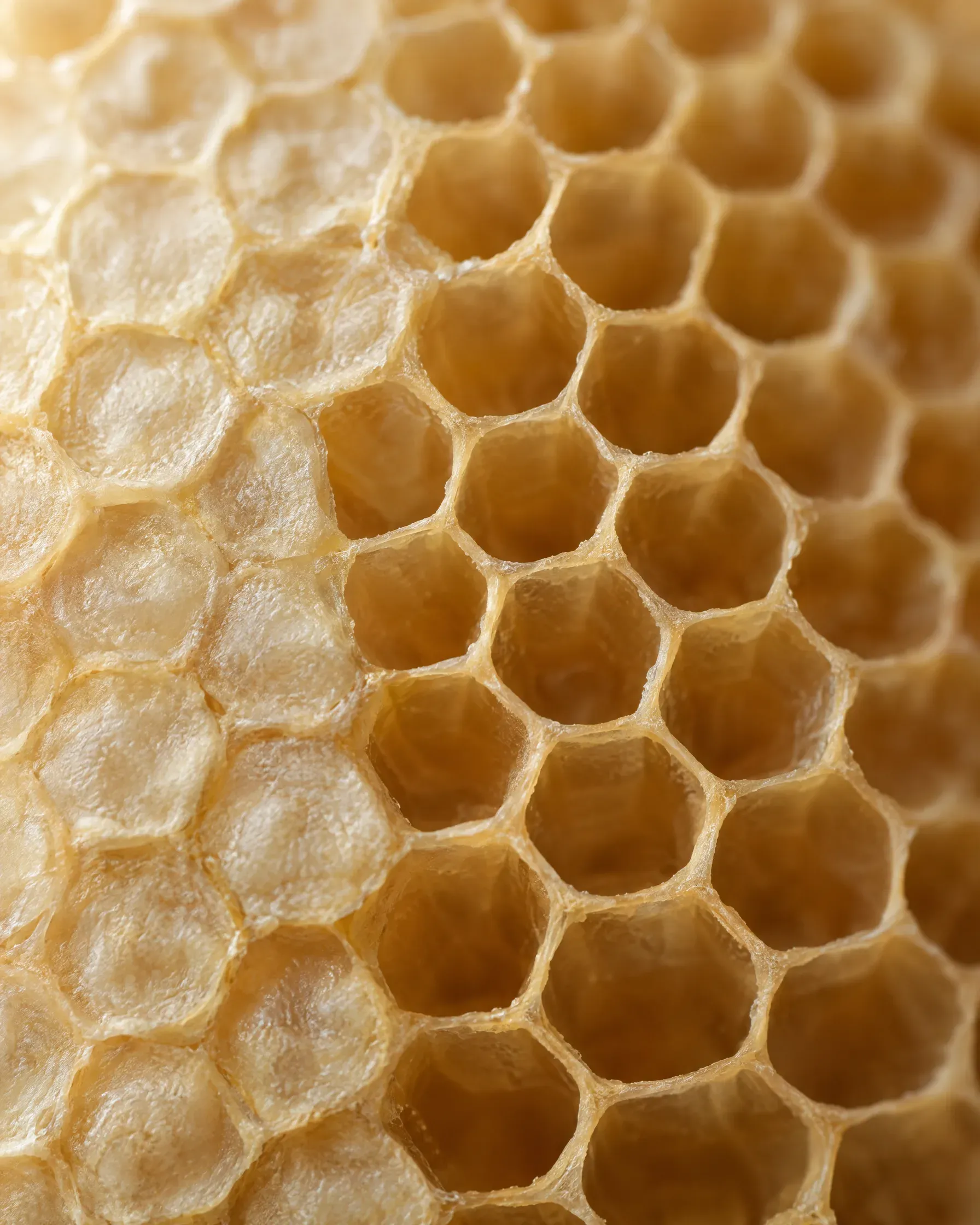
Beeswax candles burn longer and brighter than soy candles, with a faint honey scent of their own, because beeswax is denser and melts at a higher temperature. Soy wax is softer and less expensive, carries added fragrance easily and suits candles in jars. Both avoid petroleum when they are 100 % pure, but many soy candles are blends, so the label matters more than the name.
The figures below are typical ranges, not laboratory values. Every wax varies with its grade, its blend and the wick it is paired with.
| Beeswax | Soy | Paraffin | Coconut blends | |
|---|---|---|---|---|
| Origin | Made by honeybees, filtered from the comb | Hydrogenated soybean oil | By-product of petroleum refining | Coconut oil, processed and usually blended |
| Melting point | Around 62 to 64 °C | Roughly 45 to 55 °C | Roughly 45 to 65 °C, by grade | Low; blended so it sets |
| Burn speed | Slow | Faster than beeswax | Medium to fast | Medium to fast |
| Scent | A faint honey note of its own | Neutral, carries fragrance well | Neutral, carries fragrance strongly | Neutral, carries fragrance well |
| Soot | Very little with a trimmed wick | Low with a trimmed wick | More likely with long wicks and heavy fragrance | Low with a trimmed wick |
| Shapes | Pillars, tapers and containers | Mostly containers | Any shape | Containers |
| Blends and additives | Sold pure, but also cut with paraffin | Often blended with paraffin or other waxes | Often the unnamed part of blends | Almost always blended |
| Price | Highest | Moderate | Lowest | Moderate to high |
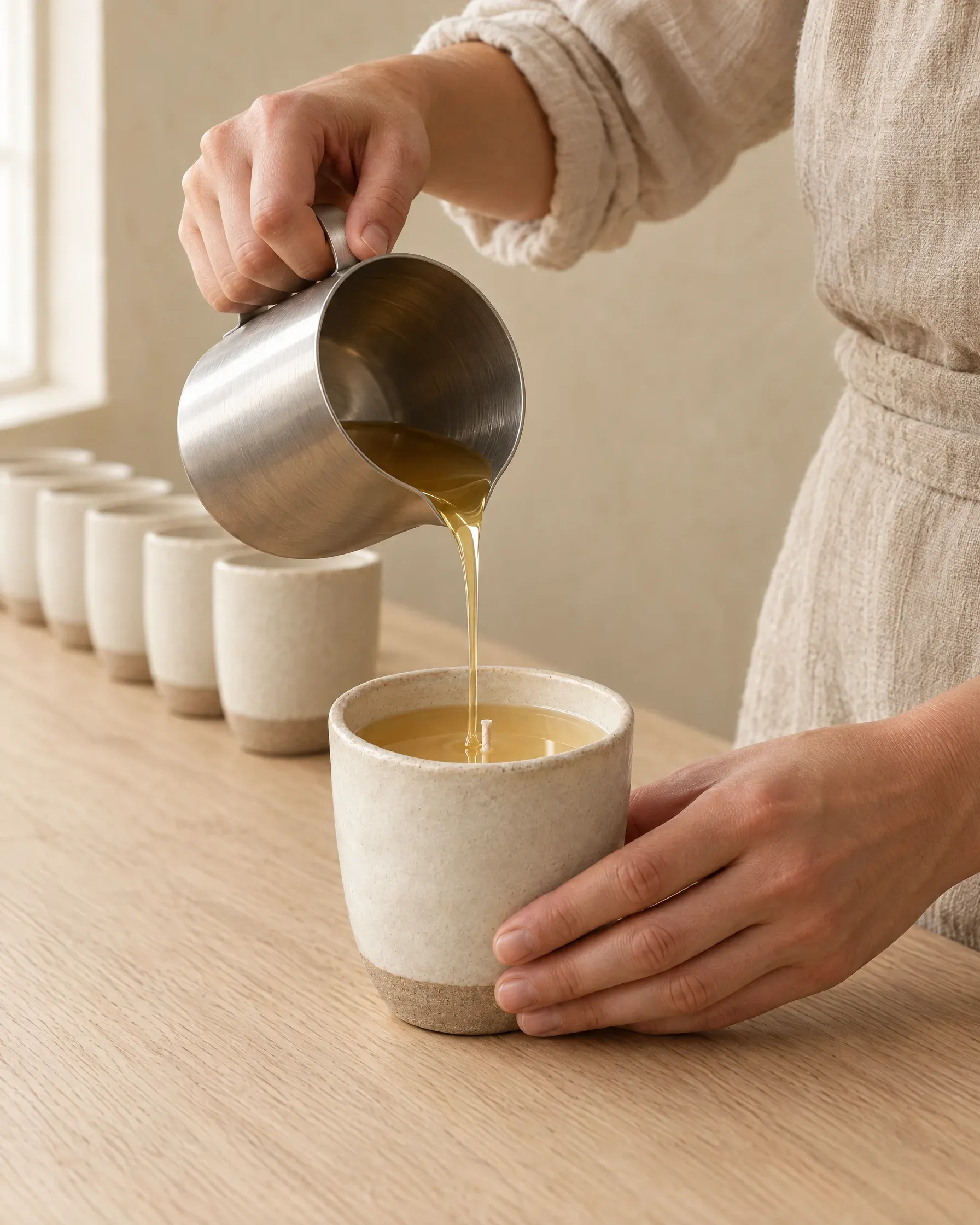
Beeswax is made by worker bees, who secrete it in tiny flakes and shape it into comb. When honey is harvested, the beekeeper slices off the thin wax caps; that wax is melted, filtered and poured. Nothing has to be added for it to become a candle. You can read the longer story on Our beeswax.
Soy wax starts as soybean oil, which is liquid at room temperature. It is hydrogenated to make it solid, and often mixed with other waxes or additives so it holds fragrance and sets smoothly. It is plant-based, but it is a processed product rather than one found in nature.
Paraffin is a by-product of petroleum refining and remains the most common candle wax. Coconut wax is usually hydrogenated coconut oil, too soft to use alone, so it is almost always blended with soy, other plant waxes or paraffin.
Beeswax, generally. Because it is dense and needs more heat to melt, the flame uses it slowly. A beeswax candle will usually outlast a soy or paraffin candle of the same size. As an example, our 20 cm beeswax pillar burns for about 100 hours and a 220 g vessel for about 45 hours, figures measured on our own shelves. Wick size, curing and care change these numbers for every wax, which we explain in our guide to long burning candles.
Pure beeswax smells faintly of warm honeycomb when lit, because a trace of the hive stays in the wax. Unscented beeswax candles are therefore never entirely scentless, which many people like. Soy is close to odourless and is the usual choice for strongly scented candles, because it takes added fragrance easily. If you want a lot of scent, soy will give you more of it. If you want a quiet room, beeswax suits better.
Every flame produces some particles. With a trimmed wick and still air, pure beeswax burns with very little visible soot, and so does a well-made soy candle. The largest differences usually come from the wick and the fragrance load rather than the wax alone. Heavily scented candles of any wax, and long untrimmed wicks, are what blacken walls and glass. If a cleaner burn is your main concern, our guide to non-toxic candles covers what to look for beyond the wax.
Paraffin is inexpensive, holds a strong scent and can be moulded into any shape, which is why most candles on the market use it. People who look for beeswax or soy are usually trying to avoid it. Coconut blends are popular in premium scented candles because they melt smoothly and carry fragrance well, but check what they are blended with: “coconut wax” on the front can mean coconut with paraffin inside.
Bees make a small amount of wax for a large amount of honey, and only the capping wax is taken after the harvest. Beeswax is a limited, seasonal material, and it needs careful filtering. That is the honest reason for the price, and also why it lasts longer once lit: you are paying for hours rather than for grams.
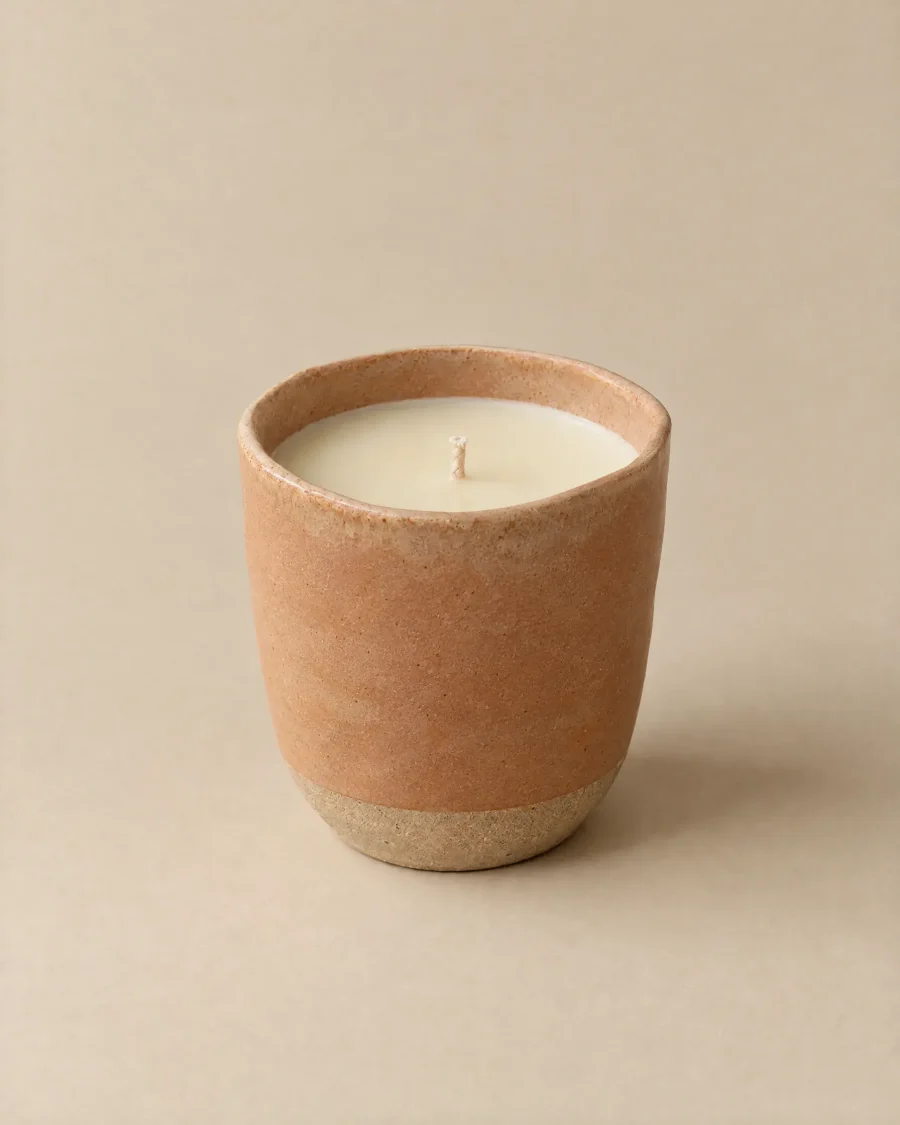
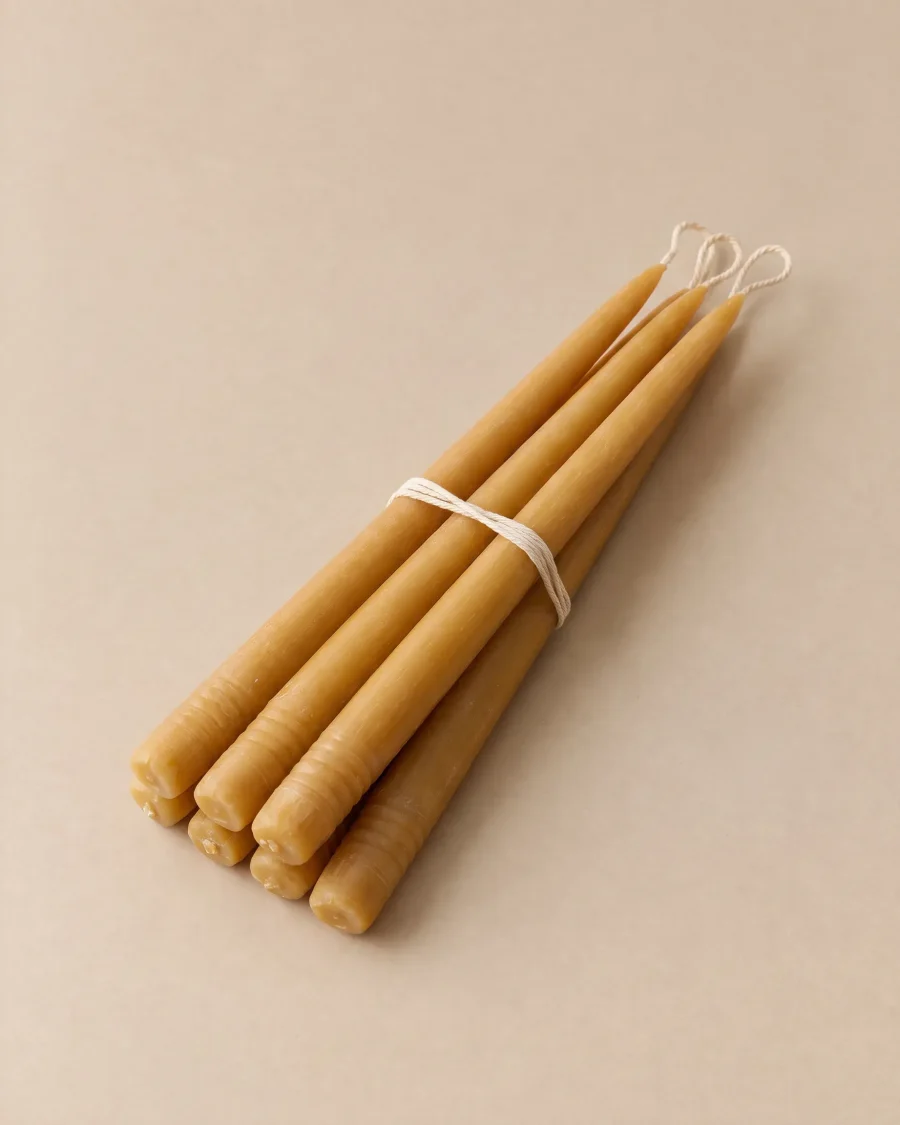
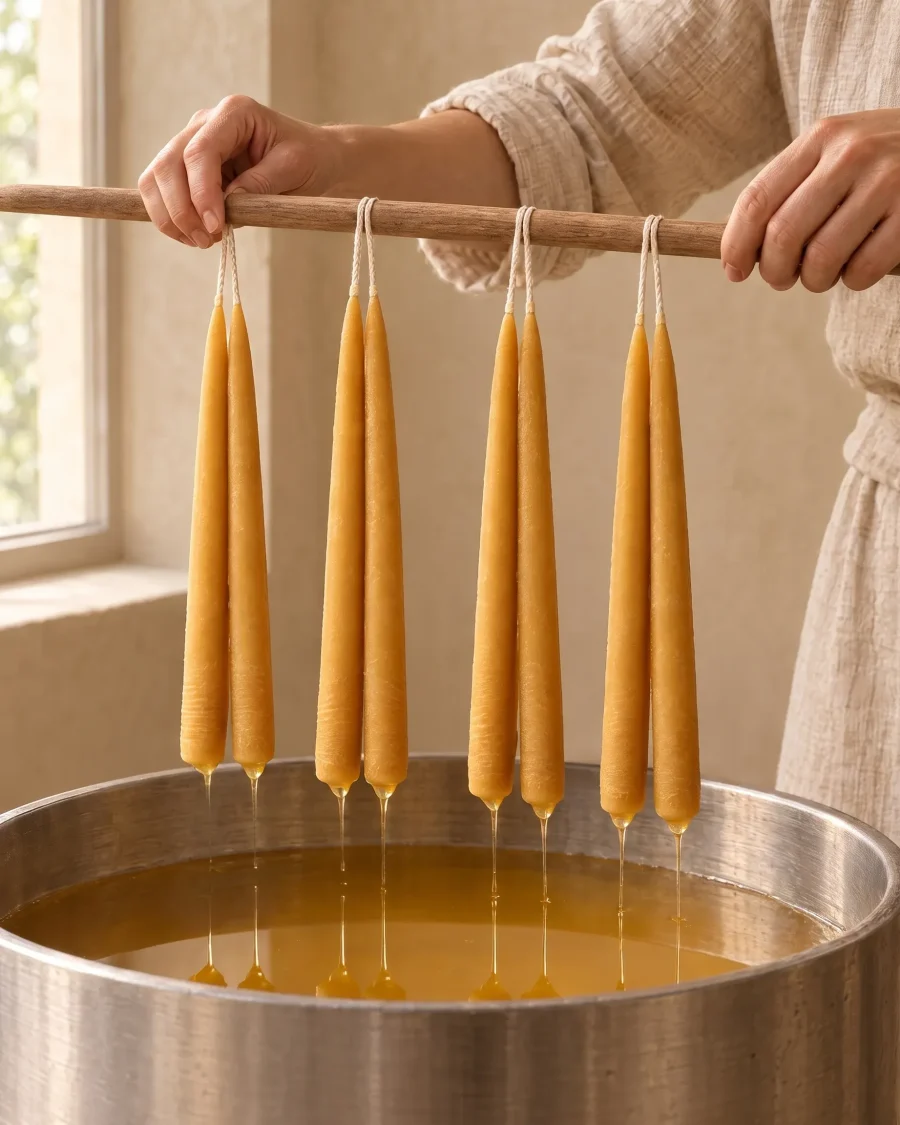
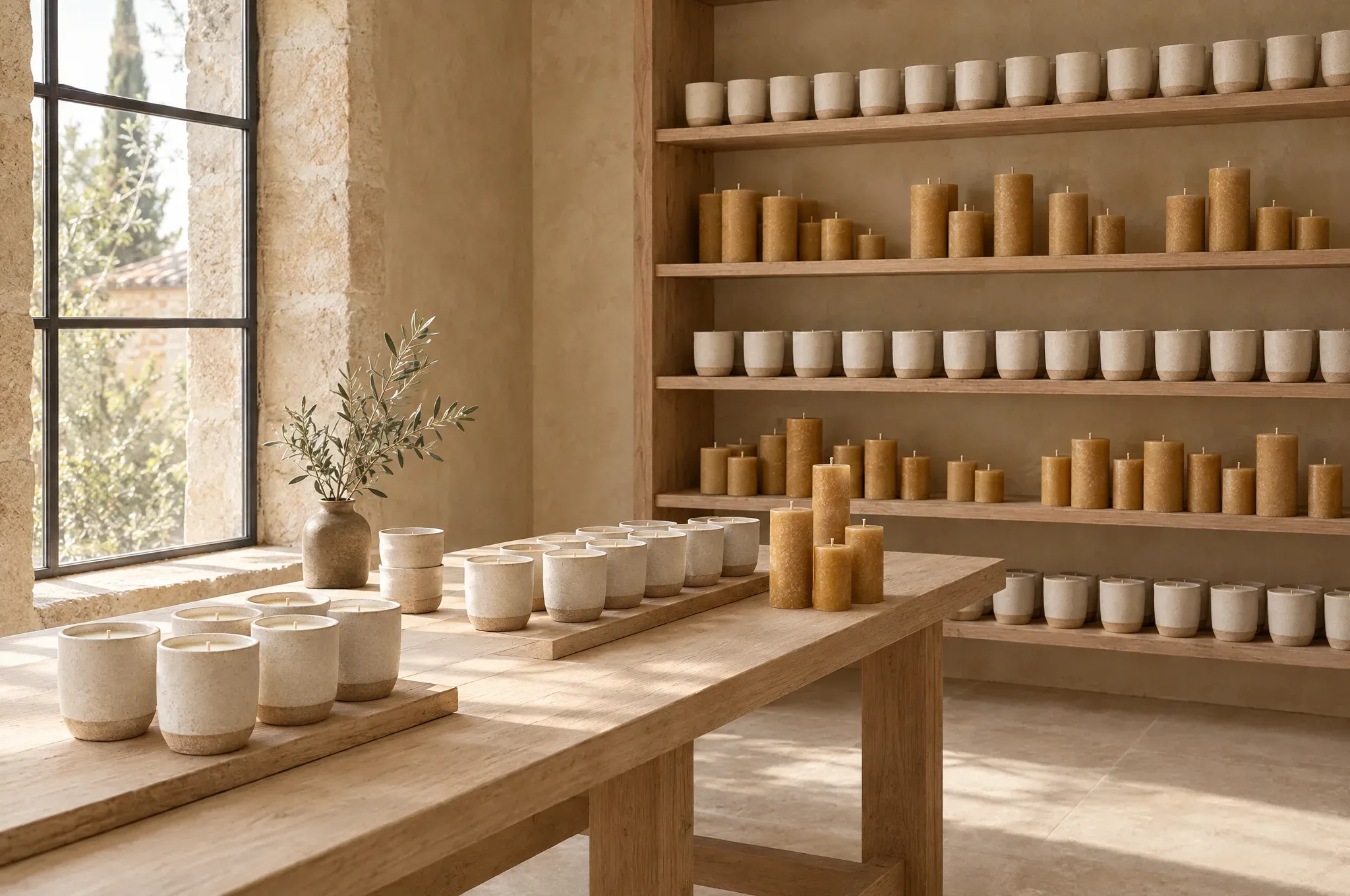
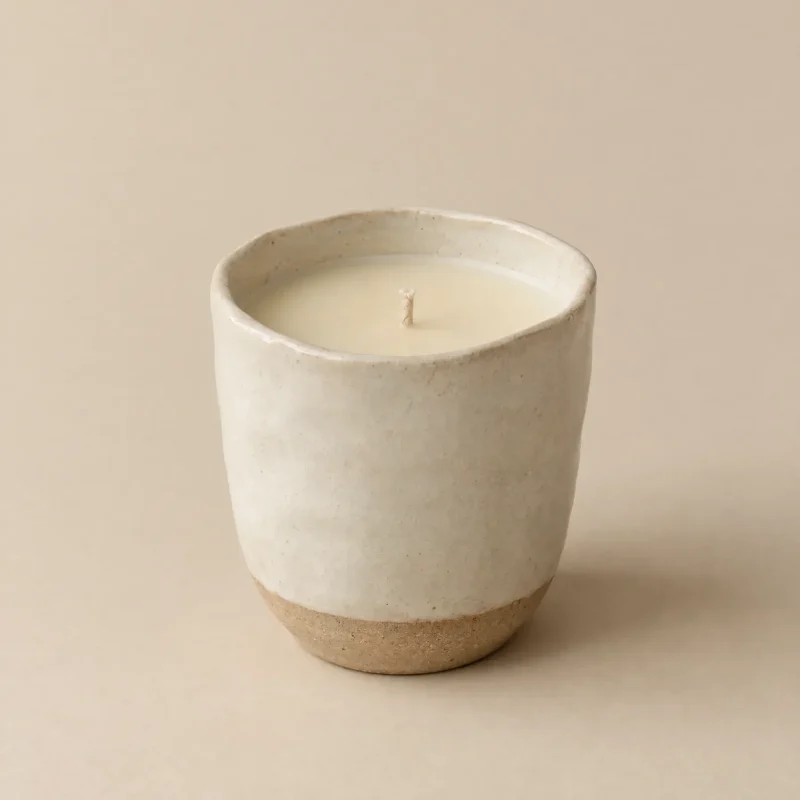
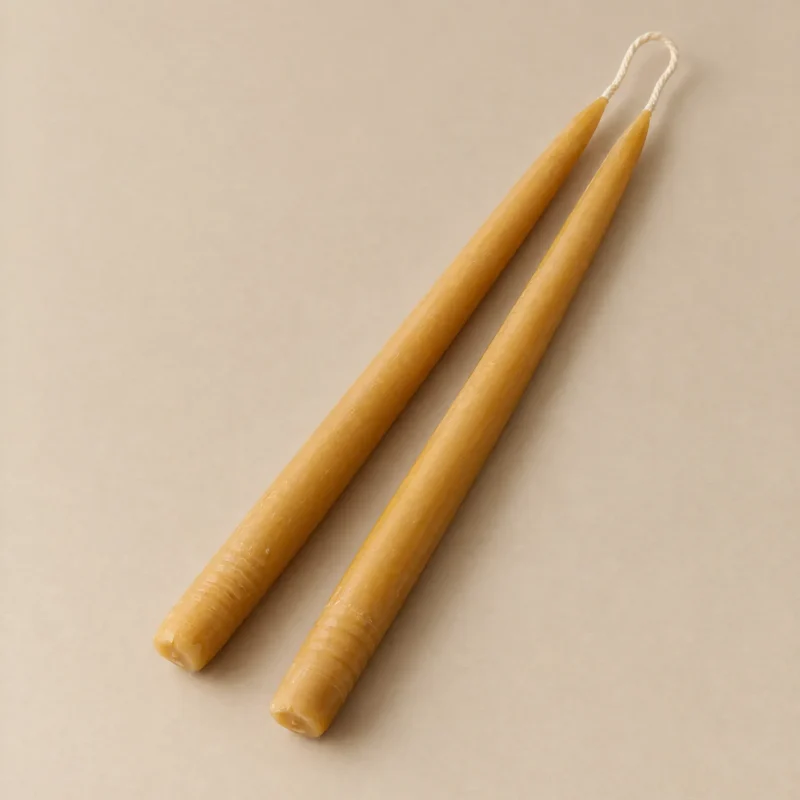
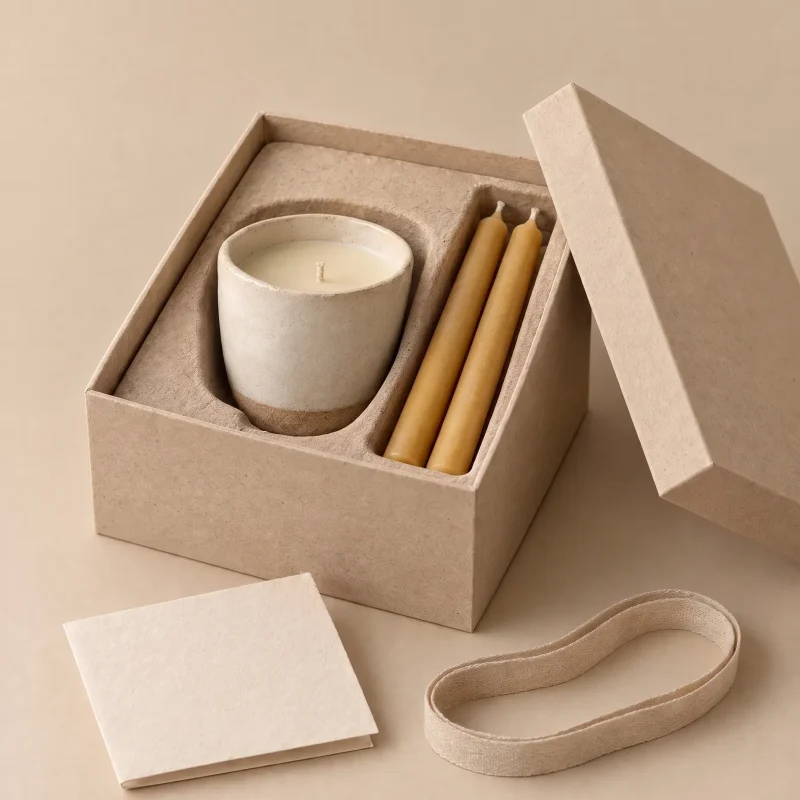
We use only 100 % European beeswax and a cotton wick: no soy, no paraffin, no blends. The wax is filtered and never bleached or dyed, so it keeps its natural gold. Our pillars stand on their own, our tapers are dipped by hand, and our three stoneware vessels are scented with organic essential oils.
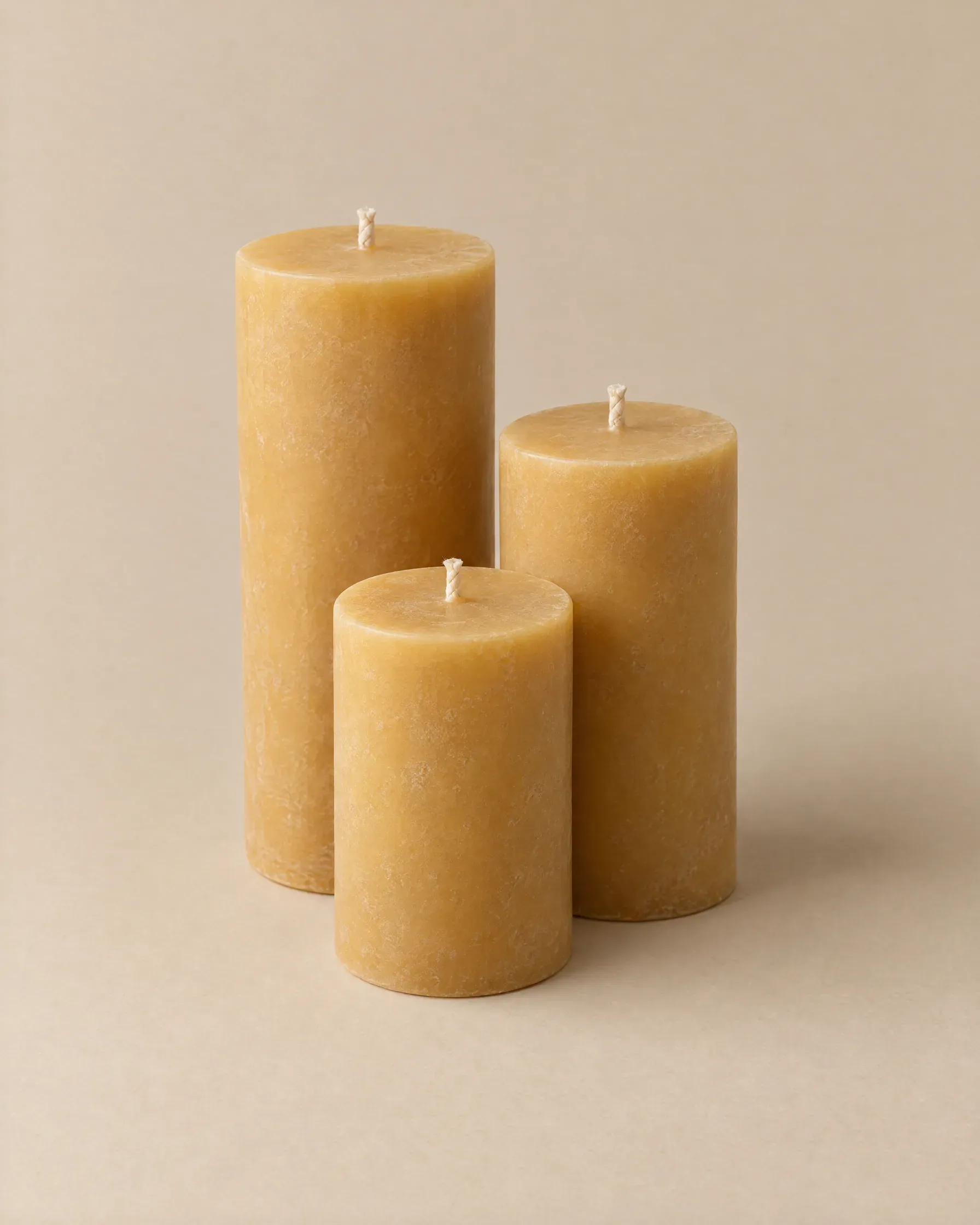
Pillars
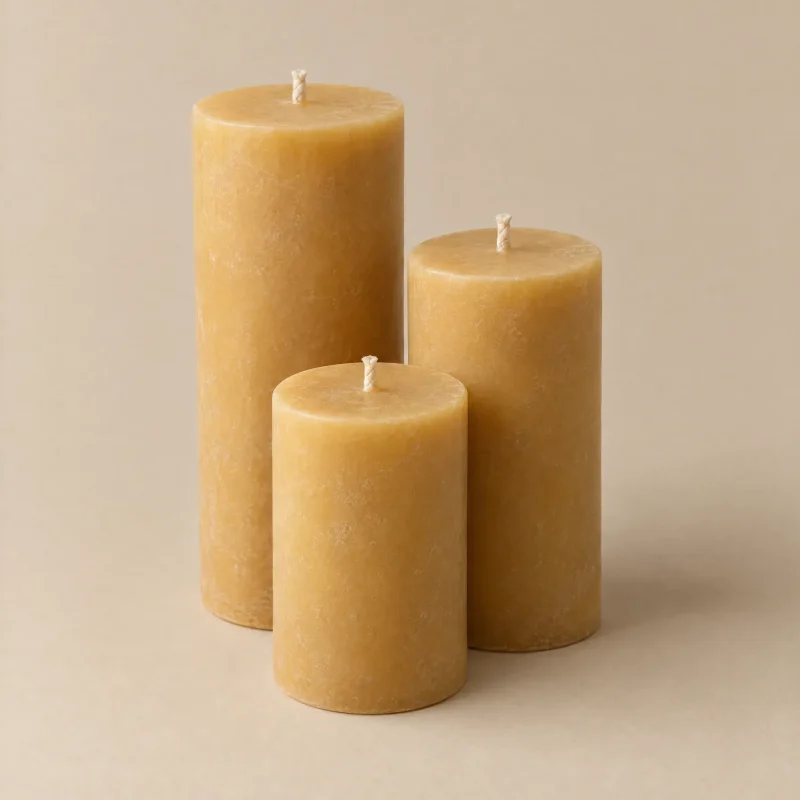
Soy is too soft for a free-standing pillar; beeswax is not. Ours stand on a plate, need no jar and burn from about 50 to about 100 hours.
The candles
Questions
It depends on what you want. Beeswax burns longer and brighter, has a faint honey scent of its own and is firm enough for pillars and tapers. Soy is less expensive, nearly odourless and carries added fragrance well, so it suits strongly scented candles in jars. If you want few ingredients and a long burn, beeswax is the stronger choice.
Beeswax, in most cases. It is denser and melts at a higher temperature, around 62 to 64 °C against roughly 45 to 55 °C for soy, so the flame uses it more slowly. A beeswax candle generally outlasts a soy candle of the same size, provided both have a well-sized wick and are burned away from draughts.
Some do. "Soy blend", "made with soy" or "soy wax" without a percentage can all include paraffin or other waxes. A candle labelled 100 % soy should not. If the maker does not give the full blend, ask, or choose a wax that is clearly labelled as one ingredient.
Both pure beeswax and pure soy burn with little visible soot when the wick is trimmed and the air is still. Differences between waxes are smaller than the differences made by wick length, draughts and fragrance. Any flame releases some particles, so trim the wick, avoid draughts and air the room after a long burn.
No. Beeswax is made by bees, so beeswax candles are not vegan. We buy only the surplus capping wax that beekeepers take after the honey harvest, so the hive is never short. If you want a fully plant-based candle, a 100 % soy or other plant wax is the right choice.
Beeswax is limited and seasonal: bees make a small amount of wax for every harvest of honey, and it must be carefully filtered. Soy is an agricultural commodity produced in large volumes. Because beeswax burns slowly, the price per hour of light is closer than the price per candle suggests.
More guides
No soy, no paraffin, no blends: 100% European beeswax and a cotton wick. Free shipping over 80 €.