The atelier2 min read
Why our candles cure for weeks
A freshly poured candle is not finished. Time on the shelf is what makes the burn slow and even.
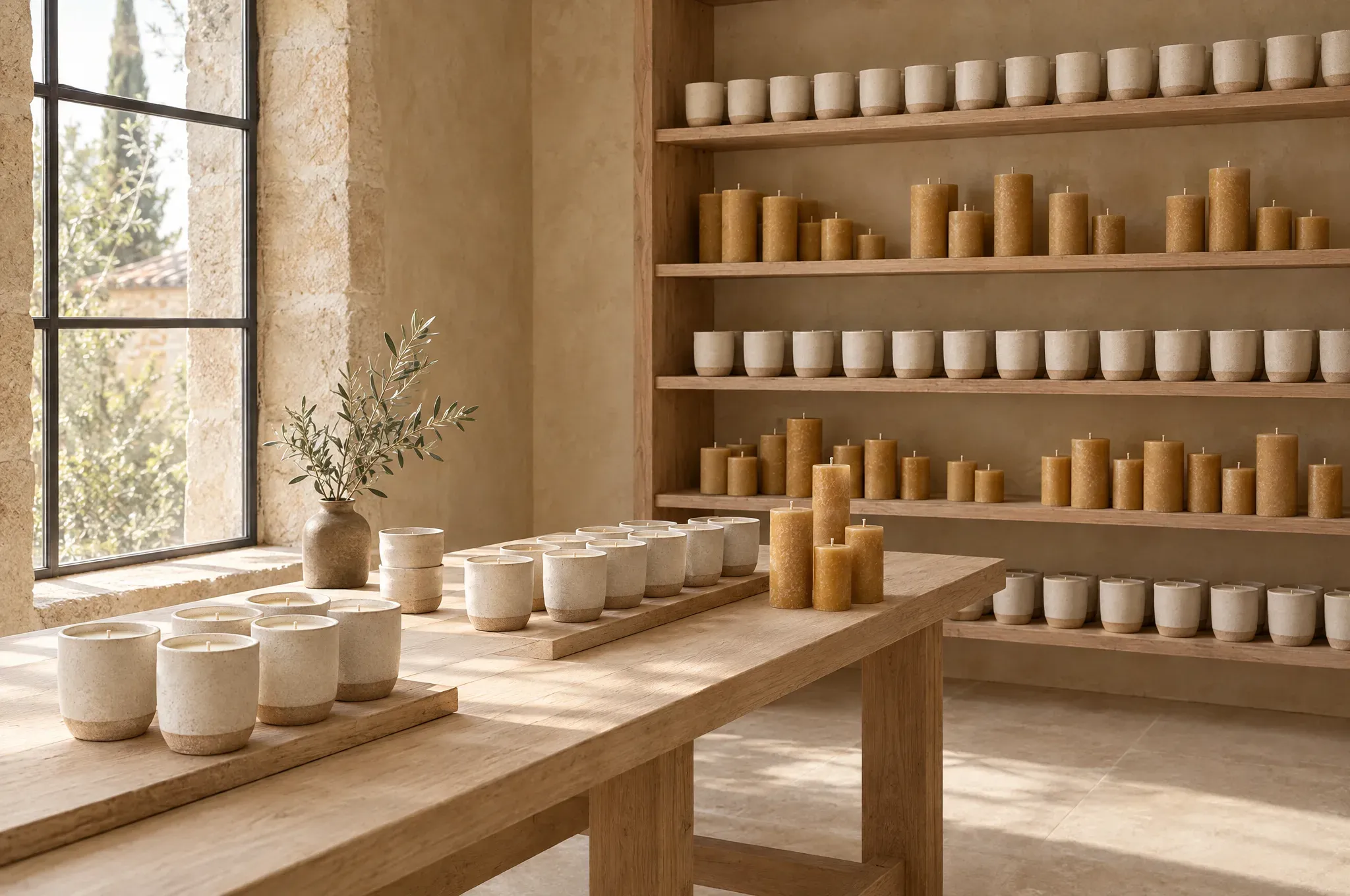
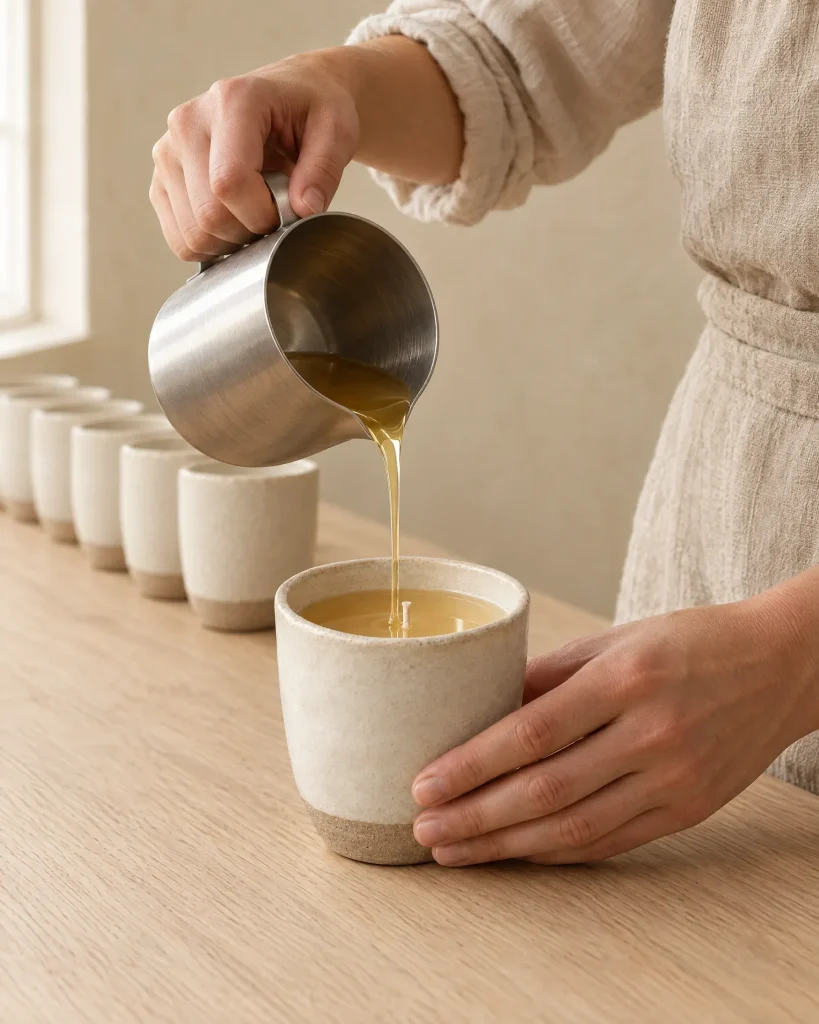
A candle that has just been poured looks finished. It is not. Like bread that needs to cool or wine that needs to rest, it keeps changing over the days that follow, and those changes decide how well it will burn.
What happens on the shelf
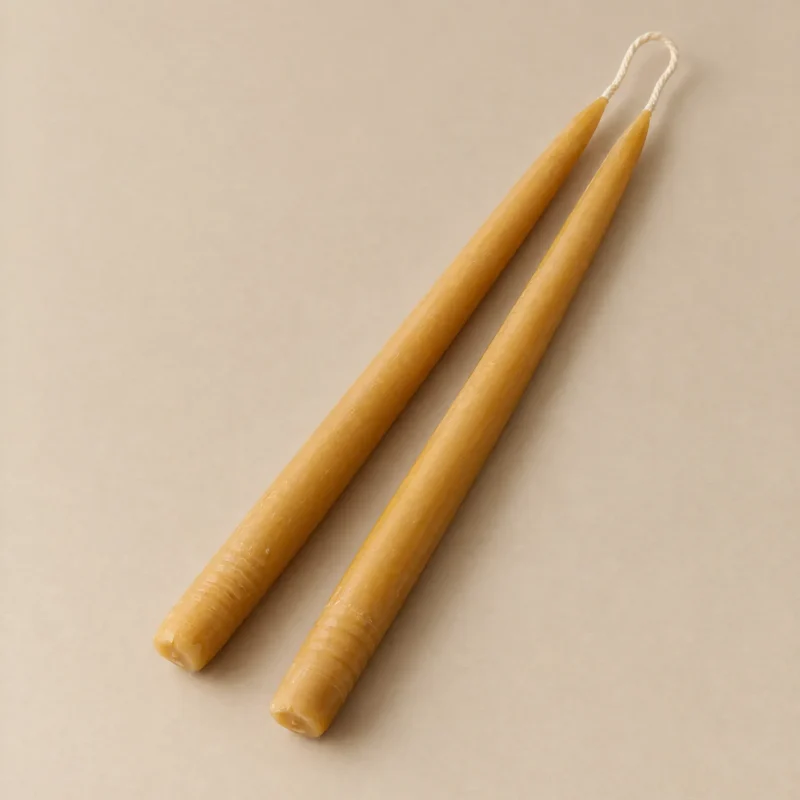
As beeswax cools, it sets from the outside in. Over the following weeks its structure keeps settling: the crystals in the wax grow and pack together, and the candle becomes harder, denser and more even all the way through.
A well-cured candle burns more slowly and more steadily. The melt pool forms evenly, the flame stays calm, and more of the wax is used. A fresh one tends to burn faster and less evenly.
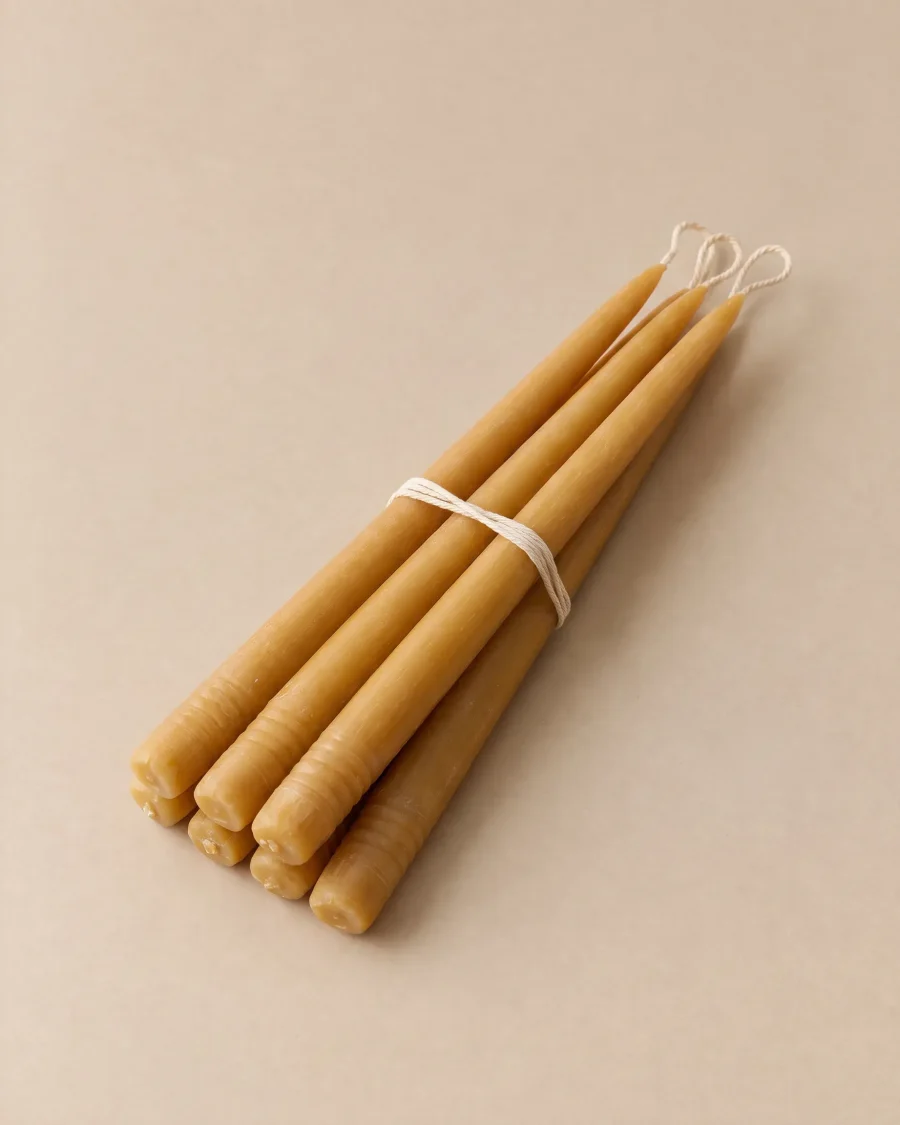
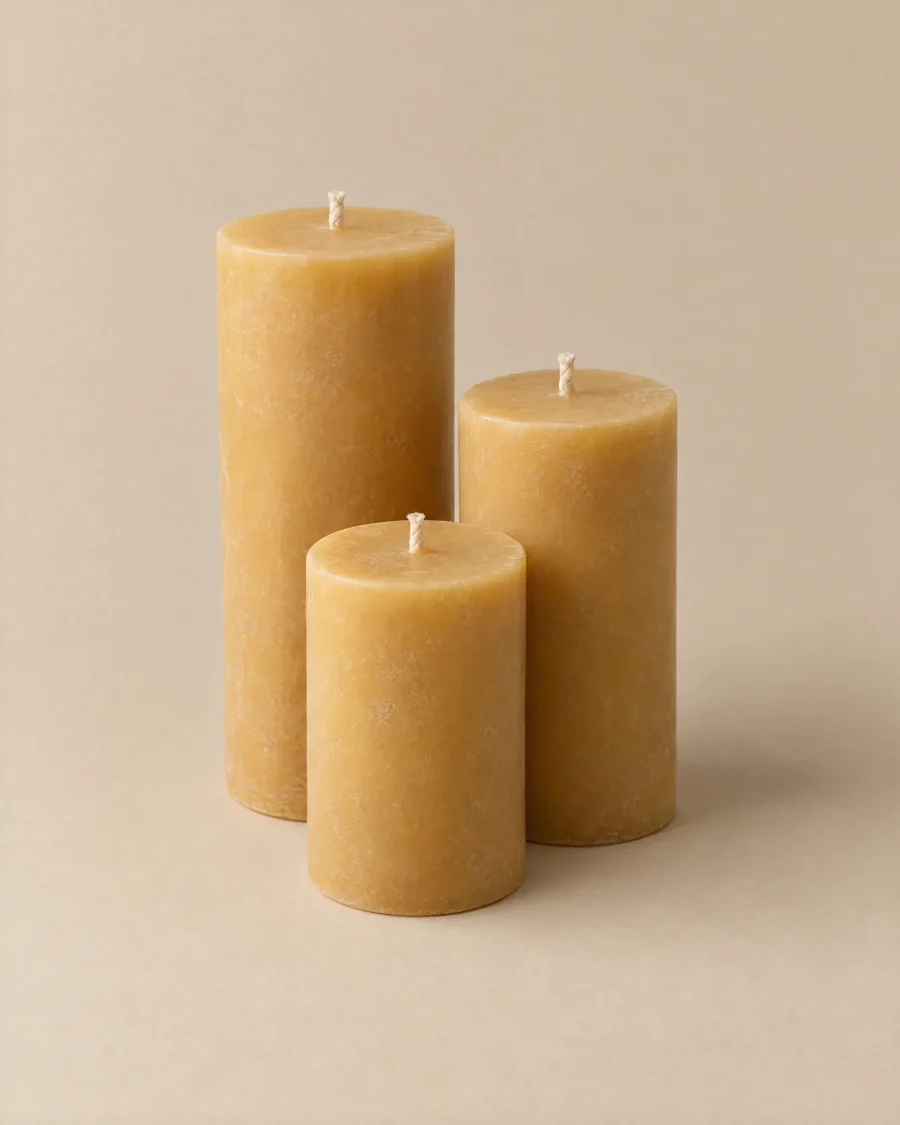
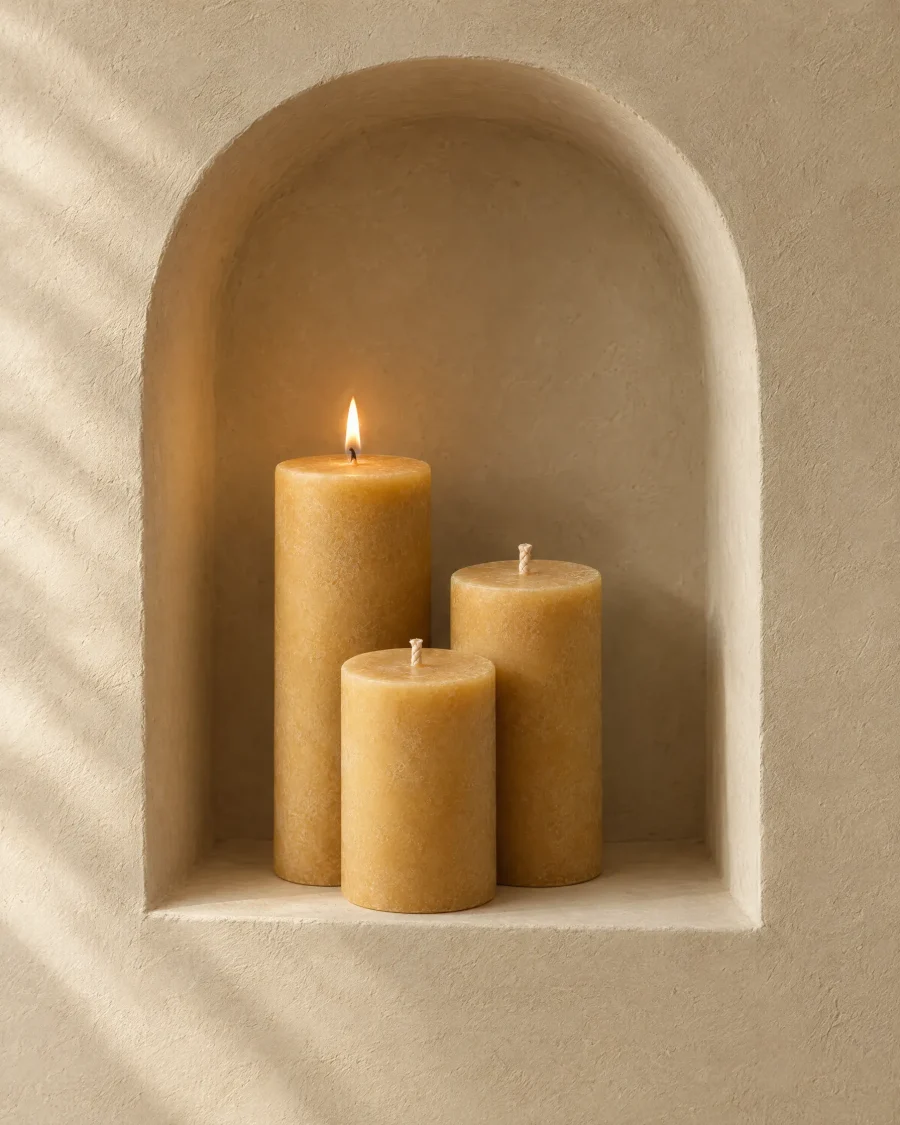
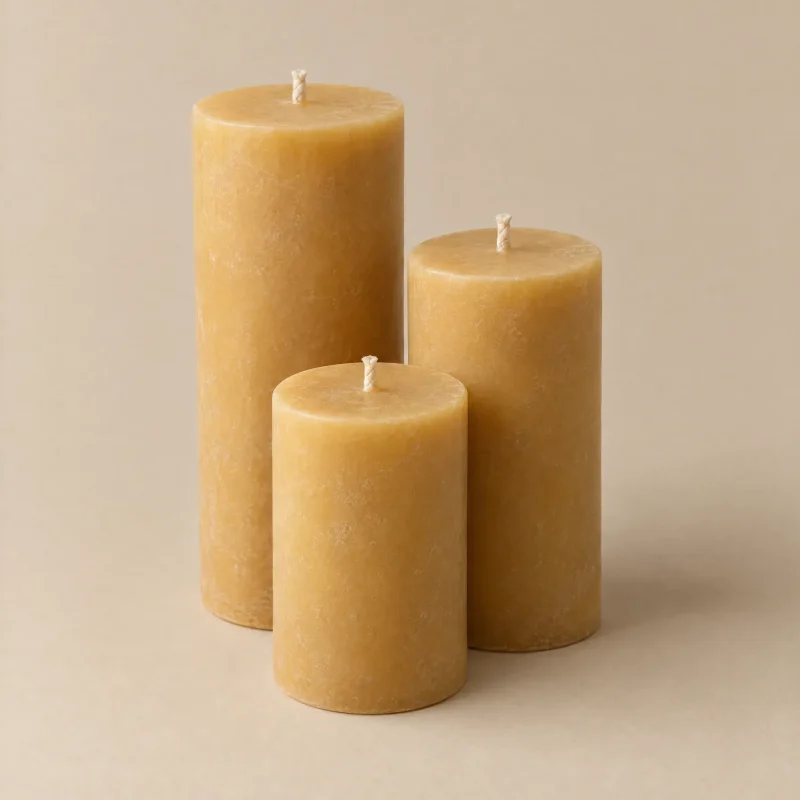
You can see it, if you look closely. A freshly poured candle has a slight sheen and gives a little under a fingernail. A few weeks later the surface is matt and firm, and a pillar sounds solid when you tap its side.
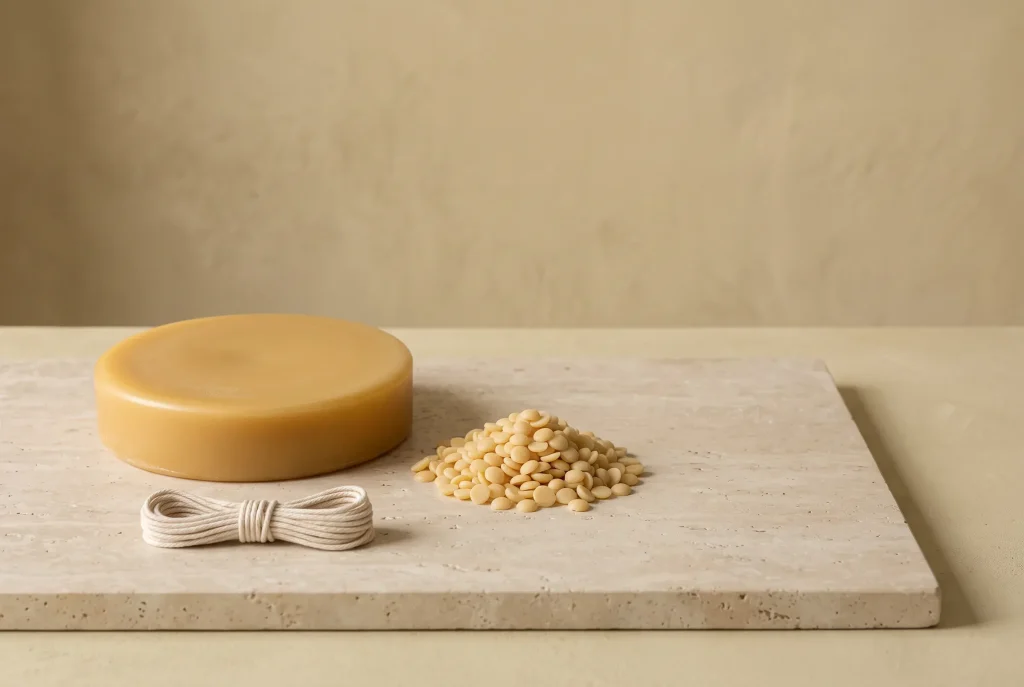
How long we wait
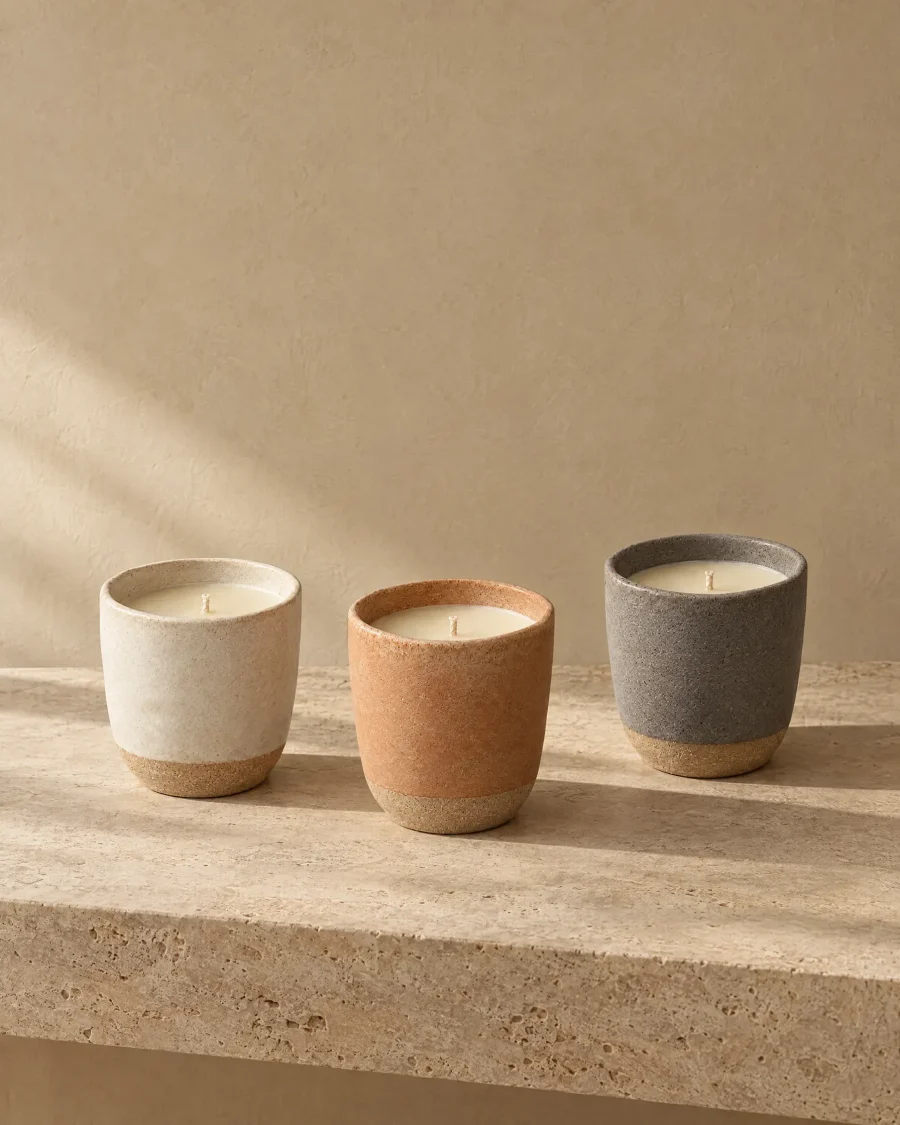
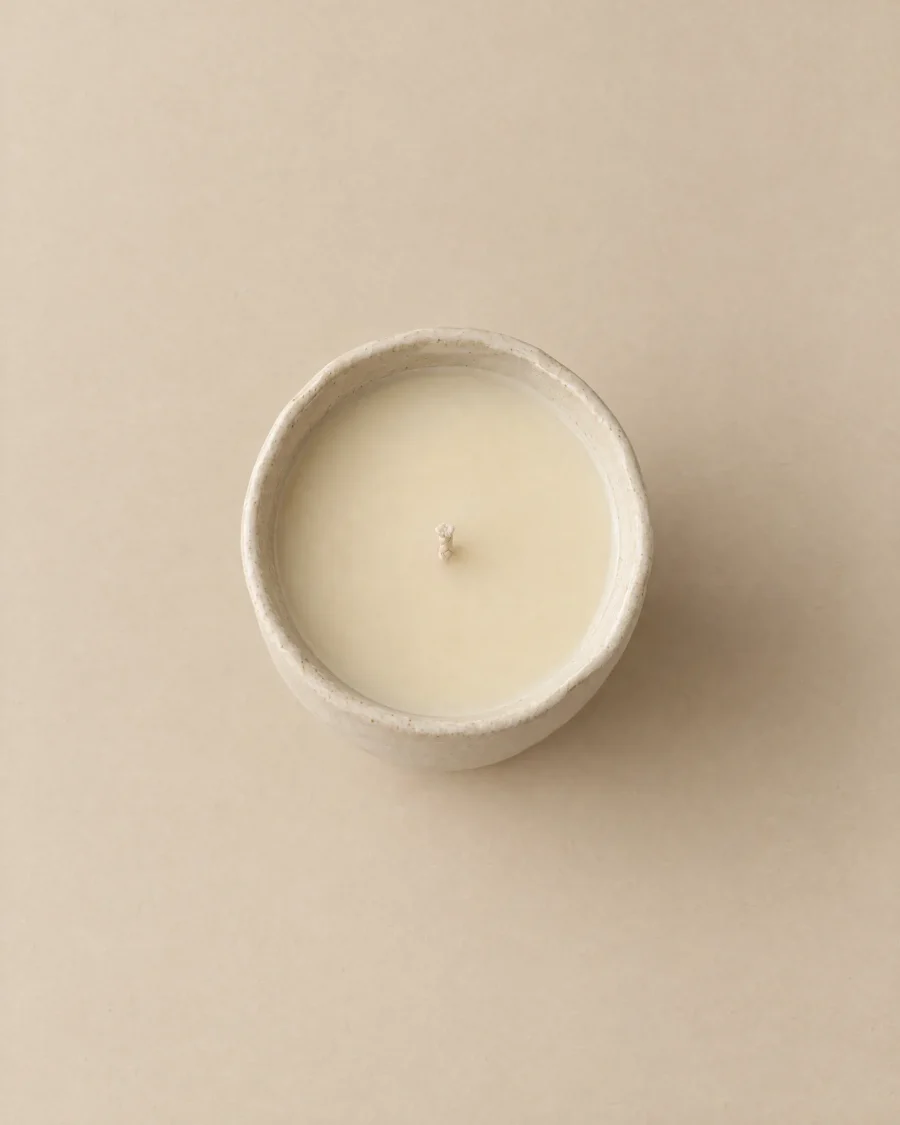
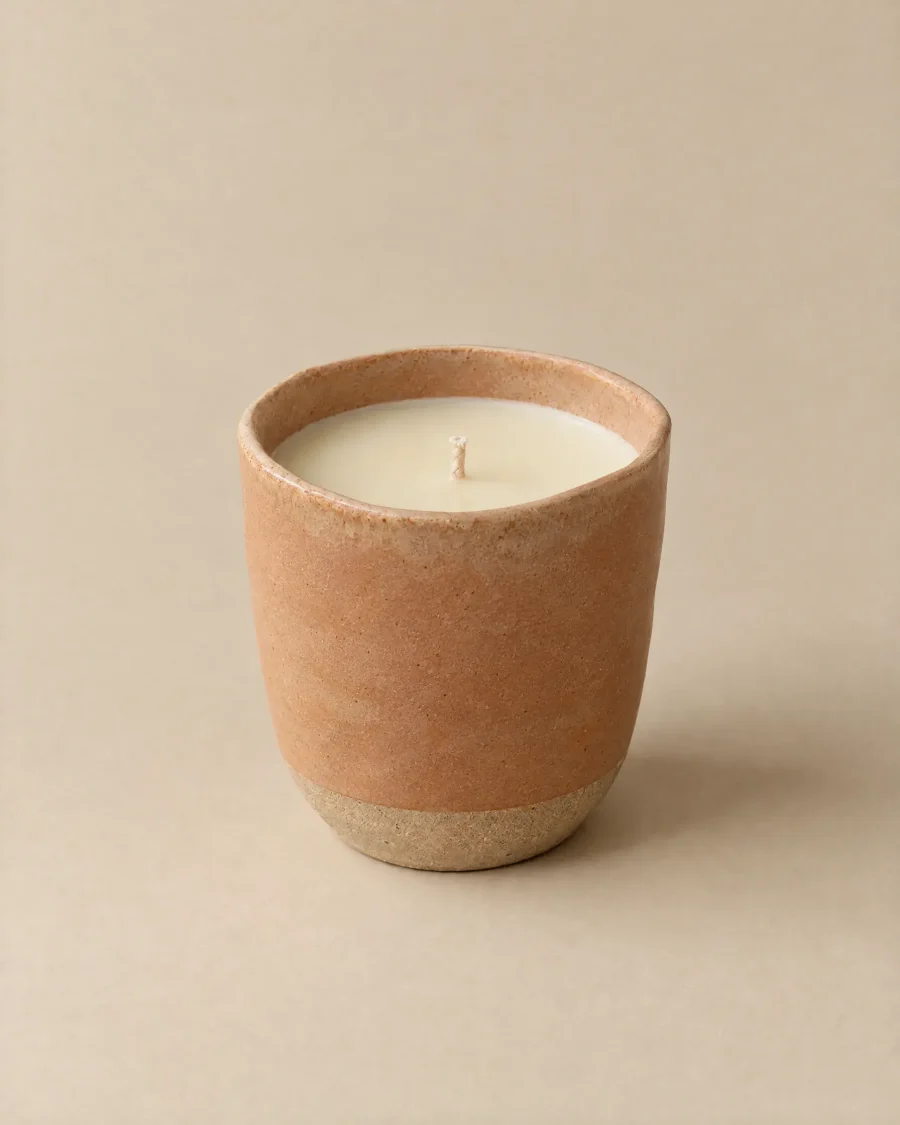
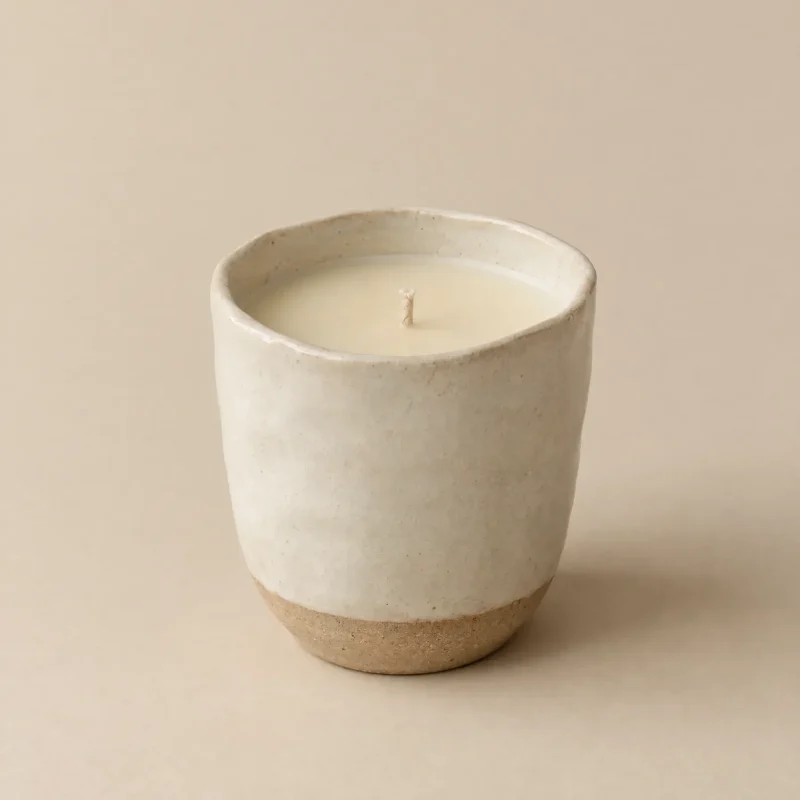
Every candle we make rests on the atelier shelves for at least three weeks before it is packed. The room is cool, dark and still, which suits the wax. The scented vessels rest too, so their organic essential oils settle evenly through the wax rather than gathering near the surface.
Time on the shelf is what makes the burn slow and even.
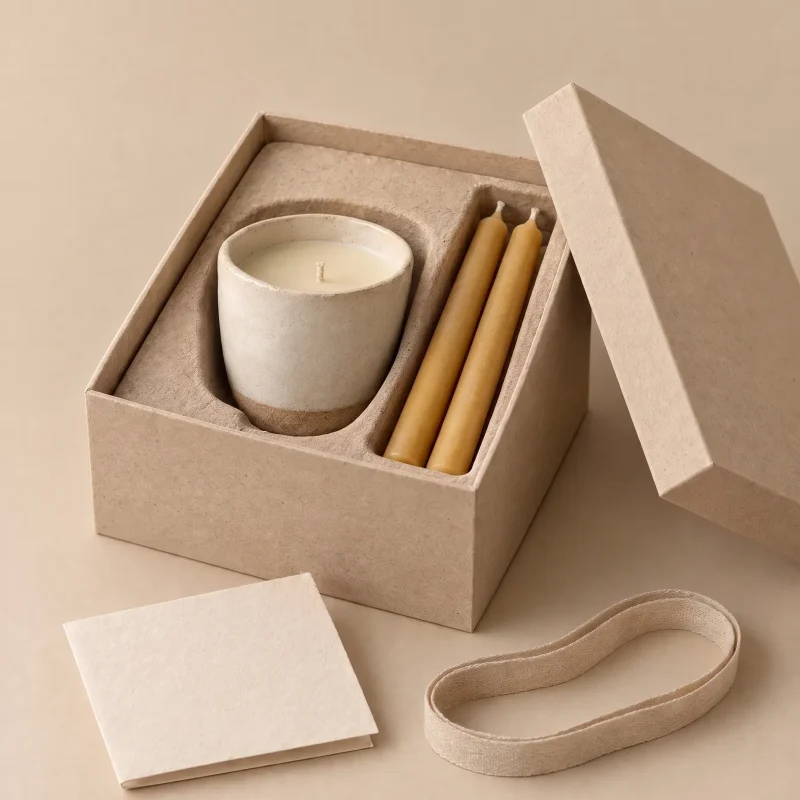
We could send candles out the week they are poured. We would rather they reached you ready.
The wait also gives us time to check. One candle from every batch is burned on the test shelf while the rest cure, so by the time a batch is packed, we already know how it burns.
Bloom, and why it is a good sign
During curing, and sometimes later at home, pure beeswax can develop a soft white haze called bloom. It is natural, and it is a property of real beeswax that paraffin does not share. It is not a flaw and does not affect the burn. Leave it if you like the look, or rub it away with a soft cloth.